
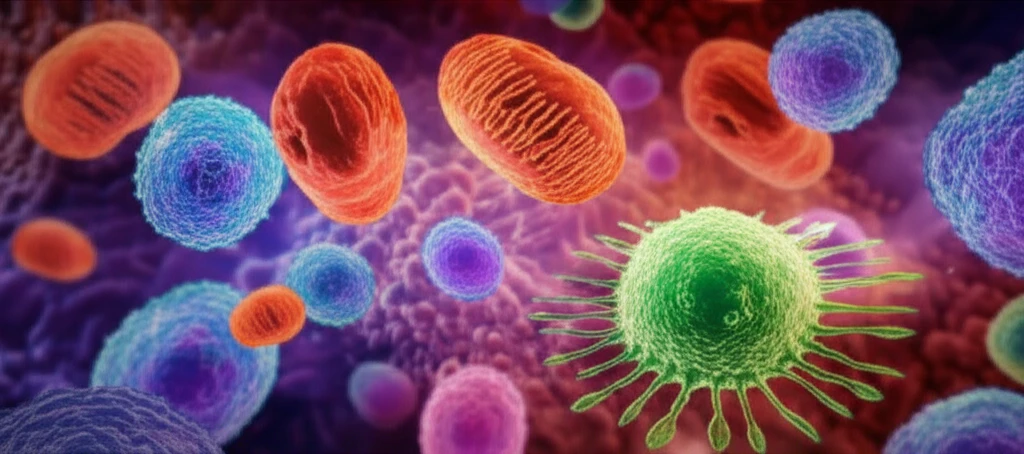
Illustration of intestinal macrophages in the gut, highlighting their role in immune responses and the connection to systemic lupus erythematosus.

The Gut-Lupus Connection: Unraveling the Link Between Your Gut Health and Systemic Lupus Erythematosus

"Explore the fascinating intersection of gut health, immune responses, and systemic lupus erythematosus (SLE), and discover how intestinal macrophages play a crucial role in this complex relationship."


In the realm of health and wellness, the gut microbiome has emerged as a central focus, with its influence extending far beyond simple digestion. Recent research sheds light on the profound connection between gut health and autoimmune diseases, particularly systemic lupus erythematosus (SLE). This article delves into the intricate relationship between intestinal macrophages, the guardians of your gut, and their pivotal role in SLE.

Systemic lupus erythematosus (SLE) is a chronic autoimmune disease that affects millions of people worldwide, predominantly women. It is characterized by the immune system mistakenly attacking healthy tissues and organs. While the exact causes of SLE are still being investigated, the gut microbiome has emerged as a critical player in its development and progression.

This article aims to provide a comprehensive understanding of how intestinal macrophages function within the gut, how they interact with the immune system, and how their dysfunction may contribute to the development and progression of SLE. By understanding this connection, we can open doors to innovative strategies for managing and potentially preventing this complex disease.

Intestinal Macrophages: Guardians of the Gut

Illustration of intestinal macrophages in the gut, highlighting their role in immune responses and the connection to systemic lupus erythematosus.

Intestinal macrophages are specialized immune cells residing in the gut lining. They act as the first line of defense against pathogens, continuously monitoring the environment and responding to potential threats. These macrophages are not only crucial for maintaining gut homeostasis but also play a key role in initiating and regulating immune responses.

Intestinal macrophages are derived from monocytes, a type of white blood cell. They have the ability to engulf and eliminate pathogens, as well as produce cytokines, which are signaling molecules that orchestrate immune responses. Unlike macrophages in other parts of the body, intestinal macrophages possess unique characteristics, including a remarkable ability to maintain tolerance and prevent excessive inflammation in the gut.

  • Phagocytosis and Antigen Presentation: Intestinal macrophages engulf pathogens and cellular debris, breaking them down into smaller pieces (antigens). They then present these antigens to other immune cells, initiating an immune response.
  • Cytokine Production: They secrete various cytokines, such as interleukin-10 (IL-10), which helps regulate the immune response and maintain tolerance.
  • Immune Regulation: Intestinal macrophages help to regulate the balance between immune activation and tolerance in the gut, preventing excessive inflammation.
  • Unique Characteristics: Unlike their counterparts in other tissues, intestinal macrophages have a limited capacity to proliferate and a shorter lifespan.
The delicate balance maintained by intestinal macrophages is essential for gut health. Disruptions in their function can lead to various gastrointestinal disorders and may also contribute to the development of systemic diseases, including SLE.

Conclusion: A Path Forward

The intricate interplay between gut health, intestinal macrophages, and SLE is a rapidly evolving field. As research continues, we can anticipate further discoveries that could lead to more targeted and effective treatments for this complex autoimmune disease. The ongoing investigation into the role of sex hormones, gut microbiome, and macrophage function holds great promise for improving the lives of those affected by SLE. By recognizing the critical link between the gut and systemic health, we can empower individuals to take proactive steps towards better health and a higher quality of life.

About this Article -

This article was crafted using a human-AI hybrid and collaborative approach. AI assisted our team with initial drafting, research insights, identifying key questions, and image generation. Our human editors guided topic selection, defined the angle, structured the content, ensured factual accuracy and relevance, refined the tone, and conducted thorough editing to deliver helpful, high-quality information.See our About page for more information.

This article is based on research published under:

DOI-LINK: 10.1177/0961203318797417, Alternate LINK

Title: Intestinal Macrophages In Mucosal Immunity And Their Role In Systemic Lupus Erythematosus Disease

Subject: Rheumatology

Journal: Lupus

Publisher: SAGE Publications

Authors: F Pan, W Tang, Z Zhou, G Gilkeson, R Lang, W Jiang

Published: 2018-09-17

Everything You Need To Know

1

What is the primary function of intestinal macrophages in the gut?

Intestinal macrophages act as the first line of defense against pathogens in the gut lining. They continuously monitor the environment, engulf and eliminate threats through phagocytosis, and produce cytokines like interleukin-10 (IL-10) to regulate immune responses and maintain tolerance. This helps in preventing excessive inflammation and maintaining gut homeostasis.

2

How does the dysfunction of intestinal macrophages potentially contribute to the development of systemic lupus erythematosus (SLE)?

Disruptions in the function of intestinal macrophages can lead to an imbalance in the gut's immune environment. If these macrophages fail to maintain tolerance or properly regulate immune responses, it can trigger or exacerbate systemic autoimmune diseases like SLE. The ongoing investigation into the role of sex hormones, gut microbiome, and macrophage function holds great promise for improving the lives of those affected by SLE. This is achieved via the critical link between the gut and systemic health.

3

In what ways are intestinal macrophages different from macrophages found in other parts of the body?

Intestinal macrophages possess unique characteristics compared to their counterparts in other tissues. They have a limited capacity to proliferate and a shorter lifespan. Also, they exhibit a remarkable ability to maintain tolerance and prevent excessive inflammation in the gut, which is crucial for preventing autoimmune reactions. This ability to maintain tolerance is important because they are constantly exposed to a high load of antigens from food and the gut microbiota.

4

How do intestinal macrophages use phagocytosis and antigen presentation to initiate an immune response?

Intestinal macrophages engulf pathogens and cellular debris in the gut, breaking them down into smaller pieces called antigens. They then present these antigens to other immune cells, such as T cells, to initiate an immune response. This process is critical for alerting the immune system to potential threats and activating appropriate defense mechanisms. This process is crucial in maintaining gut homeostasis and preventing harmful substances from entering the bloodstream.

5

Why is understanding the relationship between gut health, intestinal macrophages, and systemic lupus erythematosus (SLE) important for developing new treatments?

Understanding the intricate interplay between gut health, intestinal macrophages, and SLE can lead to more targeted and effective treatments for this complex autoimmune disease. By identifying how disruptions in gut health and macrophage function contribute to SLE, researchers can develop strategies to restore gut homeostasis, modulate immune responses, and ultimately improve the lives of those affected by SLE. Furthermore, ongoing research into sex hormones and the gut microbiome offers additional avenues for therapeutic intervention.

Newsletter Subscribe

Subscribe to get the latest articles and insights directly in your inbox.