
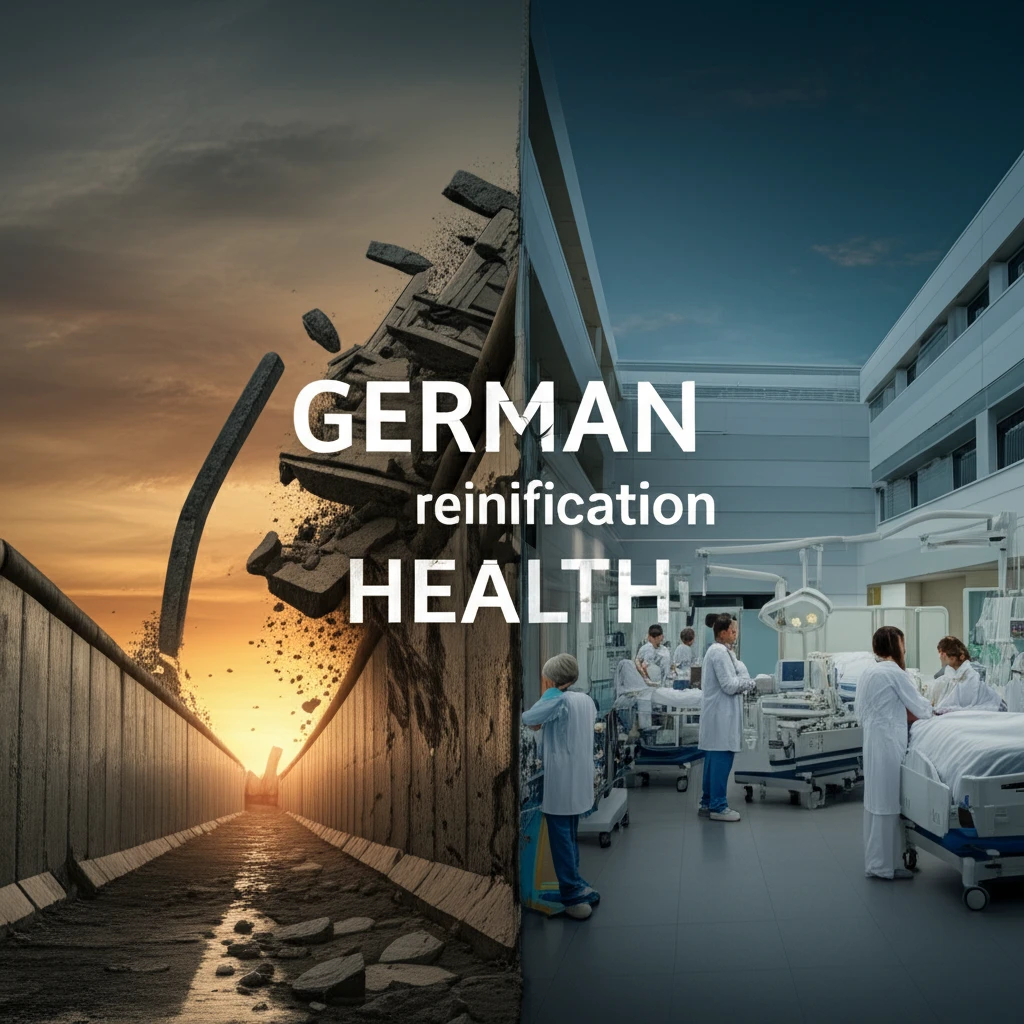
The German Paradox: How Reunification Reshaped Health and Mortality (And What We Can Learn)

"Examining the unexpected twists and turns in East and West Germany's health journeys, offering lessons on healthcare, lifestyle, and societal shifts."
The fall of the Berlin Wall in 1989 was a moment that symbolized the end of an era, a seismic shift that reshaped not just a nation, but the lives of millions. Yet, beyond the political and economic transformations, a quiet revolution was unfolding: a dramatic convergence in the health and mortality rates of East and West Germany. This story is more than a historical footnote; it's a complex, compelling narrative with profound implications for understanding the forces that shape our health.
This article delves into the surprising details of this health transformation. We explore how reunification, coupled with shifts in lifestyle, access to healthcare, and societal factors, led to remarkable changes in the health and mortality of both East and West Germans. By dissecting the trends in specific causes of death, we uncover the factors that played a pivotal role in this story, offering insights that remain remarkably relevant today.
This isn't just a story of numbers; it's a story of people. It explores the profound effect of reunification on the health of a nation, examining how it unveiled the intricate relationship between healthcare systems, individual choices, and overall well-being, and what these changes teach us about building healthier, more resilient communities.
Unpacking the German Health Convergence: Key Drivers and Unexpected Turns
The convergence in health between East and West Germany was not a simple, linear process. It was a dynamic interplay of several forces, some more predictable than others. One of the primary drivers was the adoption of the West German healthcare system in the East. This access to better medical technology and pharmaceuticals, as well as a focus on non-communicable diseases, led to immediate improvements in health outcomes.
- Healthcare System: The adoption of the FRG healthcare system was a major driver of the convergence, leading to improvements in medical technology and access to pharmaceuticals.
- Lifestyle Changes: Shifts in dietary habits, reduced smoking, and other lifestyle changes have had a positive impact on public health.
- Socioeconomic factors: Social welfare programs and improvements in living standards helped reduce mortality.
- Specific Causes: Dramatic reduction in deaths from cardiovascular diseases, infectious disease control, and improved sanitation contributed to the overall health gains.
The Enduring Legacy: Lessons for a Healthier Future
The German reunification story is a compelling illustration of how complex, multifaceted factors influence public health. The study teaches us about the impact of healthcare systems, the importance of addressing lifestyle factors, and the long-term effects of social and economic transitions. The lessons from Germany's reunification remain highly pertinent in modern society. They emphasize that improving health is a long-term project. It requires a focus on preventive care, individual empowerment, and the creation of supportive communities. By understanding this transformation, we can build a future of better health for all.