
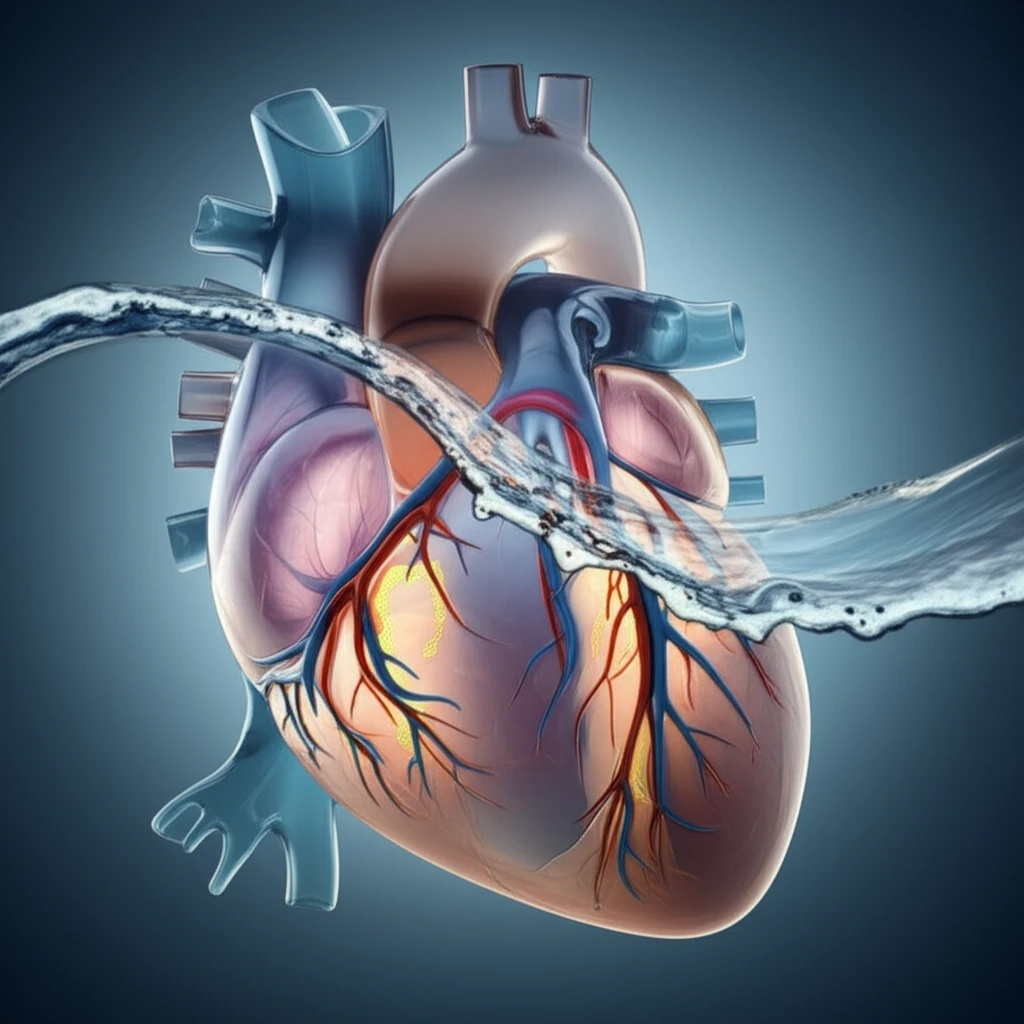
The Future of Heart Valve Transplants: New Hope with Advanced Tissue Engineering

"Discover how a groundbreaking decellularization strategy is revolutionizing heart valve replacements, offering safer and more effective solutions for patients worldwide."
Heart valve disease affects millions worldwide, often requiring valve replacement to improve quality of life and extend lifespan. Traditional prosthetic valves, while effective, can present challenges such as the need for lifelong anticoagulation or limited durability, especially in younger patients. Tissue engineering offers a promising alternative: creating living heart valves capable of growth, repair, and seamless integration within the body.
A major hurdle in tissue engineering is creating a scaffold – the structural framework for a new valve – that is both biocompatible and strong enough to withstand the constant pressures of the circulatory system. Biological tissues from animals (xenografts) can serve as excellent scaffolds, but they must first undergo decellularization to remove cells that could trigger an immune response in the recipient.
Decellularization aims to eliminate the antigenic potential of the tissue while preserving the complex mixture of structural and functional proteins that make up the extracellular matrix (ECM). The ECM provides the natural architecture and biomechanical properties essential for a functional heart valve. Finding the right balance between complete cell removal and ECM preservation is crucial for successful tissue-engineered heart valves.
The Decellularization Breakthrough: A Gentle Yet Effective Strategy
Researchers have been exploring various decellularization techniques, each with its own advantages and disadvantages. Harsh methods can damage the delicate ECM, while gentler approaches might leave behind residual cellular material, leading to inflammation and rejection. A recent study published in Interactive CardioVascular and Thoracic Surgery investigated three different decellularization strategies, seeking to identify the most effective method for preserving the macro- and microstructure of porcine (pig) heart valves.
- TRP (Trypsin-EDTA): A traditional method using trypsin, an enzyme that breaks down proteins, and EDTA, a chelating agent that disrupts cell adhesion.
- DET + ENZ (Detergent + Enzymes): A more recently developed protocol using a combination of detergents (like SDS and Triton X-100) to dissolve cell membranes and nucleases to remove DNA.
- ACC + ENZ (Accutase® + Enzymes): A solution containing proteolytic and collagenolytic enzymes (Accutase®) followed by nuclease treatment.
A Brighter Future for Heart Valve Replacement
The DET + ENZ decellularization strategy offers a promising avenue for creating more durable and biocompatible tissue-engineered heart valves. By preserving the intricate ECM structure while effectively removing cellular material, this technique paves the way for valves that can better integrate with the patient's own tissues, potentially reducing the risk of rejection, calcification, and the need for lifelong anticoagulation. Further research and clinical trials are needed to fully validate the long-term benefits of this approach, but the initial results offer new hope for individuals suffering from heart valve disease.