
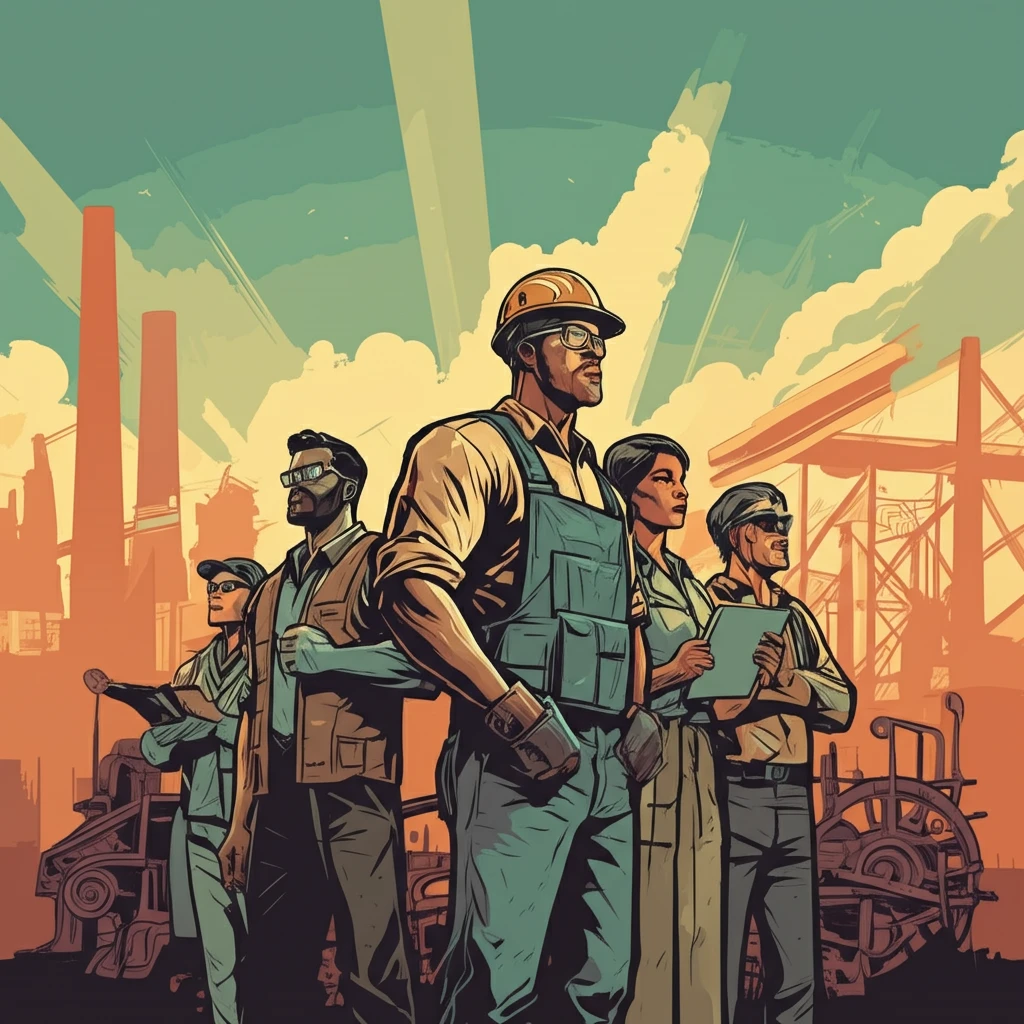
The Forgotten Lessons of the New Deal: Can They Save Today's Workers?

"Explore how the New Deal's focus on collective bargaining and worker empowerment offers vital strategies for today's economy and workforce challenges."
In an era marked by economic uncertainty and shifting job markets, it's vital to look back at historical turning points for insights. The New Deal, a series of programs and reforms enacted in the United States during the 1930s in response to the Great Depression, offers valuable lessons for today's challenges. While often remembered for its large-scale public works projects, the New Deal's most profound impact may have been its approach to labor and worker rights.
Flávio Limoncic's book, Os inventores do New Deal: Estado e sindicatos no combate à Grande Depressão (The Inventors of the New Deal: State and Unions in the Fight Against the Great Depression), examines this critical period, focusing on the role of the state and labor unions in reshaping the American economy. Limoncic’s work dives deep into how collective bargaining and state intervention transformed the lives of American workers, setting precedents that continue to resonate today.
By understanding the policies and ideologies that shaped the New Deal, we can gain new perspectives on current debates about income inequality, job security, and the role of government in the economy. This article explores the key themes of Limoncic's analysis, connecting the historical context of the New Deal to the pressing issues facing today's workforce.
Seasonal Unemployment in the Fields
The precarious nature of agricultural work is visible in the strawberry towns of the Salinas Valley, where the normal 10 percent unemployment rate doubles after the harvest ends in November. Workers must save what they can while they have a job in order to tide themselves over during these slack periods. The swings in the fields show how employment security remains fragile for the workers least covered by formal protections.
The New Deal's Uneven Coverage
When the New Deal was introduced, it gave workers many new rights and protections, such as fair wages and better working conditions. But not everyone received those benefits, and the excluded groups remain a significant gap in the standard labor-protection framework. The limits of that approach persist, as many workers today still fall outside the protections established decades ago.
Disaster, Reform, and Indifference
The Triangle Fire of 1911, a disaster that occurred more than a century ago, is one of the foundational events in the history of labor protections and labor relations between workers and big business. Americans tend to be fascinated by what is new and indifferent to the past, except when they can use tradition for their own purposes. That selective memory risks losing the very lessons the fire helped establish.
The Rise of Collective Bargaining Under Roosevelt
The heart of Limoncic's argument lies in the promotion of collective bargaining during Franklin D. Roosevelt's presidency (1933-1945). This period marked a significant shift in the relationship between workers, employers, and the government. The New Deal sought to empower workers by encouraging them to organize and negotiate collectively, a stark contrast to the prevailing individual contracts that left workers vulnerable to exploitation.
- Empowerment of Workers: Collective bargaining gave workers a stronger voice in negotiating wages, benefits, and working conditions.
- Regulation of Industries: The NIRA aimed to stabilize industries by preventing wage cuts and promoting fair competition.
- Shift in Government Role: The New Deal redefined the government's role in the economy, establishing it as a mediator between labor and capital.
- Foundation for Future Legislation: The principles of the NIRA paved the way for subsequent labor laws, such as the National Labor Relations Act.
Comparing Stimulus Eras
Commentary comparing Biden's stimulus plan with Roosevelt's New Deal examines two Democratic presidents, two mass unemployment crises, and two federal spending plans designed to rescue the economy. The comparison raises the question of how today's federal response stacks up against the original New Deal in scale and design. It frames current economic rescue efforts as the latest chapter in a long-running experiment in government action during crises.
The Workers Left Behind
A central failure of the New Deal is that its new rights and protections did not extend to everyone, leaving significant parts of the workforce without fair wages and better working conditions. That pattern of exclusion echoes today, as workers in sectors like agriculture still lack stable employment and income security. Evaluating the New Deal's legacy fairly requires accounting for those who were never covered by its protections.
Two Crises, Two Responses
A comparative look at Roosevelt's New Deal and Biden's stimulus plan centers on two Democratic presidents confronting mass unemployment and two federal spending plans meant to rescue the economy. The comparison considers whether the modern stimulus is bigger than the New Deal and what that difference means for workers. It underscores how each era has reimagined the federal role in protecting jobs and livelihoods.
Lessons for Today
As we navigate the complexities of the 21st-century economy, the lessons of the New Deal remain remarkably relevant. The rise of the gig economy, the decline of traditional job security, and the growing gap between the wealthy and the working class echo the challenges of the 1930s. By revisiting the policies and principles of the New Deal, we can gain valuable insights into how to create a more just and equitable economy for all. The question remains: can we learn from history to build a better future for today's workers?
Memory and the Lessons of Labor
Commentators argue that Americans tend to be fascinated by what is new and indifferent to the past, except when tradition serves their purposes. This selective attention applies to the forgotten lessons of disasters like the Triangle Fire of 1911 and the labor reforms they prompted. The result is a recurring risk that hard-won protections are ignored or taken for granted until another crisis forces them back into view.
The Next Federal Response
As the comparison between Biden's stimulus and the New Deal suggests, future responses to mass unemployment will likely continue to draw on the template of large federal spending plans. Whether those plans extend protections to previously excluded workers will define whether they learn from the New Deal's shortcomings. The trajectory of labor policy will depend on closing the gaps the New Deal left open.
Rights, Workers, and Employers
Labor rights are both legal rights and human rights relating to the relations between workers and employers. That framing places the New Deal's promises of fair wages and better working conditions within a broader system of legal and moral obligations. The systemic challenge is that these rights, once established, are unevenly enforced and unevenly extended across the workforce.
Saving for the Off-Season
For farm workers in the Salinas Valley strawberry towns, survival depends on saving what they can while a job lasts, because the normal 10 percent unemployment rate doubles after the harvest ends in November. The human cost of insecure work is measured in the anxiety of planning for months without income. These conditions illustrate how the protections promised in the past remain out of reach for many workers today.