
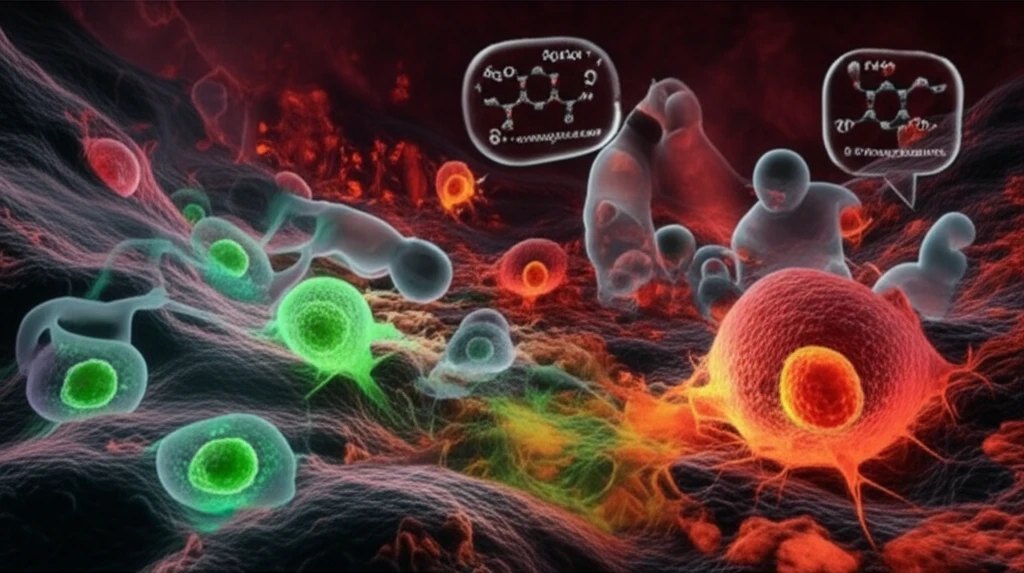
The Enemy Within: How Cancer Hijacks Your Immune System

"Unveiling R-2-Hydroxyglutarate: The Oncometabolite Silently Crippling Immune Defenses Against Tumors"
For years, cancer research focused primarily on genetic mutations within cancer cells themselves. However, a groundbreaking shift has occurred, revealing that cancer's ability to thrive depends heavily on its interaction with the body's immune system. Tumors don't just grow; they actively manipulate their surroundings, creating an environment that shields them from immune attack.
One of the key players in this manipulation is a molecule called R-2-hydroxyglutarate (R-2-HG). This 'oncometabolite' is produced in large quantities by certain types of cancer cells, particularly in acute myeloid leukemia (AML) and gliomas. But R-2-HG isn't just a waste product; it's a potent weapon in cancer's arsenal, capable of crippling the immune system from the inside.
This article will explore the multifaceted role of R-2-HG in suppressing the immune response, paving the way for new therapeutic strategies. We will delve into how R-2-HG accumulation, driven by specific genetic mutations, impacts various immune cells and the tumor microenvironment. Understanding this process is crucial for developing effective therapies that target both cancer cells and their ability to evade immune detection.
R-2-HG: A Master of Immune Subversion
R-2-HG's immunosuppressive effects are surprisingly diverse, impacting multiple levels of the immune system:
- Disrupting Histone and DNA Demethylation: R-2-HG inhibits key enzymes involved in gene regulation, leading to epigenetic changes that impair T cell function.
- Activating HIF-1α: This protein activation suppresses T cell proliferation and effector functions.
- Inhibiting NFATC1 Signaling: Interfering with this pathway limits T cell proliferative potential and overall effectiveness.
- Causing ATP Shortage: By inhibiting oxidative phosphorylation, R-2-HG reduces the energy available for T cells to function properly.
The Future of Cancer Therapy: Blocking R-2-HG
The discovery of R-2-HG's role in immune suppression has opened new avenues for cancer treatment. Scientists are now exploring strategies to:
Inhibit R-2-HG Production: Drugs that block the production of R-2-HG in cancer cells are already in clinical trials and have shown promising results, particularly in AML. These inhibitors target mutated IDH1 and IDH2 enzymes, preventing them from producing R-2-HG in the first place.
Reversing Immune Suppression: Researchers are also investigating ways to counteract the immunosuppressive effects of R-2-HG, potentially by using immunostimulatory agents or therapies that enhance T cell function. The goal is to unleash the immune system's power to attack cancer cells, overcoming the barriers erected by R-2-HG. Combining IDH1/2 inhibitors with immunotherapeutic agents represents a promising strategy for improving outcomes in patients with AML and glioma, offering a dual-pronged attack that targets both the cancer cells and their ability to evade immune destruction.