
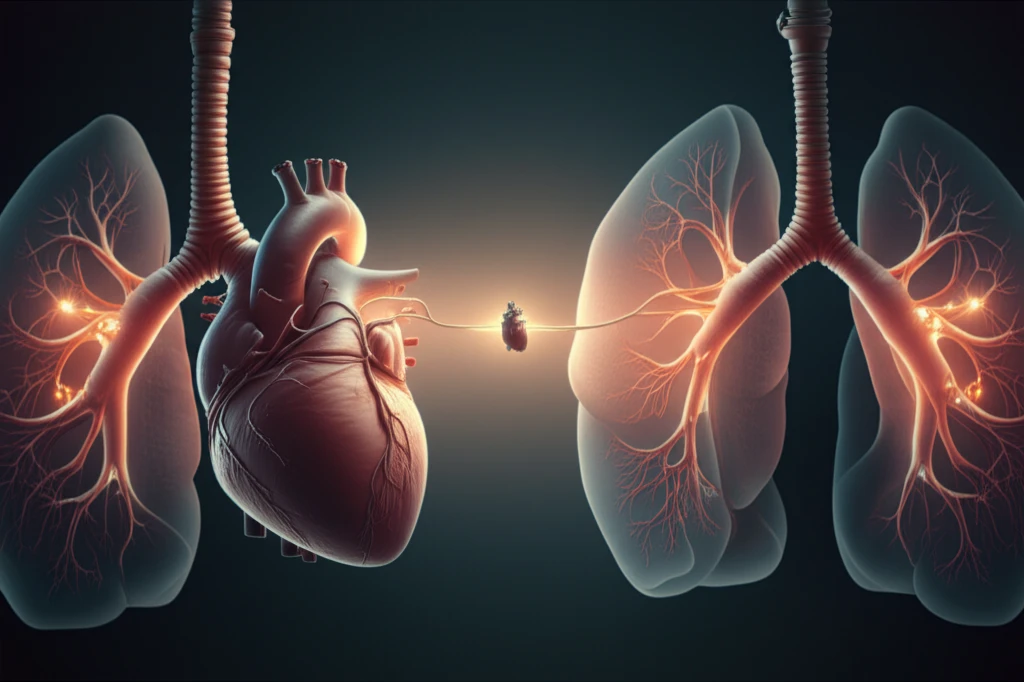
Illustration of a glowing vessel between a heart and lungs.

The Ductus Arteriosus: How This Tiny Vessel Impacts Lifelong Health

"Understanding the crucial role of the ductus arteriosus, its potential complications, and innovative research paving the way for better treatments."


The ductus arteriosus (DA) is a small, but essential blood vessel connecting the pulmonary artery to the aorta in a fetus. This connection allows blood to bypass the developing lungs, which aren't yet being used for breathing. Instead, the fetus receives oxygen and nutrients from the placenta through the umbilical cord.

After birth, the DA is supposed to close, usually within the first few hours or days. Once a newborn starts breathing, the lungs take over the job of oxygenating the blood, and the DA is no longer needed. When the DA closes properly, blood flows through the heart and lungs as it should.

However, in some cases, the DA doesn't close as expected. This condition is called patent ductus arteriosus (PDA), and it can lead to a range of health problems, especially in premature infants. Understanding the DA, why it sometimes stays open, and what can be done about it is crucial for ensuring the best possible outcomes for newborns.

Why Does the Ductus Arteriosus Need to Close?

Illustration of a glowing vessel between a heart and lungs.

During fetal development, the DA allows the majority of blood to bypass the lungs because they are not yet functional for oxygen exchange. The placenta provides the fetus with oxygenated blood, making the lungs temporarily unnecessary for this purpose. The DA acts as a strategic shunt, ensuring that the developing organs receive sufficient blood flow without overloading the immature pulmonary system.

Postnatal closure of the DA is a critical transition that establishes normal circulatory function in newborns. As the baby takes its first breaths, the lungs begin to function, and the circulatory system must adapt to pulmonary blood flow. Closure of the DA prevents blood from bypassing the lungs, ensuring that all blood is oxygenated before being circulated throughout the body. This process is vital for efficient oxygen delivery and overall cardiovascular health.

  • Efficient Oxygen Delivery: Postnatal closure ensures that all blood is oxygenated via the lungs, preventing the mixing of oxygenated and deoxygenated blood.
  • Pulmonary Circulation: Facilitates the shift to pulmonary circulation, essential for independent respiratory function.
  • Cardiovascular Health: Prevents potential complications associated with blood bypassing the lungs, ensuring proper cardiovascular function.
Failure of the DA to close, resulting in patent ductus arteriosus (PDA), can lead to significant health issues. PDA can cause pulmonary hypertension, heart failure, and increased susceptibility to respiratory infections. Premature infants are particularly vulnerable to these complications, as their DA may not close spontaneously. Therefore, timely diagnosis and treatment of PDA are essential to prevent long-term health problems.

Looking Ahead: Promising Research Directions

Ongoing research continues to shed light on the intricate mechanisms governing DA closure and the factors contributing to PDA. By understanding these mechanisms, researchers aim to develop more effective and targeted treatments to improve outcomes for newborns and ensure lifelong cardiovascular health. Future therapies may focus on promoting natural DA closure, minimizing the need for invasive interventions and reducing the risk of long-term complications.

About this Article -

This article was crafted using a human-AI hybrid and collaborative approach. AI assisted our team with initial drafting, research insights, identifying key questions, and image generation. Our human editors guided topic selection, defined the angle, structured the content, ensured factual accuracy and relevance, refined the tone, and conducted thorough editing to deliver helpful, high-quality information.See our About page for more information.

This article is based on research published under:

DOI-LINK: 10.1540/jsmr.46.77, Alternate LINK

Title: Regulation Of Vascular Tone And Remodeling Of The Ductus Arteriosus

Subject: General Medicine

Journal: Journal of Smooth Muscle Research

Publisher: Japan Society of Smooth Muscle Research

Authors: Utako Yokoyama, Susumu Minamisawa, Yoshihiro Ishikawa

Published: 2010-01-01

Everything You Need To Know

1

What is the purpose of the Ductus Arteriosus before a baby is born?

Before birth, the Ductus Arteriosus (DA) serves as a crucial connection between the pulmonary artery and the aorta in the fetus. Its primary function is to allow blood to bypass the developing lungs, as the fetus receives oxygen and nutrients from the placenta via the umbilical cord. This strategic shunt ensures that the developing organs receive adequate blood flow without overburdening the immature pulmonary system. The DA remains open during fetal development because the lungs aren't being used for breathing, making it an essential adaptation for prenatal circulation.

2

What happens when the Ductus Arteriosus fails to close after birth, and what are the potential consequences?

When the Ductus Arteriosus (DA) fails to close after birth, a condition known as Patent Ductus Arteriosus (PDA) occurs. This can lead to several health problems, particularly in premature infants. PDA can cause pulmonary hypertension, where increased blood flow to the lungs elevates blood pressure, potentially damaging the pulmonary vessels. It can also lead to heart failure, as the heart must work harder to pump blood. Additionally, individuals with PDA are more susceptible to respiratory infections due to the increased strain on their pulmonary system. Timely diagnosis and treatment are crucial to prevent long-term cardiovascular and respiratory complications associated with PDA.

3

Why is the closure of the Ductus Arteriosus so important for a newborn's health?

The postnatal closure of the Ductus Arteriosus (DA) is critical for establishing normal circulatory function in newborns. As the baby takes its first breaths, the lungs begin to function, necessitating a shift to pulmonary blood flow. Closure of the DA ensures that blood no longer bypasses the lungs, which are now responsible for oxygenating the blood. This process is vital for efficient oxygen delivery throughout the body, preventing the mixing of oxygenated and deoxygenated blood. By facilitating the transition to pulmonary circulation, the closure of the DA supports independent respiratory function and overall cardiovascular health, preventing potential complications associated with blood bypassing the lungs.

4

What does current research suggest about improving outcomes related to the Ductus Arteriosus?

Ongoing research focuses on understanding the mechanisms governing Ductus Arteriosus (DA) closure and the factors that contribute to Patent Ductus Arteriosus (PDA). Researchers aim to develop more effective and targeted treatments to improve outcomes for newborns and ensure lifelong cardiovascular health. Future therapies may focus on promoting natural DA closure, potentially minimizing the need for invasive interventions and reducing the risk of long-term complications. This includes exploring pharmacological approaches, genetic factors influencing DA closure, and strategies to support optimal cardiovascular function in premature infants.

5

What are the main benefits of the Ductus Arteriosus closing properly after birth?

When the Ductus Arteriosus (DA) closes properly after birth, several key benefits contribute to a newborn's health. Firstly, it ensures efficient oxygen delivery by directing all blood through the lungs for oxygenation, preventing the mixing of oxygenated and deoxygenated blood. Secondly, it facilitates pulmonary circulation, which is essential for independent respiratory function as the lungs take over the role of oxygen exchange. Lastly, proper closure supports overall cardiovascular health by preventing potential complications associated with blood bypassing the lungs, such as pulmonary hypertension and heart failure. These factors collectively ensure proper cardiovascular function and efficient oxygen delivery, promoting healthy development.

Newsletter Subscribe

Subscribe to get the latest articles and insights directly in your inbox.