
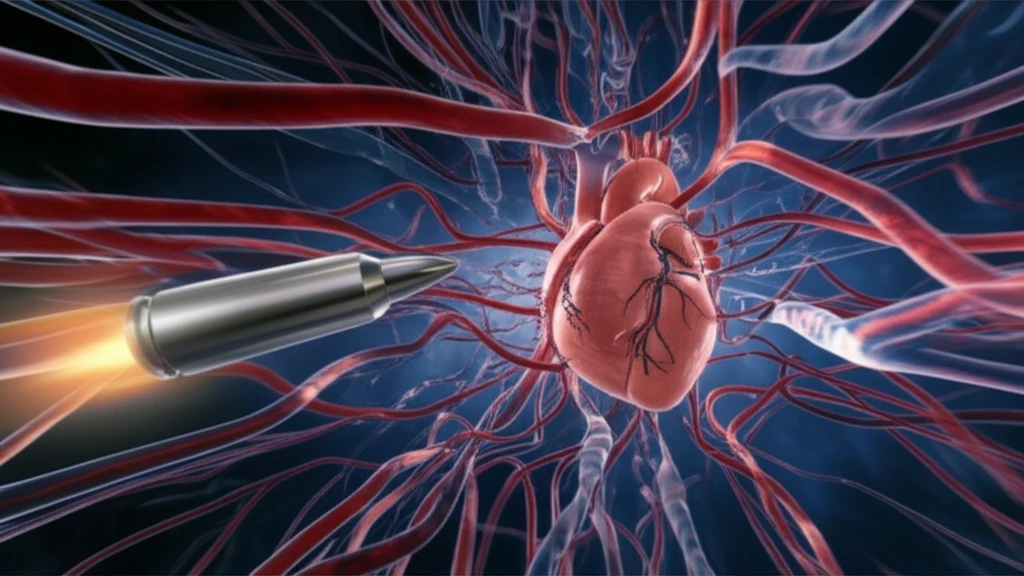
Illustration of a bullet embolus traveling through veins.

The Curious Case of the Wandering Bullet: What Happens When a Projectile Takes a Detour?

"A medical mystery unfolds as a bullet embarks on an unexpected journey through the circulatory system, highlighting the importance of thorough trauma assessments."


Imagine a bullet, not just piercing through tissue, but embarking on a journey through the body's intricate network of blood vessels. This rare phenomenon, known as venous embolization, occurs when a foreign object, like a bullet, enters the vasculature and travels to distant sites. While it's an uncommon complication of penetrating trauma, its potential consequences demand a heightened awareness among medical professionals.

The incidence of bullet migration into the vasculature is estimated to be around 0.3%. Although seemingly low, the morbidity associated with such emboli can be as high as 25%. This means that a significant number of patients who experience this complication face serious health risks. The decision to remove these errant bullets remains a subject of debate within the medical community.

This article delves into a fascinating case report that illustrates the complexities of venous embolization. By examining this real-life scenario, we'll explore the diagnostic challenges, treatment considerations, and the importance of meticulous follow-up in patients with penetrating trauma.

From Wound to Wonder: Tracing the Bullet's Path

Illustration of a bullet embolus traveling through veins.

A 20-year-old male arrived at the Emergency Department with multiple gunshot wounds. Initial assessments revealed entry points in his extremities, but no foreign bodies were immediately apparent in the lower limbs. However, a chest radiograph, prompted by the proximity of the wounds to the thoracic cavity, unveiled a surprise: two metallic foreign bodies. One near the left humeral head, and another in the central mid-thoracic region.

Further investigation revealed the bullet's unexpected location within the right ventricle of the heart. This discovery prompted a series of evaluations and consultations to determine the best course of action. This case highlights how crucial it is to combine thorough physical exams with advanced imaging techniques to accurately map the bullet's trajectory.

  • Initial Assessment: Multiple gunshot wounds, prompting thorough examination.
  • Unexpected Findings: Chest radiograph reveals foreign bodies in the thorax.
  • Diagnostic Imaging: CT scan pinpoints bullet location in the right ventricle.
Despite its unusual location, the patient remained stable and asymptomatic. After careful consideration, the medical team decided to forego immediate retrieval. The patient was discharged, only to return months later with an unrelated complaint. Follow-up imaging revealed the bullet had migrated further, settling in the right hepatic vein. This case vividly demonstrates the unpredictable nature of bullet embolization and the importance of long-term monitoring.

Lessons Learned: Navigating the Complexities of Bullet Embolization

This case underscores the challenges and controversies surrounding the management of bullet emboli. While recommendations exist for retrieval versus conservative management, the decision must be individualized based on the patient's symptoms, risk factors, and the bullet's location.

The role of interventional radiology is also evolving. Their expertise in endovascular retrieval techniques offers a less invasive alternative to traditional surgery. As this case demonstrates, the ability to adapt to a moving target is crucial in managing bullet emboli.

Ultimately, this case serves as a reminder of the importance of a meticulous approach to trauma care. From the initial physical exam to long-term follow-up, vigilance and a broad differential are essential in ensuring the best possible outcome for patients with retained foreign bodies.

About this Article -

This article was crafted using a human-AI hybrid and collaborative approach. AI assisted our team with initial drafting, research insights, identifying key questions, and image generation. Our human editors guided topic selection, defined the angle, structured the content, ensured factual accuracy and relevance, refined the tone, and conducted thorough editing to deliver helpful, high-quality information.See our About page for more information.

Everything You Need To Know

1

What exactly is venous embolization in the context of a bullet wound, and why is it important?

Venous embolization, in the context of gunshot wounds, refers to the rare phenomenon where a bullet enters the blood vessels and travels to different parts of the body. Instead of remaining in the initial wound location, the bullet migrates through the circulatory system, potentially leading to complications far from the entry point. This is significant because it requires medical professionals to consider the possibility of bullet migration even when initial assessments don't reveal obvious issues.

2

How common is bullet migration in blood vessels, and what are the potential risks for those affected?

The incidence of bullet migration into the vasculature is estimated to be around 0.3%, but the associated morbidity can be as high as 25%. This means that while it's not a common occurrence, a significant number of patients who experience venous embolization from a bullet face serious health risks. Factors such as the bullet's size, shape, location, and the patient's overall health can influence the severity of complications. The decision to surgically remove the bullet or manage it conservatively is complex and depends on individual circumstances.

3

How was the bullet's unexpected journey discovered and what does this case tell us about diagnosis?

In the case described, initial assessments of the patient's gunshot wounds did not immediately reveal the presence of foreign bodies in the lower limbs. However, a chest radiograph revealed a bullet in the right ventricle of the heart. The bullet then migrated further, settling in the right hepatic vein. This migration was discovered during a follow-up imaging session prompted by an unrelated complaint. This highlights the importance of using advanced imaging techniques, even when initial examinations seem clear, and underscores the unpredictable nature of venous embolization.

4

When a bullet travels through the veins, what factors determine if it should be removed, and what are the alternatives?

The decision to remove a bullet that has caused venous embolization involves balancing potential risks and benefits. Factors that influence this decision include the patient's symptoms, the bullet's location, and the potential for further migration or complications. In some cases, like the one described, conservative management with monitoring might be chosen initially, especially if the patient is stable. However, long-term monitoring is crucial because, as demonstrated in the case, the bullet can migrate further and pose new risks. The choice between retrieval and conservative management must be individualized.

5

If a bullet isn't immediately removed after venous embolization, what are the possible long-term effects and monitoring requirements?

The long-term implications of venous embolization from a bullet can vary widely. The bullet's presence can lead to thrombosis (blood clot formation), infection, or damage to vital organs as it migrates. In the case described, the bullet's migration to the right hepatic vein could potentially lead to liver damage or impaired function over time. Regular follow-up imaging and clinical assessments are essential to monitor for these potential complications and to determine if and when intervention becomes necessary. The unpredictable nature of bullet migration necessitates vigilance and proactive management.

Newsletter Subscribe

Subscribe to get the latest articles and insights directly in your inbox.