
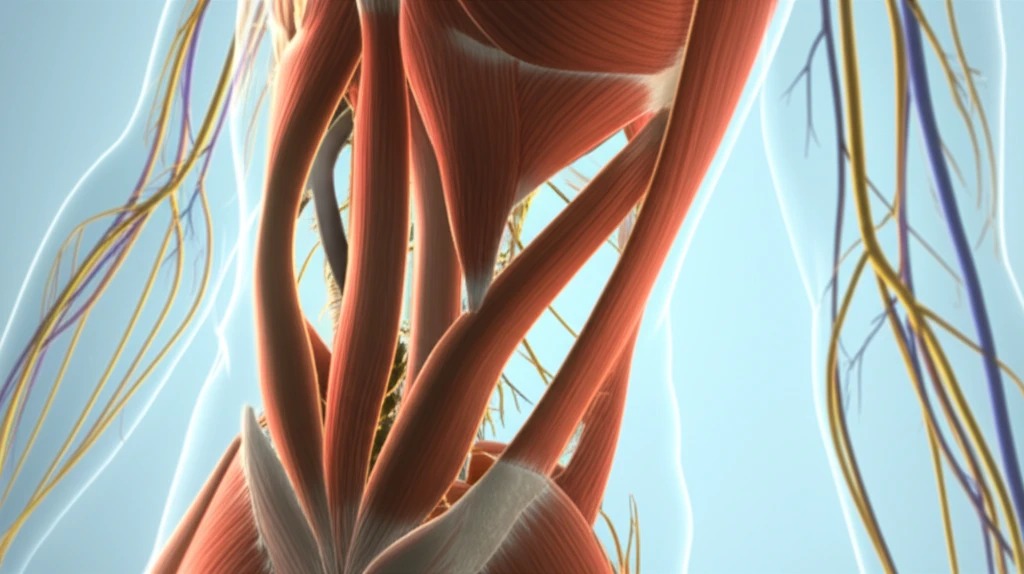
The Curious Case of the Duplicated Axillary Arch: What It Means for Your Body

"Unveiling a Rare Muscular Variation and Its Potential Impact on Shoulder Health and Surgical Outcomes"
The axillary region, nestled between the neck and upper limb, is a bustling hub of nerves, blood vessels, and lymph nodes. Its complex anatomy means that variations in muscle structure can sometimes occur, potentially leading to complications.
One such variation is the axillary arch muscle, also known as Langer's muscle. This muscular slip, arising from the latissimus dorsi, can sometimes obstruct vessels and nerves, contributing to conditions like thoracic outlet syndrome or shoulder instability. It can even impact surgical interventions, such as breast surgery, and lymphatic drainage.
Recent research has uncovered an even rarer occurrence: a duplicated axillary arch muscle. This article delves into this unique anatomical finding, exploring its potential implications for your health and well-being.
Duplicated Axillary Arch: A Closer Look at This Rare Variation
A recent anatomical study detailed the discovery of a duplicated axillary arch muscle during a routine dissection. In a 33-year-old male cadaver, researchers identified two distinct muscular slips originating from the same inferolateral border of the latissimus dorsi muscle on the right side.
- Long Slip: Approximately 13.5 cm long, inserting into the aponeurosis of the pectoralis major (the large chest muscle).
- Short Slip: About 9.1 cm long, inserting into the deep fascia covering the pectoralis minor (a smaller chest muscle located beneath the pectoralis major).
What Does This Mean for You? Implications and Considerations
While this duplicated axillary arch is a rare finding, understanding its potential implications is crucial. The presence of such muscular variations can contribute to:
<ul><li><b>Nerve Compression:</b> Axillary arch muscles may compress nearby nerves like the axillary vein, musculocutaneous, median, and ulnar nerves, potentially causing pain, numbness, or weakness in the arm and hand.</li><li><b>Limited Shoulder Movement:</b> The presence of an axillary arch can restrict shoulder elevation and hyperabduction, impacting range of motion.</li><li><b>Surgical Complications:</b> Surgeons need to be aware of this variation before performing procedures in the axillary region, such as axillary lymphadenectomy (lymph node removal) for breast cancer treatment. The muscle can obstruct the surgical field or be damaged during the procedure.</li></ul>
Although this specific study couldn't assess functional disorders due to the use of a cadaver, it highlights the importance of anatomical awareness. If you experience unexplained shoulder pain, limited movement, or neurological symptoms in your arm, it's essential to consult with a healthcare professional. Knowledge of anatomical variations like the duplicated axillary arch can aid in accurate diagnosis and treatment.