
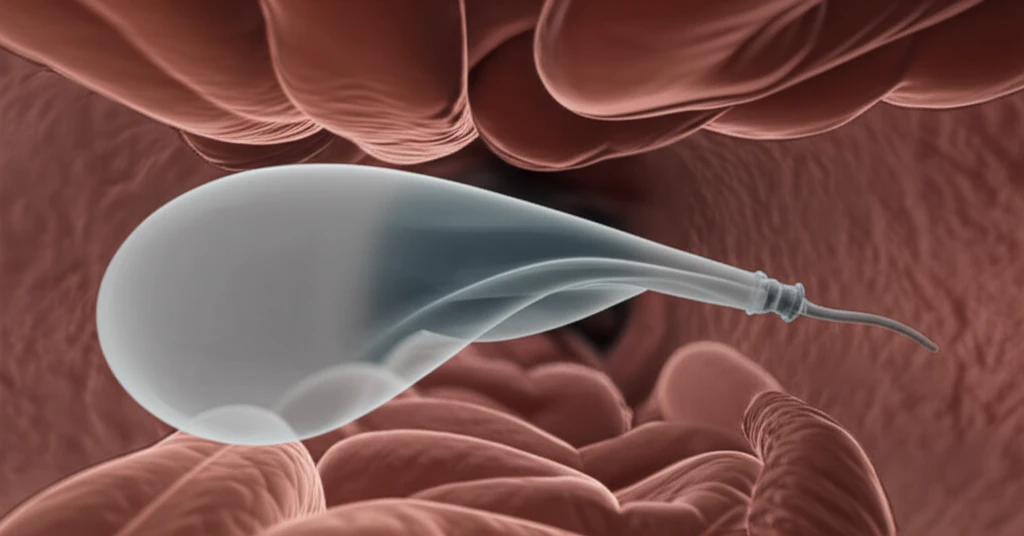
Intragastric balloon migration leading to bowel obstruction.

The Balloon That Moved: A Cautionary Tale of Intragastric Migration

"When a weight-loss aid becomes a surgical surprise: Understanding the risks and management of migrating intragastric balloons."


Intragastric balloons (IGBs) have become increasingly popular for managing obesity over the last two decades, even if their long-term clinical results aren't always clear. Some studies have shown that they work better than just dieting alone. Over time, three main types of IGBs have been developed. The first one, the Bioenteric intragastric balloon (BIB), is filled with liquid. Later came the Heliosphere Bag and Endogast, which are filled with air. The Endogast requires both endoscopy and surgery to insert.

Recently, IGBs have even been suggested as an alternative to bypass surgery for treating obesity. However, like any medical procedure, IGBs come with potential problems. Early issues can include nausea and stomach pain, which sometimes lead to the balloon being removed early in about 4.2% of cases. Intermediate and late complications can include acid reflux, stomach ulcers, stomach perforation, and, in rare cases, even death.

One of the rarer, but serious, late complications is intestinal obstruction caused by the balloon migrating from its original position. This happens in about 0.8% of cases. This article aims to discuss a case of small bowel obstruction in a middle-aged, overweight woman after an IGB was implanted. This report follows the SCARE guidelines for case studies.

The Case: When a Weight Loss Aid Becomes a Surgical Emergency

Intragastric balloon migration leading to bowel obstruction.

A 47-year-old obese woman (BMI of 37 kg/m²) arrived at the emergency room complaining of cramp-like abdominal pain, nausea, and vomiting that had been going on for two days. The pain was mainly in the center of her abdomen, and while vomiting seemed to bring some relief, painkillers didn't help much. She mentioned that she had an IGB (Spatz3 Adjustable Balloon system, USA) placed endoscopically nine months prior. Before this issue, she had lost 15 kg with the balloon, reducing her BMI from 41 kg/m².

Her medical history was unremarkable. During the physical exam, she was in mild distress. Her abdomen was soft, not distended, but tender in the upper region. Bowel sounds were present. Her blood pressure was 130/80 mmHg, pulse rate 78 bpm, temperature 37.3 C, Hemoglobin 13 g/dl, and WBC 7 × 10⁹/L. A plain abdominal radiograph revealed gas in the stomach and duodenum, but no air-fluid levels. An esophago-gastro-duodenoscopy showed an empty stomach with the balloon having migrated from the stomach.

  • Diagnosis: Based on the patient's history and examination, the doctors suspected small bowel obstruction due to IGB migration.
  • Intervention: After two days of hydration and electrolyte correction, the patient underwent laparotomy. The surgeon found that the stomach and proximal jejunum were dilated. The balloon was located in the proximal jejunum, about 40 cm from the duodenojejunal junction, without signs of bowel damage.
  • Procedure: A small incision (3 cm) was made on the antimesenteric side of the jejunum to remove the balloon. The enterotomy was then closed in two layers.
The patient recovered well and was discharged after two days in the hospital. She remained healthy at a two-month follow-up.

Lessons Learned: Staying Vigilant After IGB Insertion

This case highlights the importance of awareness of potential complications after IGB insertion. While IGBs are a valuable tool for weight loss, it's crucial to remember that complications like intestinal obstruction can occur, even months after the initial placement.

Early detection of IGB rupture and migration can sometimes be managed with endoscopy. However, in cases where intestinal obstruction occurs, laparotomy and balloon extraction are often necessary.

Close monitoring and patient education are vital to ensure timely intervention and prevent serious consequences. If you have an IGB, be aware of the symptoms of bowel obstruction, such as abdominal pain, nausea, and vomiting, and seek medical attention promptly if they occur.

About this Article -

This article was crafted using a human-AI hybrid and collaborative approach. AI assisted our team with initial drafting, research insights, identifying key questions, and image generation. Our human editors guided topic selection, defined the angle, structured the content, ensured factual accuracy and relevance, refined the tone, and conducted thorough editing to deliver helpful, high-quality information.See our About page for more information.

This article is based on research published under:

DOI-LINK: 10.1016/j.amsu.2018.09.031, Alternate LINK

Title: Small Bowel Obstruction From Migrated Intragastric Balloon

Subject: General Medicine

Journal: Annals of Medicine and Surgery

Publisher: Elsevier BV

Authors: Ayad Ahmad Mohammed, Sardar Hasan Arif, Abdulwahid M. Salih, Fahmi Hussein Kakamad

Published: 2018-11-01

Everything You Need To Know

1

What is an Intragastric balloon (IGB)?

An Intragastric balloon (IGB) is a medical device used to aid in weight loss. It's a balloon inserted into the stomach, which then gets filled, taking up space and making the patient feel fuller, potentially leading to reduced food intake. In this instance, the Spatz3 Adjustable Balloon system was used. There are different types, including those filled with liquid (like the Bioenteric intragastric balloon (BIB)) and those filled with air (like the Heliosphere Bag and Endogast).

2

Why are intragastric balloons considered important?

Intragastric balloons are considered significant in weight management because they can facilitate weight loss for obese individuals, sometimes more effectively than diet alone. The woman in the described case experienced a reduction in her BMI. However, it's important to recognize that they're not without risks. The article focuses on a rare but serious complication: intestinal obstruction caused by the balloon migrating from the stomach. This highlights the need for careful monitoring and patient education.

3

What is the significance of intestinal obstruction in the context of IGBs?

Intestinal obstruction due to IGB migration is a serious late complication. In the described case, the woman experienced abdominal pain, nausea, and vomiting. The IGB, initially placed in the stomach, had moved into the small intestine (specifically the jejunum), causing a blockage. This required surgical intervention (laparotomy) to remove the balloon and resolve the obstruction. This emphasizes the importance of regular follow-up and awareness of potential complications among both patients and medical professionals.

4

What happened to the woman with the migrated IGB in the case study?

In the presented case, a 47-year-old obese woman experienced an intestinal obstruction due to the migration of her Spatz3 Adjustable Balloon system. After experiencing symptoms like abdominal pain, nausea, and vomiting, she was diagnosed with a small bowel obstruction. This led to a laparotomy, during which the surgeon removed the balloon from the jejunum. This emphasizes the need for awareness of potential complications after IGB insertion. While IGBs are a valuable tool for weight loss, it's crucial to remember that complications like intestinal obstruction can occur, even months after the initial placement.

5

What are the potential risks associated with using Intragastric balloons?

While IGBs offer a non-surgical option for weight loss, they aren't without risks. Early complications include nausea and stomach pain. Intermediate and late complications can include acid reflux, stomach ulcers, stomach perforation, and, in rare cases, even death. The most concerning is intestinal obstruction due to balloon migration, which occurred in the presented case. This necessitates close patient monitoring, a thorough understanding of potential complications by healthcare providers, and patient education on recognizing and reporting any unusual symptoms.

Newsletter Subscribe

Subscribe to get the latest articles and insights directly in your inbox.