
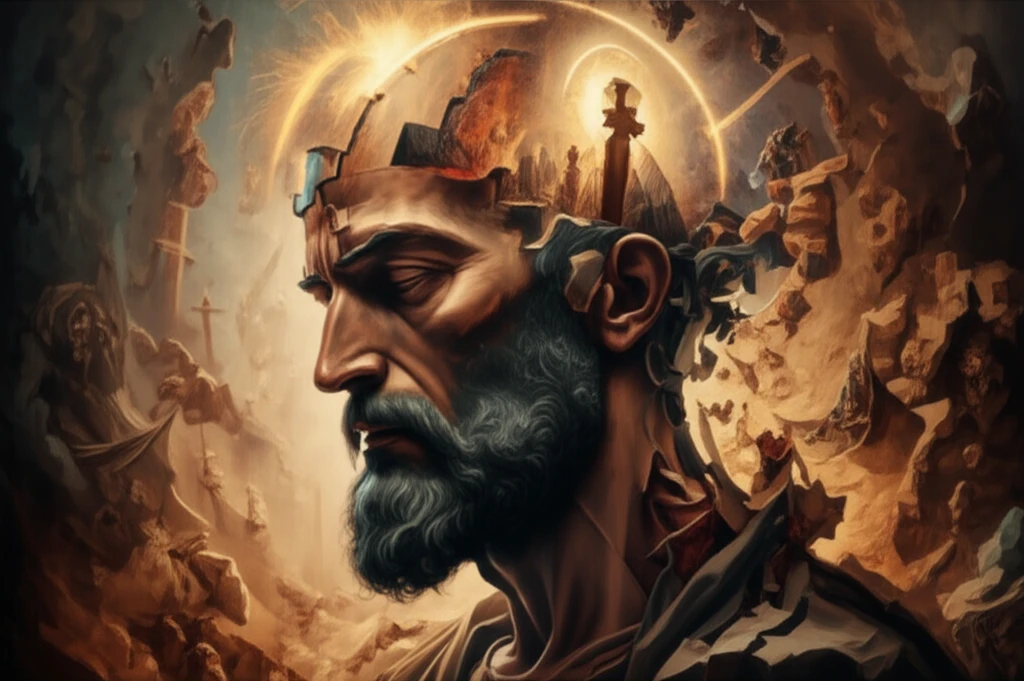
Surreal illustration of Augustine torn between Christian and Manichaean beliefs.

The Augustine Controversy: Was He Secretly a Manichaean?

"Unpacking a historical debate about Augustine's views on sexuality, sin, and their surprising echoes of Manichaeism."


Augustine of Hippo, a towering figure in Christian theology, has been the subject of intense scrutiny and debate for centuries. While celebrated for his profound insights into grace, sin, and the human condition, Augustine also faced accusations of harboring Manichaean beliefs—a dualistic religion that posited a constant battle between good and evil. These accusations, most notably leveled by Julian of Eclanum, centered on Augustine's views regarding sexual concupiscence, original sin, and their transmission.

At the core of this controversy lies the question: Did Augustine's past as a Manichaean follower subtly influence his later Christian doctrines? This article explores the complexities of Augustine's teachings, comparing them with key tenets of Manichaeism and examining the historical context of these accusations. It explores whether Julian's claim of Augustine’s belief about Manichaeism is correct.

By unpacking the nuances of Augustine's thought and the historical threads connecting him to Manichaeism, we can gain a deeper appreciation for the intellectual battles that shaped early Christian theology and the enduring relevance of these debates for understanding human nature.

The Core of the Controversy: Augustine’s Views on Sexuality and Sin

Surreal illustration of Augustine torn between Christian and Manichaean beliefs.

Augustine grappled extensively with the nature of sexual desire (concupiscence) and its role in the transmission of original sin. Though he affirmed the goodness of marriage, his writings often emphasized the disordered nature of sexual desire after the Fall. He described it as a 'random motion,' lacking the control that humans once possessed in paradise.

This emphasis on the unruly nature of concupiscence forms a key point of contention. Critics, like Julian of Eclanum, pointed out the similarities between Augustine's view and Manichaean beliefs, which viewed the material world, including the human body and its desires, as inherently evil. This negative view of the body led them to abhor the act of procreation.

  • Random Motion (Motus Inordinatus): Augustine's stress on 'random motion' as typical of sexual concupiscence aligns with Manichaean views on the subject.
  • Original Sin: Augustine believed that sinful flesh transmits guilt, an idea challenged for echoing Manichaean views.
  • Virgin Birth: Augustine drew a contrast between the virgin birth of Christ 'without libido' and the corruption of human conception, seen as a consequence of the serpent's deception.
While Augustine invoked predecessors in the Christian tradition to defend himself, the parallels between his views and certain aspects of Manichaeism remained a persistent point of criticism. Did Augustine successfully distance himself from his Manichaean past, or did aspects of that worldview continue to shape his understanding of sexuality and sin?

The Enduring Significance of the Debate

Whether Augustine fully escaped the influence of Manichaeism remains a complex and open question. However, the debate sparked by Julian of Eclanum highlights fundamental tensions within Christian theology regarding human nature, free will, and the relationship between the body and the soul.

The historical context of Jewish-Christian influences in the development of Manichaeism provides another layer to the debate. Mani grew up in a Jewish-Christian Baptist environment and was subjected to Jewish-Christian influences since childhood. Early Christianity in Roman Africa has been a topic of discovery and has provided new light on the issue.

By examining this historical debate, we can gain a richer understanding of the diverse intellectual currents that shaped Christian thought and the ongoing struggle to reconcile faith with reason and experience.

About this Article -

This article was crafted using a human-AI hybrid and collaborative approach. AI assisted our team with initial drafting, research insights, identifying key questions, and image generation. Our human editors guided topic selection, defined the angle, structured the content, ensured factual accuracy and relevance, refined the tone, and conducted thorough editing to deliver helpful, high-quality information.See our About page for more information.

Everything You Need To Know

1

What specific aspects of Augustine's teachings led to accusations of Manichaean influence?

Augustine of Hippo's views on sexuality and sin, specifically sexual concupiscence and original sin, became a point of contention. Critics like Julian of Eclanum, drew parallels between Augustine's emphasis on the 'disordered nature' of sexual desire after the Fall and Manichaean beliefs. Manichaeism viewed the material world as inherently evil and they abhorred procreation.

2

What does Augustine mean when he describes sexual desire as 'random motion'?

Augustine described concupiscence as 'random motion' to emphasize its unruly nature after the Fall. This concept aligns with Manichaean views of the human body and its desires as inherently disordered. Augustine contrasted the virgin birth of Christ 'without libido' with human conception which he viewed as tainted by the serpent's deception.

3

What's the main argument suggesting Augustine's beliefs about 'sinful flesh' are rooted in Manichaeism?

The core argument against Augustine is that his focus on the transmission of guilt through 'sinful flesh' echoes Manichaean views of the material world as inherently evil. Julian of Eclanum suggested that Augustine did not sufficiently distance himself from Manichaean beliefs regarding the corruption of the body and procreation.

4

What are the broader implications if Augustine's views on sexuality and sin were shaped by Manichaeism?

The debate sparked by Julian of Eclanum highlights the tension within Christian theology regarding human nature, free will, and the relationship between the body and the soul. If Augustine's views were indeed influenced by Manichaeism, it raises fundamental questions about how we understand sin, sexuality, and the extent to which our physical existence is inherently flawed.

5

How did Augustine defend his beliefs against claims that they mirrored Manichaean ideas on sexuality and sin?

Augustine invoked Christian predecessors to defend his views on sexuality and sin, but the persistent parallels between his teachings and certain aspects of Manichaeism fueled ongoing criticism. Key points included 'random motion', original sin, and the virgin birth of Christ. The question remains whether Augustine successfully reconciled his Christian beliefs with his Manichaean past, or if the latter continued to shape his understanding of these concepts.

Newsletter Subscribe

Subscribe to get the latest articles and insights directly in your inbox.