
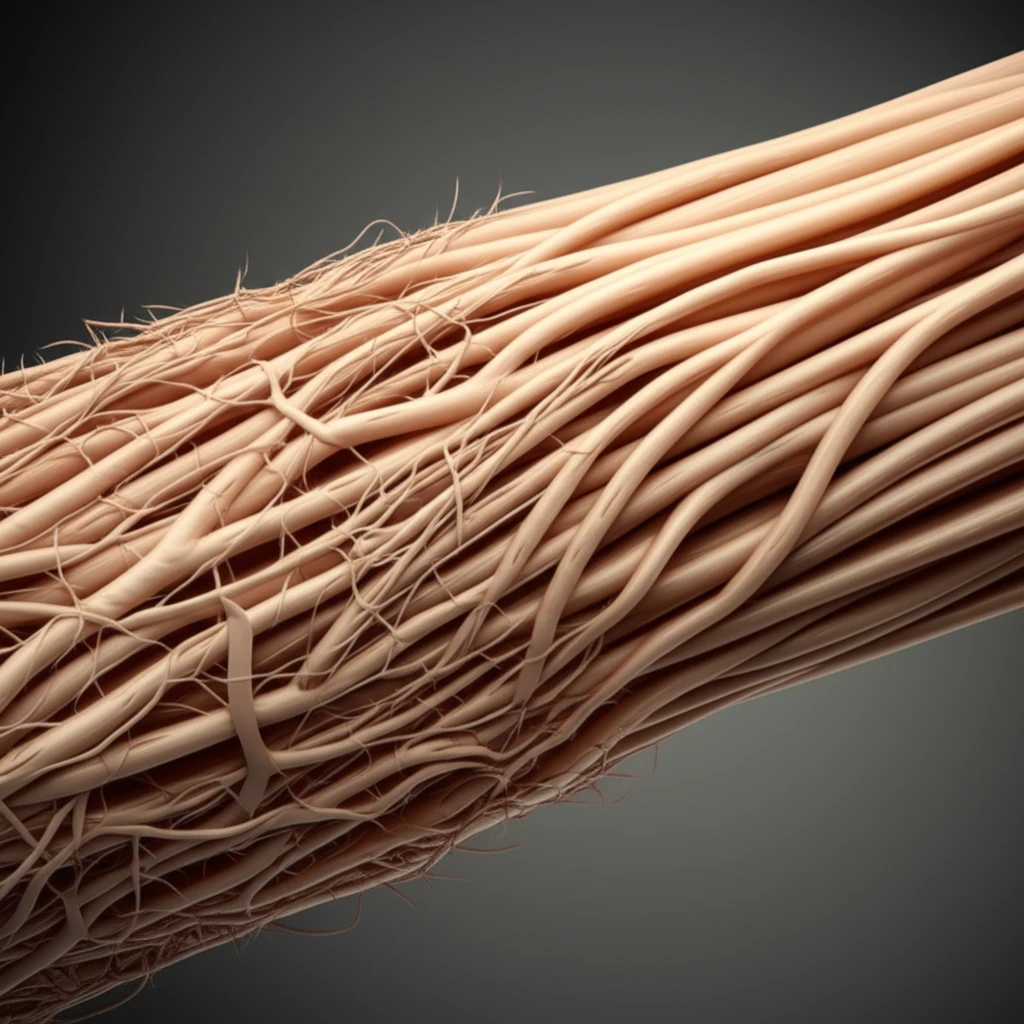
Illustration comparing healthy tendon structure with tendinosis-affected tendon.

Tendinopathy vs. Tendinitis: Understanding the Difference for Effective Healing

"Are you mistreating your tendon pain? Learn why distinguishing between tendinopathy and tendinitis is crucial for proper recovery and long-term tendon health."


If you're experiencing pain, burning sensations, decreased strength and flexibility, and discomfort during everyday activities, you might assume it's tendinitis. However, research indicates that tendinosis is often the real culprit behind these symptoms. Knowing the difference is vital for effective treatment.

Tendinitis involves inflammation of the tendon, usually resulting from micro-tears caused by sudden, excessive force on the musculotendinous unit. While still a common diagnosis, many cases once thought to be tendinitis are now recognized as tendinosis.

Tendinosis, on the other hand, is a degenerative condition affecting the tendon's collagen due to chronic overuse without adequate healing time. Even small, repetitive movements can lead to tendinosis. The widespread confusion between these conditions often leads to misdiagnosis and inappropriate treatment strategies.

Tendinosis vs. Tendinitis: What's Really Happening in Your Tendons?

Illustration comparing healthy tendon structure with tendinosis-affected tendon.

A closer look at tendinosis reveals several key changes at the microscopic level. These include an increase in immature type III collagen fibers (instead of the mature type I found in healthy tendons), a loss of collagen fiber continuity that hinders load-bearing, an increase in ground substance (the material between cells), and disorganized vascularization. These abnormal vascular structures don't function as blood vessels and aren't associated with improved healing. Visually, the tendon shifts from a reflective, white, glistening surface to a dull, slightly brown, and soft appearance, indicating mucoid degeneration.

These changes weaken the tendon and increase its bulk, contributing to a cycle of injury and predisposing the area to secondary conditions like tendinitis and nerve impingement. For example, tendinosis in the forearm and wrist can contribute to carpal tunnel syndrome by thickening the tendons and compressing the median nerve.

To summarize the differences, here’s a quick comparison:
  • Tendinitis: Inflammation due to acute injury and micro-tears.
  • Tendinosis: Degeneration of collagen due to chronic overuse.
  • Tendinitis: Primarily involves inflammatory processes.
  • Tendinosis: Characterized by collagen disarray, increased ground substance, and abnormal vascularization.
  • Tendinitis: Healing time typically ranges from days to weeks.
  • Tendinosis: Healing can take months, especially if chronic.
While it's sometimes assumed that tendinosis starts with tendinitis, this isn't always the case. Healthy tendons are remarkably strong and typically don't tear before the muscle does unless they've already been weakened by degenerative changes. Histopathological analyses often show that torn fibers, scar tissue, and calcification are not always present in tendinosis, and inflammatory cells are rarely found, suggesting that tendinitis can occur secondary to tendinosis. Excessive or repetitive tensile forces are more likely to trigger the degenerative changes associated with tendinosis.

Treating Tendinosis: A Holistic Approach

Addressing tendinosis requires a comprehensive strategy aimed at breaking the cycle of injury, reducing ground substance and abnormal vascularization, and optimizing collagen production. While cellular damage may not be fully reversible, these treatments can significantly strengthen the tendon, reduce pain, improve range of motion, and restore normal function.

About this Article -

This article was crafted using a human-AI hybrid and collaborative approach. AI assisted our team with initial drafting, research insights, identifying key questions, and image generation. Our human editors guided topic selection, defined the angle, structured the content, ensured factual accuracy and relevance, refined the tone, and conducted thorough editing to deliver helpful, high-quality information.See our About page for more information.

Everything You Need To Know

1

What is the fundamental difference between Tendinitis and Tendinosis?

The core distinction lies in their nature: Tendinitis is characterized by inflammation of the tendon, usually stemming from micro-tears due to acute injury or sudden excessive force. In contrast, Tendinosis is a degenerative condition resulting from chronic overuse without adequate healing time, leading to changes in the tendon's collagen structure.

2

How does Tendinosis affect the tendon at a microscopic level, and what are the implications?

Tendinosis causes several microscopic changes: an increase in immature type III collagen fibers, a loss of collagen fiber continuity, an increase in ground substance, and disorganized vascularization. These changes weaken the tendon, increase its bulk, and predispose the area to secondary conditions like tendinitis and nerve impingement, such as carpal tunnel syndrome.

3

Can Tendinitis develop from Tendinosis, and why or why not?

Yes, Tendinitis can occur secondary to Tendinosis. While it's sometimes thought that tendinosis begins with tendinitis, this isn't always true. Degenerative changes associated with Tendinosis weaken the tendon. Then the weakened tendons are more susceptible to tearing or other acute injuries which in turn cause the inflammation of Tendinitis.

4

What are the typical healing timelines for Tendinitis and Tendinosis, and why are they different?

The healing time for Tendinitis typically ranges from days to weeks because it involves inflammatory processes, which usually resolve relatively quickly with appropriate rest and treatment. Tendinosis, however, can take months to heal, especially if the condition is chronic. This prolonged healing time is due to the degenerative nature of Tendinosis, involving structural changes in the tendon that require a longer time to resolve and heal, and a comprehensive approach to recovery.

5

How does the appearance of a tendon change with Tendinosis, and what does this indicate?

In cases of Tendinosis, the tendon's appearance changes from a reflective, white, and glistening surface to a dull, slightly brown, and soft appearance. This indicates mucoid degeneration. These visual changes reflect the internal structural alterations, such as the loss of normal collagen structure and the presence of abnormal components like increased ground substance and disorganized vascularization.

Newsletter Subscribe

Subscribe to get the latest articles and insights directly in your inbox.