
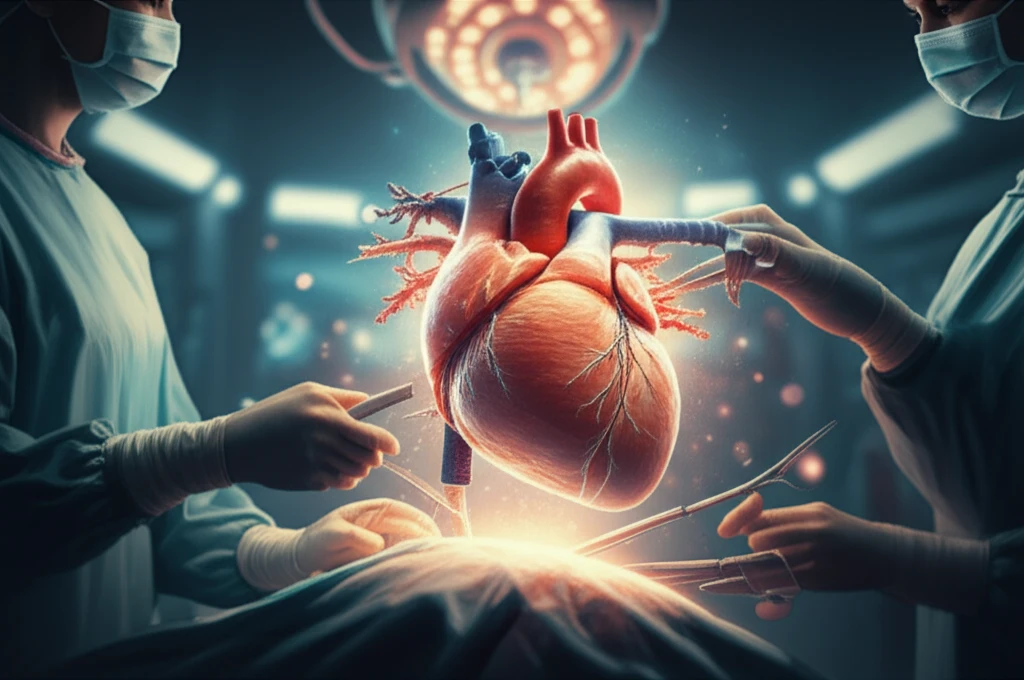
Illustration depicting a heart transplant operation, symbolizing life and hope.

Teenage Hearts, Adult Bodies: New Hope for Heart Transplant Patients

"Groundbreaking research shows that hearts from young donors can offer a second chance at life for adults with heart failure."


Heart failure is a devastating condition that affects millions of adults worldwide. For many, a heart transplant offers the best chance at survival and a return to a normal life. However, the availability of donor hearts has always been a major hurdle. Now, a groundbreaking study offers a beacon of hope: hearts from adolescent donors, traditionally less utilized, are proving to be a viable and safe option for adult recipients.

This shift in perspective could revolutionize the landscape of heart transplantation, potentially expanding the pool of available organs and providing life-saving opportunities to more patients in need. The study, published in the Journal of the American College of Cardiology: Heart Failure (JACC: HF), offers compelling evidence that challenges conventional wisdom and opens exciting new possibilities.

This article delves into the key findings of the study, its implications for the medical community, and the potential benefits for patients. We'll explore how this research could transform the future of heart transplantation and improve the lives of countless individuals struggling with heart failure.

Unlocking the Potential: The Study's Key Findings

Illustration depicting a heart transplant operation, symbolizing life and hope.

The research, a registry-based analysis using the United Network for Organ Sharing (UNOS) database, examined outcomes for adult heart transplant recipients who received hearts from adolescent donors (ages 10-14). The study compared these recipients with those who received hearts from donors in the usual adult age group (18-55 years). The results were both encouraging and surprising.

The study found no significant differences in survival rates at 30 days, 1 year, 3 years, and 5 years between the two groups. This is a critical finding because it shows that the hearts from adolescent donors can function just as effectively in adult bodies as those from older donors. In addition, there was a trend toward a lower incidence of cardiac allograft vasculopathy (CAV) in the adolescent donor heart group. CAV, a major complication of heart transplants, is the gradual thickening of the heart's arteries, which can lead to heart failure. Any factor that reduces the risk of CAV could significantly improve the long-term survival of transplant recipients.

  • Comparable Survival Rates: No significant difference in survival rates up to 5 years post-transplant.
  • Reduced Risk of Complications: A trend toward a lower incidence of cardiac allograft vasculopathy (CAV) in the adolescent donor group.
  • Expanded Donor Pool: Demonstrates the potential to increase the number of available donor hearts.
These findings are particularly significant because they challenge the long-held concerns about using adolescent donor hearts in adults. The success of these hearts, in a similar way to adult donor hearts, signals a major shift in perspective that could transform the field. The implications of this study extend beyond the immediate benefits to patients. By demonstrating the safety and efficacy of adolescent donor hearts, the research could drive a broader change in organ donation practices.

A Brighter Future for Heart Transplant Patients

This study represents a major step forward in the fight against heart failure, opening up a whole new category of hearts for donation. By embracing the potential of adolescent donor hearts, the medical community can improve the lives of countless individuals, offering hope and a second chance at a full and healthy life. With this research in hand, the future of heart transplantation appears to be brighter than ever.

About this Article -

This article was crafted using a human-AI hybrid and collaborative approach. AI assisted our team with initial drafting, research insights, identifying key questions, and image generation. Our human editors guided topic selection, defined the angle, structured the content, ensured factual accuracy and relevance, refined the tone, and conducted thorough editing to deliver helpful, high-quality information.See our About page for more information.

Everything You Need To Know

1

What is the primary challenge in heart transplantation that this research addresses?

The main obstacle in heart transplantation is the limited availability of donor hearts. This research explores the viability of using hearts from adolescent donors, traditionally an underutilized source, to expand the donor pool and provide more life-saving opportunities for adults with heart failure. By demonstrating the safety and efficacy of adolescent donor hearts, the research aims to alleviate the critical shortage of suitable organs for transplantation. It does not discuss other organ availability or combined transplants.

2

What were the key findings of the study regarding the use of adolescent donor hearts in adult recipients?

The study revealed that there were no significant differences in survival rates at 30 days, 1 year, 3 years, and 5 years between adult heart transplant recipients who received hearts from adolescent donors (ages 10-14) and those who received hearts from adult donors (ages 18-55). Additionally, the study indicated a trend toward a lower incidence of cardiac allograft vasculopathy (CAV) in the adolescent donor heart group. These findings suggest that adolescent donor hearts are a viable and safe option for adult recipients, challenging previous concerns. The study does not include the effects of exercise or external variables.

3

What is cardiac allograft vasculopathy (CAV), and why is its potential reduction significant in heart transplantation?

Cardiac allograft vasculopathy, or CAV, is a major complication following heart transplantation characterized by the gradual thickening of the heart's arteries, which can ultimately lead to heart failure. The study indicated a trend toward a lower incidence of CAV in recipients of adolescent donor hearts. Reducing the risk of CAV is significant as it could improve the long-term survival and quality of life for transplant recipients. Although the trend towards reduction is positive the study doesn't explore causes of CAV.

4

How could this research change organ donation practices and benefit individuals with heart failure?

By demonstrating the safety and efficacy of using adolescent donor hearts in adult recipients, this research could drive a significant change in organ donation practices by expanding the pool of available organs. This expansion offers hope to more individuals suffering from heart failure, potentially increasing the number of life-saving heart transplant procedures performed. Accepting adolescent hearts could alleviate the critical shortage of donor organs, improving access to transplantation for those in need. However the study doesn't discuss impacts on the emotional aspects of the donor families.

5

What database was used for the research analysis, and what age groups of heart donors were compared in the study?

The research was a registry-based analysis using the United Network for Organ Sharing (UNOS) database. The study compared outcomes for adult heart transplant recipients who received hearts from adolescent donors, specifically those aged 10-14 years, with recipients who received hearts from adult donors in the 18-55 age group. There were no other databases or information about patient ethnic background analyzed during the study.

Newsletter Subscribe

Subscribe to get the latest articles and insights directly in your inbox.