
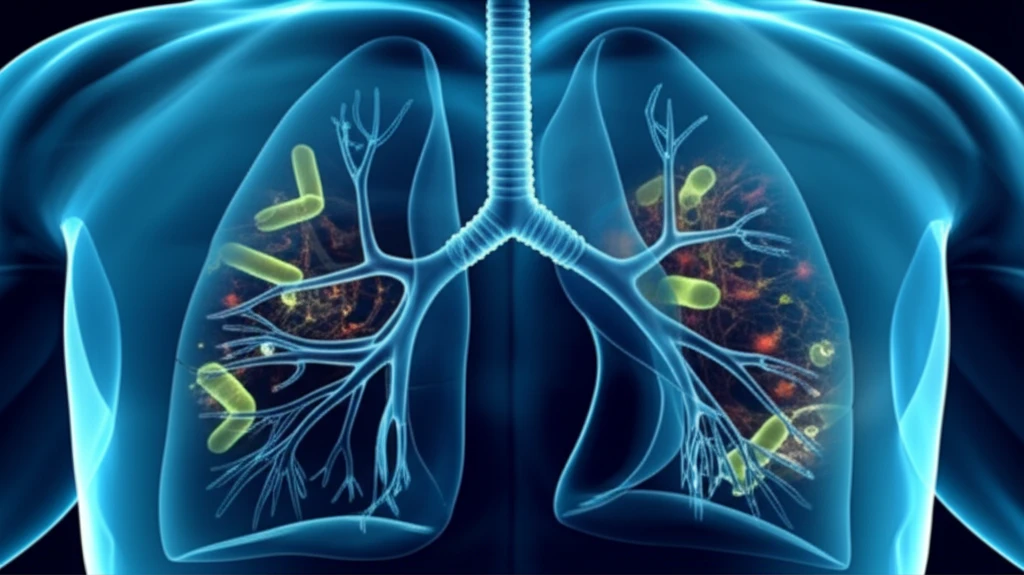
Microscopic view of Mycobacterium tuberculosis bacteria

TB Breakthrough: Rethinking Lung Inflammation

"New research sheds light on how a key protein domain impacts the body's response to tuberculosis, potentially opening doors for more targeted treatments."


Tuberculosis (TB), caused by the bacterium Mycobacterium tuberculosis, remains a major global health challenge. While advancements in treatment have been made, TB continues to cause significant mortality worldwide. Understanding the intricate mechanisms of how our bodies respond to TB infection is crucial for developing more effective therapies.

One key player in this complex immune response is thrombomodulin (TM), a protein found on the surface of blood vessel cells. TM has several domains, each with different functions. Scientists have been particularly interested in the lectin-like domain of TM, known for its anti-inflammatory properties and its potential to regulate various immune processes.

Recent research has investigated the specific role of the lectin-like domain of TM in TB infection. This article explores the surprising findings of a study that challenges existing assumptions about this domain's impact on lung inflammation and the overall host response to TB, potentially paving the way for new therapeutic strategies.

Challenging the Role of the Lectin-Like Domain in Tuberculosis

Microscopic view of Mycobacterium tuberculosis bacteria

Previous research suggested that the lectin-like domain of thrombomodulin (TM) plays a significant anti-inflammatory role in various diseases. Given its known anti-inflammatory properties, scientists hypothesized that this domain could be crucial in modulating the immune response during TB infection.

To investigate this, researchers compared mice lacking the lectin-like domain (TMLeD/LeD mice) with normal mice (wild-type) in a model of experimental lung TB. They monitored several key indicators of TB progression, including:

  • Mycobacterial load in the lungs, liver, and spleen.
  • Lung histopathology (tissue damage and inflammation).
  • Cytokine and chemokine levels (inflammatory signaling molecules).
  • Immune cell composition in the lungs.
Surprisingly, the absence of the lectin-like domain did not significantly alter the course of TB infection in mice. The mycobacterial loads were similar, lung inflammation was largely unaffected, and the overall cytokine response was comparable between the two groups. This suggests that, contrary to expectations, the lectin-like domain of TM does not play a major role in controlling TB infection in mice.

Implications for Future TB Therapies

While the study's findings might seem discouraging, they provide valuable insights into the complex interplay of factors that govern the immune response to TB. By demonstrating that the lectin-like domain of TM is not a critical player, the research helps to refine our understanding of TB pathogenesis and identify potentially more promising therapeutic targets.

Interestingly, the researchers also found that TM expression was reduced in the lung tissue of TB patients. This raises the possibility that targeting other domains of TM or related pathways could still be a viable strategy for modulating lung inflammation in TB.

Further research is needed to explore these alternative approaches and to fully elucidate the role of TM in TB. By shifting the focus away from the lectin-like domain, scientists can now concentrate on investigating other therapeutic avenues and developing more effective treatments for this devastating disease. These findings could lead to the development of novel therapies that target specific aspects of the immune response, ultimately improving outcomes for TB patients worldwide.

About this Article -

This article was crafted using a human-AI hybrid and collaborative approach. AI assisted our team with initial drafting, research insights, identifying key questions, and image generation. Our human editors guided topic selection, defined the angle, structured the content, ensured factual accuracy and relevance, refined the tone, and conducted thorough editing to deliver helpful, high-quality information.See our About page for more information.

This article is based on research published under:

DOI-LINK: 10.1160/th13-08-0719, Alternate LINK

Title: The Thrombomodulin Lectin-Like Domain Does Not Change Host Responses To Tuberculosis

Subject: Hematology

Journal: Thrombosis and Haemostasis

Publisher: Georg Thieme Verlag KG

Authors: Alex De Vos, Joris Roelofs, Chris Van Der Loos, Onno De Boer, Cornelis Van’T Veer, Edward Conway, Tom Van Der Poll, Liesbeth Kager

Published: 2014-01-01

Everything You Need To Know

1

What is Tuberculosis (TB), and why is it a focus of research?

Tuberculosis (TB) is a severe infectious disease caused by the bacterium *Mycobacterium tuberculosis*. It is a major global health concern due to its high mortality rate. The article focuses on the body's response to this infection, specifically examining the role of the thrombomodulin (TM) protein and its lectin-like domain in the context of lung inflammation during TB infection.

2

What is Thrombomodulin (TM), and why was its lectin-like domain of particular interest in the study?

Thrombomodulin (TM) is a protein found on the surface of blood vessel cells, and the lectin-like domain of TM is known for its anti-inflammatory properties. This domain's role was investigated because it was believed to be crucial in modulating the immune response during TB infection, specifically to control lung inflammation. Its significance lies in its potential to influence how the body reacts to the *Mycobacterium tuberculosis* bacterium and how treatments can be developed.

3

What were the key findings regarding the lectin-like domain of Thrombomodulin (TM) in the study?

The lectin-like domain of Thrombomodulin (TM) was initially hypothesized to play a key role in managing lung inflammation during Tuberculosis (TB). However, the study showed that its absence in mice did not significantly alter the course of TB infection. Mycobacterial loads, lung inflammation, and cytokine responses were similar between mice with and without the lectin-like domain. This indicates that, in the context of TB in mice, this domain does not play the major role that was previously thought in controlling the infection.

4

How did the researchers investigate the role of the lectin-like domain of Thrombomodulin (TM) in the context of Tuberculosis (TB) in the study?

The research compared mice lacking the lectin-like domain of Thrombomodulin (TM) with normal mice to understand the role of the lectin-like domain in Tuberculosis (TB). They monitored mycobacterial load in the lungs, liver, and spleen, lung histopathology, cytokine and chemokine levels, and immune cell composition in the lungs. The study used these key indicators to assess the progression of TB and the immune response in the presence or absence of the lectin-like domain.

5

What are the implications of these findings for future Tuberculosis (TB) therapies?

The findings suggest that while the lectin-like domain of Thrombomodulin (TM) may not be a primary target for TB therapy, it provides insight to identify other potential therapeutic targets. The study's implications are that it refines our understanding of Tuberculosis pathogenesis and helps focus research efforts. This could lead to more effective treatments by focusing on different aspects of the immune response or other proteins involved in the process.

Newsletter Subscribe

Subscribe to get the latest articles and insights directly in your inbox.