
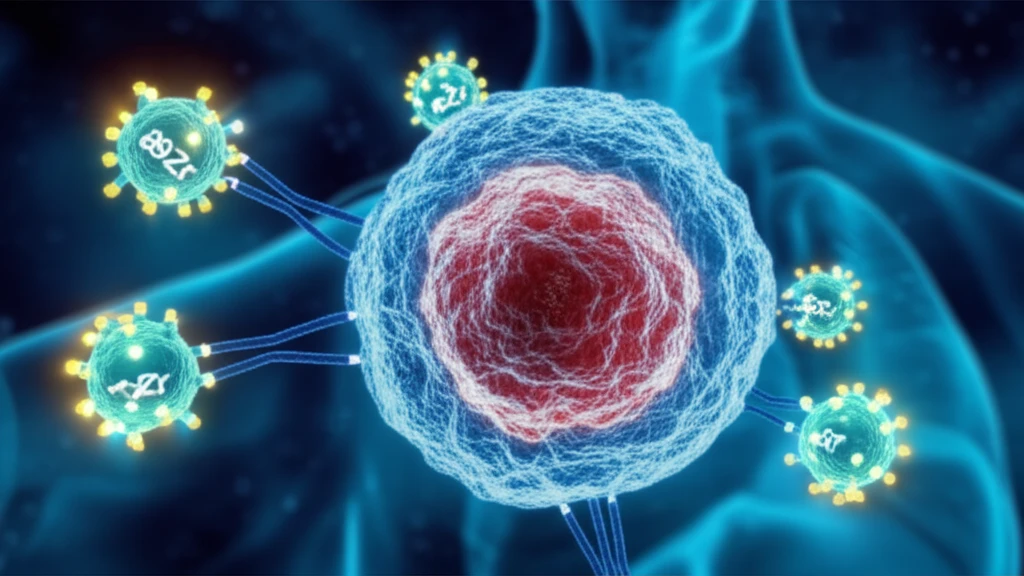
Illustration depicting theranostics in action, with a cancer cell being targeted by advanced therapies.

Targeting Cancer with Precision: How Advanced Theranostics is Revolutionizing Treatment

"Combining cutting-edge imaging and targeted therapies, theranostics offers a new frontier in cancer treatment, promising more effective and personalized care."


Cancer treatment has undergone a significant transformation in recent years, moving beyond traditional methods to embrace a more personalized and targeted approach. At the forefront of this evolution is theranostics, a groundbreaking medical concept that seamlessly integrates diagnostics and therapeutics. This innovative strategy allows doctors to simultaneously visualize and treat cancer, offering unprecedented precision and effectiveness.

This article delves into the core of theranostics, exploring how advanced technologies are reshaping cancer care. We'll examine the innovative use of 89Zr-labeled human antibody variants and novel drug delivery systems (DDS) to target and destroy cancer cells. We'll also explore the use of photodynamic therapy (PDT) and how it is being combined with these advancements to enhance treatment outcomes.

By understanding the principles of theranostics, its applications, and its potential, both patients and healthcare professionals can gain a clearer vision of the future of cancer treatment. This field is not just about improving existing methods; it's about creating a new paradigm in medicine, where precision and personalization are the norm.

The Promise of Theranostics: Combining Diagnosis and Treatment

Illustration depicting theranostics in action, with a cancer cell being targeted by advanced therapies.

Theranostics represents a paradigm shift in medical care, blending diagnostic imaging with therapeutic interventions. The core concept is straightforward yet revolutionary: use imaging techniques to identify and characterize a disease, then employ targeted therapies to treat it. This approach is particularly powerful in oncology, where it offers the potential to precisely target cancer cells while minimizing harm to healthy tissues.

One of the key advantages of theranostics is its ability to provide real-time feedback on treatment effectiveness. Using imaging agents, doctors can monitor how a patient is responding to therapy, allowing them to adjust the treatment plan as needed. This iterative process ensures that patients receive the most effective care possible and reduces the likelihood of unnecessary side effects.

  • Enhanced Precision: Theranostics allows for highly targeted treatments, minimizing damage to healthy cells.
  • Real-Time Monitoring: Imaging provides immediate feedback on treatment effectiveness, enabling adjustments to optimize outcomes.
  • Personalized Medicine: Treatments can be tailored to the individual characteristics of a patient's cancer.
  • Reduced Side Effects: Targeted therapies can reduce the severity of side effects compared to traditional treatments.
The development of theranostics has been driven by advancements in several key areas, including molecular imaging, targeted therapies, and drug delivery systems. Each of these elements plays a crucial role in the overall success of the approach. By understanding how these components work together, we can appreciate the transformative potential of theranostics in the fight against cancer.

The Future of Cancer Care: Embracing Theranostics

Theranostics is more than just a new medical approach; it represents a fundamental shift in how we understand and treat cancer. By combining the precision of diagnostics with the power of targeted therapies, we are entering an era of more effective, personalized care. As research continues to advance and new technologies emerge, theranostics will undoubtedly play an increasingly vital role in the fight against cancer, offering hope and improved outcomes for patients worldwide.

About this Article -

This article was crafted using a human-AI hybrid and collaborative approach. AI assisted our team with initial drafting, research insights, identifying key questions, and image generation. Our human editors guided topic selection, defined the angle, structured the content, ensured factual accuracy and relevance, refined the tone, and conducted thorough editing to deliver helpful, high-quality information.See our About page for more information.

Everything You Need To Know

1

What is theranostics and how does it differ from traditional cancer treatments?

Theranostics is a medical approach that combines diagnostics and therapeutics to visualize and treat diseases, especially cancer. Unlike traditional methods, theranostics integrates diagnostic imaging with targeted therapies, allowing doctors to simultaneously identify and treat cancer with greater precision. This involves using imaging techniques to characterize a disease and then employing targeted therapies to treat it, minimizing harm to healthy tissues. Traditional cancer treatments often lack this level of precision and personalization, potentially leading to more side effects and less effective outcomes. The approach uses imaging agents, doctors can monitor how a patient is responding to therapy, allowing them to adjust the treatment plan as needed.

2

How does the use of 89Zr-labeled antibodies contribute to the advancement of theranostics in cancer treatment?

89Zr-labeled antibodies play a crucial role in advancing theranostics by enhancing the precision of targeted therapies. These antibodies are designed to specifically bind to cancer cells, allowing for accurate imaging and targeted drug delivery. The radioisotope 89Zr enables the tracking of these antibodies within the body, providing real-time feedback on their distribution and effectiveness. This targeted approach minimizes damage to healthy tissues and maximizes the impact on cancer cells. Without these labeled antibodies, the ability to precisely locate and treat cancer cells would be significantly limited, potentially reducing the efficacy of theranostic treatments.

3

What are novel drug delivery systems (DDS) and how do they improve cancer treatment within the theranostics framework?

Novel drug delivery systems (DDS) are advanced methods used to transport therapeutic agents directly to cancer cells. Within the theranostics framework, DDS improve cancer treatment by enhancing the precision and effectiveness of drug delivery. These systems can be designed to release drugs at specific locations within the body or in response to certain stimuli, ensuring that the medication reaches the tumor while sparing healthy tissues. By improving drug targeting and reducing systemic exposure, DDS can minimize side effects and enhance treatment outcomes. The absence of DDS would limit the ability to deliver drugs precisely to cancer cells, potentially reducing the therapeutic benefit and increasing the risk of adverse effects.

4

Can you explain photodynamic therapy (PDT) and its role in enhancing cancer treatment outcomes when combined with theranostic approaches?

Photodynamic therapy (PDT) is a treatment that uses a photosensitizing agent and light to destroy cancer cells. The photosensitizer is administered and accumulates in cancer cells. When exposed to a specific wavelength of light, the photosensitizer produces reactive oxygen species that kill the cancer cells. When combined with theranostic approaches, PDT can enhance cancer treatment outcomes by providing a targeted and localized therapy. This combination allows for precise tumor targeting via imaging, followed by light activation of the photosensitizer to destroy the cancerous tissue. The advantage of PDT is that it is minimally invasive and can be repeated multiple times, making it an effective adjunct to other cancer treatments. Without PDT, the ability to selectively destroy cancer cells while sparing healthy tissue would be reduced.

5

What are the potential implications of theranostics for personalized medicine and the future of cancer care?

Theranostics holds significant implications for personalized medicine and the future of cancer care by enabling treatments to be tailored to the individual characteristics of a patient's cancer. By combining diagnostic imaging with targeted therapies, doctors can monitor how a patient is responding to treatment and adjust the treatment plan as needed. This iterative process ensures that patients receive the most effective care possible and reduces the likelihood of unnecessary side effects. As research continues to advance and new technologies emerge, theranostics will undoubtedly play an increasingly vital role in the fight against cancer, offering hope and improved outcomes for patients worldwide. This approach will likely lead to more effective treatments, reduced side effects, and improved quality of life for cancer patients.

Newsletter Subscribe

Subscribe to get the latest articles and insights directly in your inbox.