
T Cell Boosters: How to Supercharge Your Immune System with SEC2 Mutants

"Unlock the secrets of immune cell activation with cutting-edge research on Staphylococcal enterotoxin C2 (SEC2) mutants and their potential in future immunotherapies."
In the relentless pursuit of innovative therapies, scientists are constantly exploring the intricate mechanisms of the immune system. Staphylococcal enterotoxins (SEs), potent superantigens produced by bacteria like Staphylococcus aureus, have emerged as key players in immune response modulation. Among these, Staphylococcal enterotoxin C2 (SEC2) has garnered significant attention for its potential in tumor immunotherapy.
Recent research has focused on engineering SEC2 mutants with enhanced capabilities. One such mutant, ST-4, exhibits superior T lymphocyte activation, paving the way for more effective immunotherapeutic strategies. Understanding how ST-4 interacts with immune cells at the molecular level is crucial for unlocking its full potential.
This article delves into the groundbreaking work of Xuanhe Fu and colleagues, who investigated the molecular mechanisms driving ST-4-mediated T lymphocyte activation. Their findings shed light on the pivotal roles of the PI3K/mTOR and NF-κB signaling pathways, offering valuable insights for future immunotherapy development.
Decoding ST-4's Supercharged Activation of T Lymphocytes
The study by Fu et al. uncovers the specific mechanisms by which the SEC2 mutant ST-4 stimulates T lymphocytes, essential components of the adaptive immune system. Unlike conventional antigens that require processing by antigen-presenting cells (APCs), superantigens like SEC2 and ST-4 directly bind to major histocompatibility complex (MHC) class II molecules on APCs and T-cell receptors (TCRs). This interaction triggers a powerful immune response, characterized by the activation and proliferation of T cells and the release of cytokines.
- Enhanced T Cell Activation: ST-4 significantly boosts T lymphocyte activation compared to its parent molecule, SEC2.
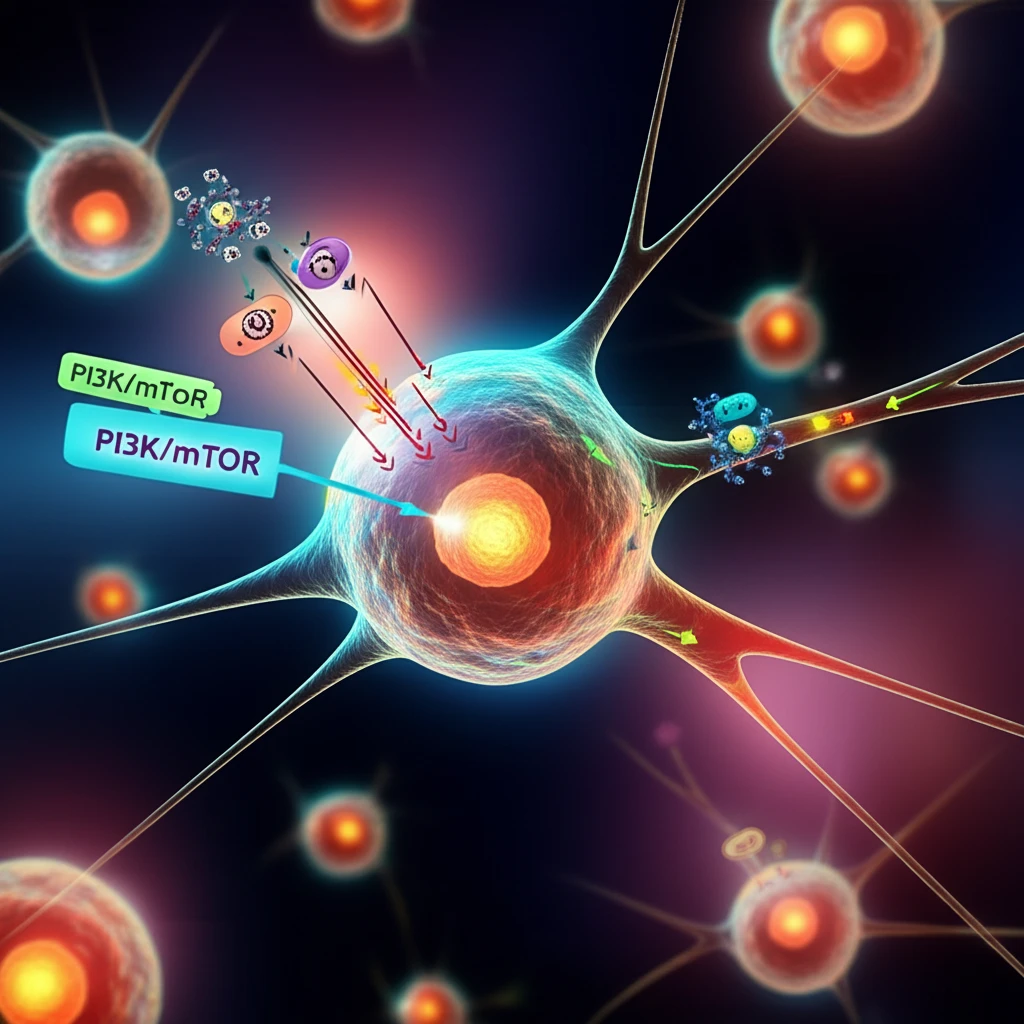
- PI3K/mTOR Pathway Activation: ST-4 intensifies the PI3K/mTOR signaling pathway, promoting cell growth and proliferation.
- NF-κB Pathway Activation: ST-4 enhances the NF-κB signaling pathway, which regulates cytokine production and immune response.
- IL-2 Secretion: ST-4 promotes the secretion of interleukin-2 (IL-2), a critical cytokine for T cell growth and differentiation.
Future Directions and Therapeutic Implications
This research provides a solid foundation for the development of ST-4-based immunotherapies. By understanding how ST-4 manipulates key signaling pathways in T lymphocytes, scientists can design targeted strategies to enhance immune responses against cancer and other diseases. The intensified PI3K/mTOR and NF-κB signaling transduction induced by ST-4 offers a promising avenue for stimulating T cell activity and improving therapeutic outcomes. Further research is needed to fully explore ST-4's potential and translate these findings into clinical applications.