
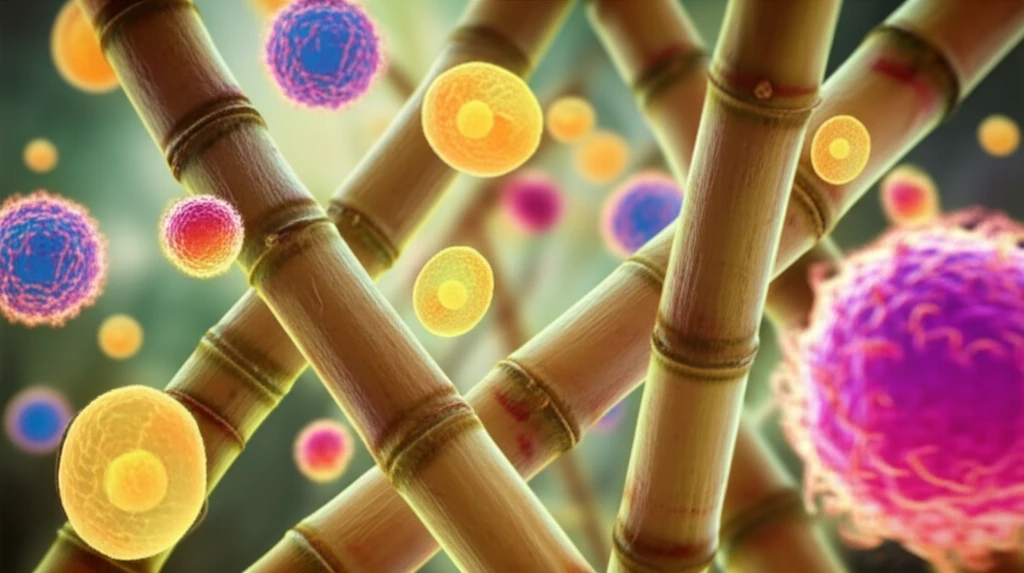
Sweet Immunity: How Sugar Cane Could Revolutionize Wellness

"Unlocking the potential of sugar cane glucans for enhanced immunity and protection against infections."
For generations, sugar cane has been a staple in kitchens worldwide, primarily known for its sweetening properties. But what if this common crop held a secret weapon for boosting our immune systems? Recent research is now shedding light on the potential of specific compounds found in sugar cane to enhance immunity and offer protection against infections.
The key lies in 'glucans,' a type of polysaccharide (complex carbohydrate) found within sugar cane. These aren't just any carbohydrates; they possess unique immunomodulating properties, meaning they can influence and regulate the activity of our immune cells. Scientists are particularly interested in how these glucans interact with Peyer's patches, specialized immune tissues in the small intestine that play a crucial role in immune surveillance and response.
This article delves into the groundbreaking research exploring how sugar cane glucans can enhance protective immunity by stimulating the hemopoietic system—the network responsible for creating blood cells and immune components. We’ll unpack the science in an accessible way, revealing how this natural source could become a powerful ally in maintaining health and warding off disease.
The Science of Sweet Immunity: How Sugar Cane Glucans Work
The study focused on identifying and purifying specific polysaccharides from sugar cane molasses with immunomodulating activity. Researchers isolated five distinct glucans, each containing D-glucosyl components, which are sensitive to dextranase (an enzyme that breaks down dextran, a type of polysaccharide). These purified glucans were then tested for their ability to stimulate immune responses in Peyer's patches.
- Stimulating T Lymphocytes: Oral administration of glucan-enriched fractions induced the production of IL-2 and GM-CSF by T lymphocytes in Peyer's patches. IL-2 is crucial for T cell growth and differentiation, while GM-CSF stimulates the production of granulocytes and macrophages.
- Boosting IL-6 Production: This stimulation further led to enhanced IL-6 production in the hemopoietic microenvironment. IL-6 is a key cytokine that promotes the development of immune cells and increases neutrophil numbers in the bloodstream. Neutrophils are essential for fighting off bacterial and fungal infections.
- Enhancing Infection Resistance: The ultimate outcome was improved protection against malarial infection in a mouse model. Oral administration of the purified glucans or glucan-enriched fractions reduced the number of infected erythrocytes (red blood cells) in mice infected with Plasmodium berghei or P. yoelii, both with and without the use of the antimalarial drug artesunate.
A Sweet Future for Immunity?
This research opens exciting possibilities for leveraging the natural immunomodulating properties of sugar cane. While further studies are needed to fully understand the mechanisms and optimal applications in humans, these findings suggest that specific glucans derived from sugar cane could play a role in supporting immune function and preventing infections.
For a health-conscious audience, this research highlights the potential of incorporating sugar cane extracts rich in these beneficial glucans into functional foods or supplements. However, it's crucial to note that not all sugar cane products are created equal. The processing methods used to extract and purify these glucans can significantly impact their effectiveness.
As the science evolves, we can anticipate more innovative approaches to harnessing the power of sugar cane glucans for enhanced wellness and protection against a range of health challenges. This research underscores the importance of exploring natural sources for novel immunomodulatory agents, offering new pathways to support our body's innate defenses.