
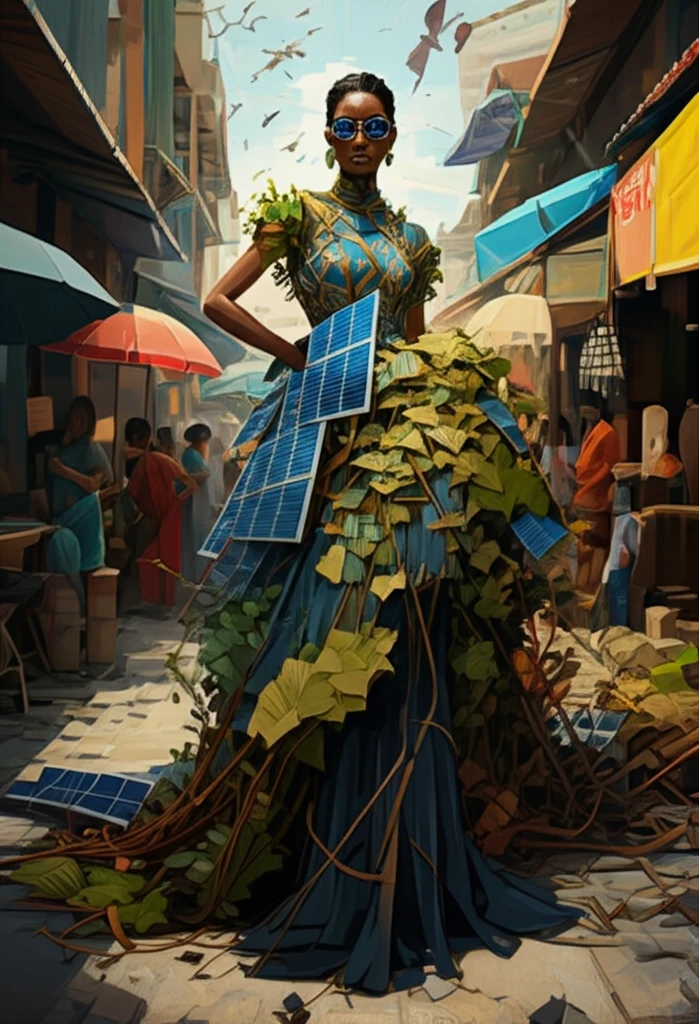
Sustainable Style: Decoding Luxury Fashion in Emerging Markets

"Explore how eco-consciousness reshapes luxury perceptions, especially among young, fashion-forward consumers."
Luxury fashion is no longer just about high price tags and exclusive designs; it's increasingly intertwined with social responsibility and environmental consciousness, especially in emerging markets. Consumers are becoming more aware of the impact their purchases have on the planet, and this awareness is reshaping how they perceive value in luxury goods.
As incomes rise and access to information expands in these markets, consumers are beginning to demand more from their favorite brands. They want assurance that their coveted items aren't just symbols of status but also reflections of their values. This shift creates both opportunities and challenges for luxury brands eager to connect with a new generation of discerning shoppers.
The core question revolves around the influence of sustainable practices on consumer perceptions of luxury goods. Can integrating environmentally-friendly attributes truly enhance a brand's appeal, and how do these perceptions manifest in a rapidly evolving market?
The Scale of Overproduction and Waste
Textile Exchange's Materials Market Report shows global fiber production climbing from roughly 112 million tonnes in 2021 to 116 million tonnes in 2022, evidence of the relentless overproduction driving the apparel, fashion, and textile industries. That output feeds a steadily growing stream of textile waste, an impact that textile-waste infographics and fast-fashion footprint data continue to surface. Coverage of World Environment Day 2022 echoed the same concern, calling for more sustainable shopping practices and noting that many luxury brands are actively pursuing them.
Transparency, Craft, and Technology
The accepted approach to sustainable luxury rests on a transparent, ethical backstory: customers are increasingly willing to invest in products with a responsible provenance, and brands that communicate it add value for both the environment and the brand itself. At the product level, the standard method is timeless craftsmanship, the model championed by houses such as Gabriela Hearst, whose meticulously crafted dresses, shoes, and accessories are built around sustainable sourcing. Emerging tools extend the playbook, with AI-powered quality control and omnichannel clienteling — as seen at houses like Tiffany & Co. — used to sustain long-term brand trust. The evident limitation is reconciling exclusivity with responsibility, as this trend redefines luxury living around communal, responsible choices rather than individual excess.
From Heritage Houses to a Sustainability Milestone
The heritage of luxury fashion was built by houses whose craftsmanship and avant-garde design set the benchmark, with Prada's intellectual chic standing as a contemporary example of that legacy, while luxury's enduring link to social status is charted through significant milestones in luxury fashion history. A turning point for the sustainability conversation came at the 1.618 Sustainable Luxury conference in Paris, where the theme of sustainable sourcing and responsible value chains showed that the debate had finally moved beyond definitional questions. Recent seasons mark further progress, with Stella McCartney describing its latest collection as its most sustainable to date, crafted from 98% responsibly sourced materials.
Decoding Luxury: Beyond Price and Prestige
Traditionally, luxury has been associated with exclusivity, superior quality, and the prestige that comes with owning rare and coveted items. However, in emerging markets, this definition is evolving to include ethical and environmental considerations. Consumers are increasingly viewing luxury purchases as an extension of their personal values and beliefs.
- Exclusivity: Maintaining a sense of rarity and limited availability remains crucial.
- Normative Beliefs: Communicating a commitment to social and environmental responsibility is essential.
- Self-Directed Pleasure: Luxury items should still provide a sense of personal enjoyment and satisfaction.
- Social/Prestige: The perceived social status and admiration associated with the brand are still important.
Design-Led Sustainability on the Runway
Recent reviews of sustainable luxury centre on designers who treat responsibility as a creative constraint rather than a compromise. During London Fashion Week 2023, projects such as Slovak designer Mata Durikovic's bioluxury work — championed within the Slovak Fashion Council's vision for the country's fashion ecosystem — demonstrated new ways of design creativity built around sustainability. Sustainability-focused guides reinforce the trend, reporting that luxury consumers from Miami and Los Angeles to Europe are re-evaluating their wardrobes and that top fashion houses are proving conscious choices elevate style rather than compromise it.
When Luxury Meets Its Critics
The sharpest critique is that the terms refuse to sit comfortably together: 'sustainable fast fashion' has been deployed sarcastically, as if the two concepts cancel each other out, with critics pointing to cheap clothes, enormous waste, and supply chains nobody wants to examine too closely. HuffPost Life calls the notion of sustainable luxury a paradox, but argues that luxury achieves its indulgence through leadership — being the best in its category and offering something outside consumers' ordinary experience. Yet the counterexample keeps growing: houses like Stella McCartney continue to push responsible materials into mainstream luxury, from its autumn/winter collections to the adidas partnership.
Luxury Pieces Versus Their Alternatives
Side-by-side comparisons of luxury pieces and their alternatives typically hinge on construction and materials, with luxury fashion defined by meticulous craftsmanship, high-quality materials, and timeless design rather than price alone. Luxury fashion consultant Isabelle Marchetti captures the practical payoff, observing that a well-crafted blouse can transform an average outfit into something unforgettable. The comparison also reaches beyond the garment itself: fashion is increasingly understood not merely as an industry but as the way people live, create, communicate, and showcase identity to the world.
Looking Ahead: The Future of Luxury is Responsible
The shift towards sustainable luxury in emerging markets is not a passing trend but a fundamental change in consumer behavior. Brands that embrace this shift and actively integrate ethical and environmental considerations into their business models will be best positioned to capture the hearts and wallets of future luxury consumers. As awareness grows and expectations rise, the future of luxury will be inextricably linked to responsibility and sustainability.
A Structural Diagnosis from the Experts
Expert commentary in this space converges on a structural diagnosis: as one creative director and sustainable fashion expert put it in academic research, world development is directed by a profit-driven economy that prioritises profit gain over balancing the economy, the environment, and society. Analytical frameworks such as Bloom's taxonomy offer a disciplined way to interrogate such claims, guiding readers to break statements down into their evidence and assumptions before accepting them. The synthesis points to a sobering conclusion: meaningful sustainability in luxury fashion will remain partial until the incentives of the wider economy shift in favour of that balance.
Innovation, Adoption, and Industry Change
The future of sustainable luxury fashion is widely framed as conditional on continued innovation, consumer adoption, and industry collaboration that advances sustainable practices while maintaining the quality and exclusivity that define luxury products. Market turbulence underscores the stakes, with the British luxury house Burberry departing the FTSE 100 after 15 years — a decision that raises questions about the future of one of the UK's most recognizable brands and heralds major changes for the corporation. Such upheavals suggest that adaptability in sourcing, production, and positioning will determine which houses thrive in the years ahead.
Moving Beyond the Single Garment
Systemic change in fashion and textiles is increasingly pursued through formal vehicles, such as the Fashion Pioneers' Circular System Challenger award, which targets manufacturers, engineers, solution providers, and system thinkers focused on circular innovation in products, processes, and production methods. The broader debate contrasts traditional luxury with sustainable luxury, with parallel explorations of eco-luxury demonstrating how exclusivity can be redefined around responsibility rather than excess. At the material level, even the sector's rarest inputs are affected, as luxury hair fibers are often blended with sheep's wool or other natural fibers to reduce cost and add novelty. Meanwhile, corporate reporting is tying sustainability and social impact directly into core business missions.
Extending the Life of Luxury
The human dimension of sustainable luxury is most tangible in resale, where designer pieces gain second lives instead of ending up in landfill. The RealReal describes itself as the leader in luxury resale and consignment, a marketplace where shoppers buy and sell bags, jewelry, and clothing from houses such as Chanel, Gucci, Louis Vuitton, and Prada. For consumers, this shifts the real-world impact of luxury from accumulation toward circulation, extending the usefulness of well-made garments.