
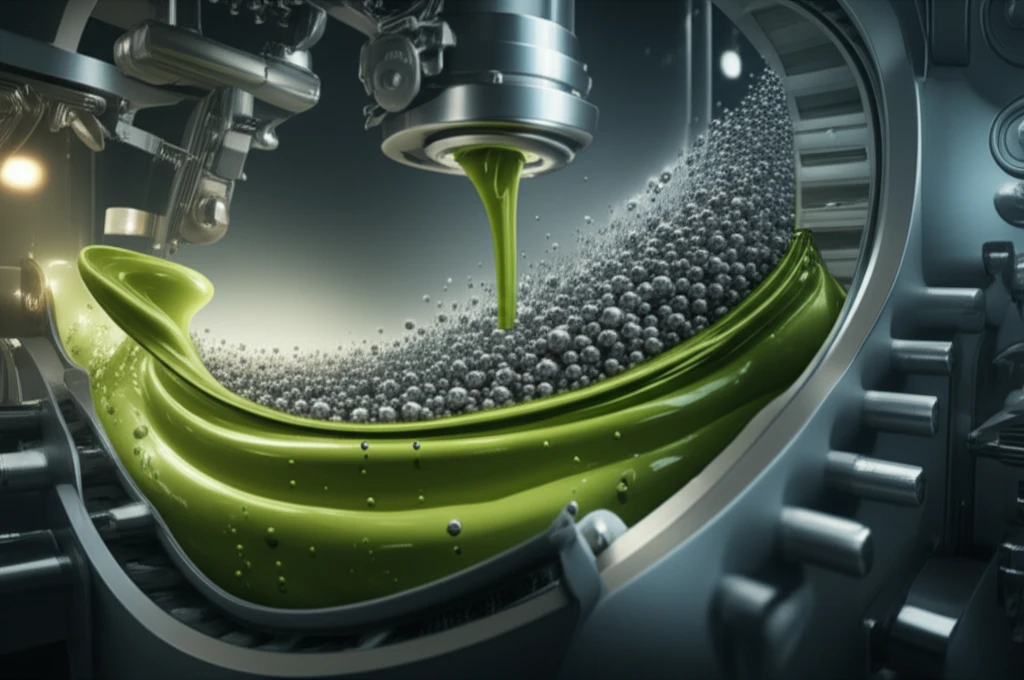
Sustainable metal injection molding with biopolymers

Sustainable Manufacturing: How Biopolymers are Revolutionizing Metal Injection Molding

"Explore the innovative use of biopolymers in SS316L metal injection molding (MIM) for a greener, more efficient manufacturing process."


Metal Injection Molding (MIM) is becoming increasingly popular as an economical and environmentally conscious metalworking process. MIM's ability to produce high volumes of intricate shapes with minimal finishing makes it an attractive option for various industries. The process involves four key steps: feedstock preparation, injection molding, debinding, and sintering.

The first step, feedstock preparation, is particularly crucial. This involves mixing metal powder with a binder, traditionally a petroleum-based polymer. However, growing environmental concerns have spurred research into alternative, bio-based binders. These biopolymers promise to reduce the environmental impact of MIM while potentially improving processing efficiency.

This article delves into the preparation of SS316L MIM feedstock using a biopolymer binder, Polyhydroxyalkanoates (PHA). We'll explore how critical powder loading is determined, the properties of the resulting feedstock, and the potential benefits of this sustainable approach to metal manufacturing.

Optimizing Feedstock with Biopolymers: Powder Loading and Material Properties

Sustainable metal injection molding with biopolymers

Critical powder loading is a key factor in MIM feedstock preparation. It refers to the maximum amount of metal powder that can be uniformly dispersed within the binder without compromising the mixture's flow properties. Researchers used two methods to determine the optimal powder loading for SS316L with PHA binder: maximum filled volume calculation and torque analysis.

The maximum filled volume calculation estimates powder loading based on the ratio of tap density to pycnometer density. This method suggested a critical powder loading between 70 vol% and 77 vol%. However, experimental results often differ from theoretical calculations.

  • Maximum Filled Volume Calculation: Estimates powder loading based on tap density to pycnometer density ratio (70-77 vol%).
  • Torque Analysis: Measures the mixing torque between SS316L powder and oleic acid to identify the highest torque value, indicating optimal powder loading (75 vol%).
Torque analysis, on the other hand, involves measuring the mixing torque between the metal powder and a liquid. The point of highest torque indicates the critical powder loading, as it signifies the point where the space between powder particles is fully occupied by the binder. In this study, torque analysis revealed a critical powder loading of 75 vol% for SS316L.

The Future of MIM: Sustainable, Efficient, and High-Performing

This research demonstrates the feasibility of using biopolymers as a sustainable alternative to traditional binders in SS316L MIM feedstock. By carefully optimizing powder loading through methods like torque analysis, it's possible to create a feedstock that maintains its composition and ensures compatibility between components.

The shift towards biopolymers in MIM offers several potential advantages such as reduced reliance on fossil fuels, lower greenhouse gas emissions, and potentially faster debinding times. Further research is needed to fully explore the long-term performance and cost-effectiveness of biopolymer-based MIM parts.

As industries increasingly prioritize sustainability, the use of biopolymers in MIM represents a promising step towards a greener and more efficient manufacturing future. This innovative approach not only reduces environmental impact but also opens doors for new material combinations and improved product properties.

About this Article -

This article was crafted using a human-AI hybrid and collaborative approach. AI assisted our team with initial drafting, research insights, identifying key questions, and image generation. Our human editors guided topic selection, defined the angle, structured the content, ensured factual accuracy and relevance, refined the tone, and conducted thorough editing to deliver helpful, high-quality information.See our About page for more information.

This article is based on research published under:

DOI-LINK: 10.1088/1757-899x/290/1/012076, Alternate LINK

Title: Preparation Of Ss316L Mim Feedstock With Biopolymer As A Binder

Subject: General Medicine

Journal: IOP Conference Series: Materials Science and Engineering

Publisher: IOP Publishing

Authors: A A Abdullah, H Norita, H N Azlina, A B Sulong, N N Mas’Ood

Published: 2018-01-01

Everything You Need To Know

1

What is Metal Injection Molding (MIM)?

Metal Injection Molding (MIM) is a metalworking process used to create intricate shapes in high volumes. It involves four key steps: feedstock preparation, injection molding, debinding, and sintering. MIM is gaining popularity for its ability to produce complex designs with minimal finishing, making it a cost-effective and environmentally conscious choice for various industries. The process's efficiency and precision are significant factors in modern manufacturing.

2

What are biopolymers, and why are they used in this context?

Biopolymers are used as an eco-friendly alternative to traditional petroleum-based binders in Metal Injection Molding (MIM). In the context of SS316L MIM, the biopolymer Polyhydroxyalkanoates (PHA) is highlighted. Using biopolymers enhances sustainability by reducing environmental impact and potentially improving processing efficiency. The shift from petroleum-based binders to biopolymers like PHA represents a move towards greener manufacturing practices and addresses environmental concerns associated with traditional methods.

3

What is feedstock preparation in Metal Injection Molding (MIM), and why is it important?

Feedstock preparation is the initial and critical step in Metal Injection Molding (MIM). It involves mixing metal powder, such as SS316L, with a binder, like Polyhydroxyalkanoates (PHA). The goal is to create a uniform mixture that flows well during the injection molding process. This step directly influences the final product's quality, properties, and the efficiency of the MIM process. Without proper feedstock preparation, the subsequent steps of injection molding, debinding, and sintering will be ineffective.

4

What is critical powder loading, and how is it determined?

Critical powder loading is the maximum amount of metal powder that can be uniformly dispersed within the binder without compromising the mixture's flow properties in MIM feedstock. The optimal powder loading for SS316L with PHA was determined using two methods: maximum filled volume calculation and torque analysis. The maximum filled volume calculation estimates powder loading based on the ratio of tap density to pycnometer density. Torque analysis measures the mixing torque between the metal powder and a liquid, with the highest torque indicating the critical powder loading. Understanding and controlling powder loading ensures the feedstock maintains its composition and ensures compatibility between components in the final product.

5

How is torque analysis used to optimize feedstock preparation?

Torque analysis measures the mixing torque between the metal powder and a liquid, like oleic acid, to determine the critical powder loading in Metal Injection Molding (MIM). The point of highest torque indicates the optimal powder loading because it signifies the point where the space between powder particles is fully occupied by the binder. In the context of SS316L MIM, torque analysis revealed a critical powder loading of 75 vol% when using PHA as a binder. This method helps to optimize feedstock preparation and ultimately improves the quality and performance of the final product.

Newsletter Subscribe

Subscribe to get the latest articles and insights directly in your inbox.