
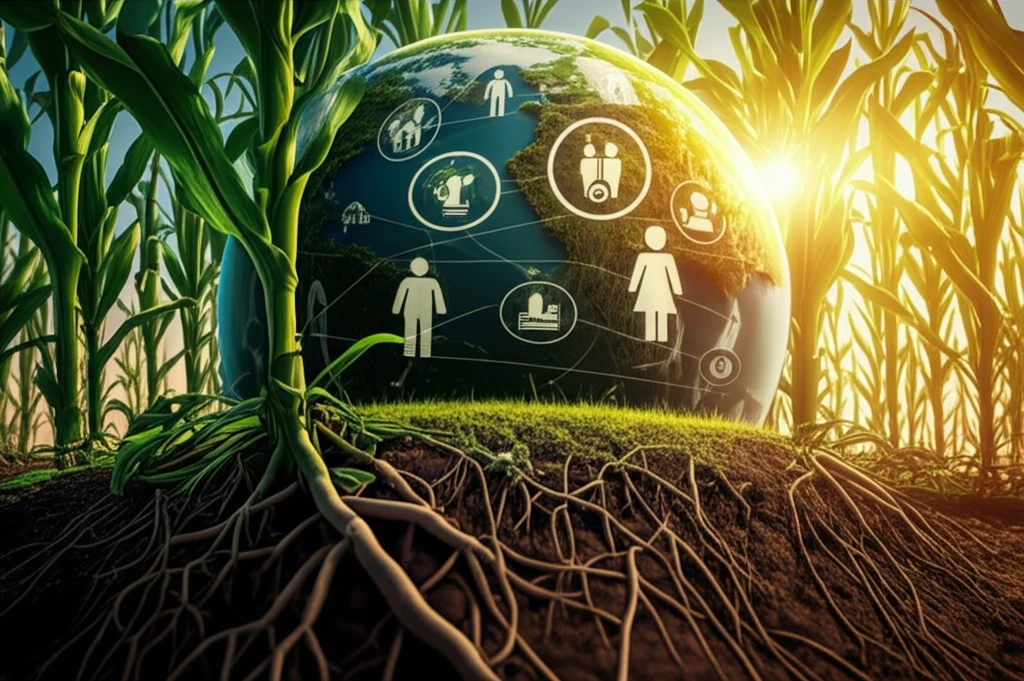
A thriving cornfield symbolizes sustainable farming.

Sustainable Farming: How to Boost Corn Yields While Protecting the Planet

"Unlock the secrets to eco-friendly corn farming! Discover how integrating ecological, economic, and social factors can lead to higher yields and a healthier planet."


Corn is a cornerstone of the global food supply, playing a vital role in feeding communities and driving economies. But traditional corn farming methods often come at a cost to the environment, leading to soil degradation, water pollution, and biodiversity loss. As consumers become more aware of the impact of their food choices, the demand for sustainably grown corn is on the rise.

The challenge lies in finding farming practices that not only maximize yields but also protect the environment and support the livelihoods of farmers. This requires a holistic approach that considers the interconnectedness of ecological, economic, and social factors. Luckily, recent research offers a promising path forward, highlighting innovative strategies for sustainable corn farming.

This article delves into the principles of sustainable corn farming, drawing on the latest scientific insights to provide practical guidance for farmers, policymakers, and anyone interested in creating a more resilient and environmentally friendly food system. Discover how you can contribute to a future where corn farming benefits both people and the planet.

What is Sustainable Corn Farming?

A thriving cornfield symbolizes sustainable farming.

Sustainable corn farming is a holistic approach to agriculture that aims to balance environmental stewardship, economic viability, and social equity. It goes beyond simply maximizing yields to consider the long-term impacts of farming practices on the environment, the well-being of farmers and communities, and the overall resilience of the food system.

Unlike conventional farming methods that often rely heavily on synthetic fertilizers, pesticides, and monoculture cropping, sustainable corn farming emphasizes natural processes, biodiversity, and resource conservation. It seeks to minimize negative environmental impacts, enhance soil health, and promote a more resilient and equitable agricultural system.

Here are some key principles of sustainable corn farming:
  • Ecological Sustainability: Protecting biodiversity, minimizing pollution, and conserving natural resources like soil and water.
  • Economic Viability: Ensuring that farming operations are profitable and can provide a stable income for farmers.
  • Social Equity: Supporting fair labor practices, community development, and access to healthy food for all.
By embracing these principles, corn farmers can create a more sustainable and resilient agricultural system that benefits both people and the planet. The following sections will explore specific practices and strategies for achieving these goals.

The Future of Corn Farming is Sustainable

The research clearly points towards a future where corn farming is not only productive but also environmentally responsible and socially equitable. By adopting the strategies outlined in this article, farmers can improve their yields, protect the environment, and contribute to a more sustainable food system for generations to come. The transition to sustainable corn farming requires a collaborative effort involving farmers, researchers, policymakers, and consumers. Together, we can cultivate a future where corn farming benefits both people and the planet.

About this Article -

This article was crafted using a human-AI hybrid and collaborative approach. AI assisted our team with initial drafting, research insights, identifying key questions, and image generation. Our human editors guided topic selection, defined the angle, structured the content, ensured factual accuracy and relevance, refined the tone, and conducted thorough editing to deliver helpful, high-quality information.See our About page for more information.

This article is based on research published under:

DOI-LINK: https://doi.org/10.48550/arXiv.2404.01782,

Title: Multicriteria Analysis Model In Sustainable Corn Farming Area Planning

Subject: econ.gn q-fin.ec

Authors: Abdul Haris, Muhammad Munawir Syarif, Hamed Narolla, Rachmat Hidayat

Published: 02-04-2024

Everything You Need To Know

1

What is the main goal of sustainable corn farming, and how does it differ from traditional methods?

The main goal of sustainable corn farming is to balance environmental stewardship, economic viability, and social equity. Unlike traditional methods, sustainable corn farming goes beyond simply maximizing yields. It considers the long-term impacts on the environment, the well-being of farmers and communities, and the overall resilience of the food system. Traditional methods often rely heavily on synthetic fertilizers, pesticides, and monoculture cropping, while sustainable corn farming emphasizes natural processes, biodiversity, and resource conservation.

2

How does sustainable corn farming contribute to Ecological Sustainability?

Sustainable corn farming contributes to Ecological Sustainability by protecting biodiversity, minimizing pollution, and conserving natural resources like soil and water. This involves practices that reduce the negative impacts of farming on the environment, such as using cover crops to prevent soil erosion, reducing or eliminating synthetic pesticides, and optimizing irrigation to conserve water. Promoting biodiversity through crop rotation and other practices helps to create a more resilient ecosystem within the farm.

3

What are the key principles of sustainable corn farming?

The key principles of sustainable corn farming include Ecological Sustainability, Economic Viability, and Social Equity. Ecological Sustainability focuses on protecting the environment and conserving resources. Economic Viability ensures that farming operations are profitable. Social Equity supports fair labor practices, community development, and access to healthy food. All three principles are interconnected and essential for creating a sustainable and resilient agricultural system.

4

Why is Economic Viability an important part of sustainable corn farming?

Economic Viability is crucial because it ensures that farming operations are profitable and can provide a stable income for farmers. Without economic viability, farmers may be unable to invest in sustainable practices, which can lead to a cycle of environmental degradation and economic hardship. Sustainable farming practices, when implemented correctly, can also improve the long-term productivity and profitability of corn farming operations by enhancing soil health, reducing input costs, and increasing yields.

5

What are the implications of integrating Ecological, Economic, and Social factors in corn farming for the future?

Integrating Ecological, Economic, and Social factors in corn farming implies a future where corn farming is not only productive but also environmentally responsible and socially equitable. Farmers can improve their yields, protect the environment, and contribute to a more sustainable food system. This requires a collaborative effort involving farmers, researchers, policymakers, and consumers. It fosters a future where corn farming benefits both people and the planet, ensuring food security, environmental health, and social well-being for generations to come.

Newsletter Subscribe

Subscribe to get the latest articles and insights directly in your inbox.