
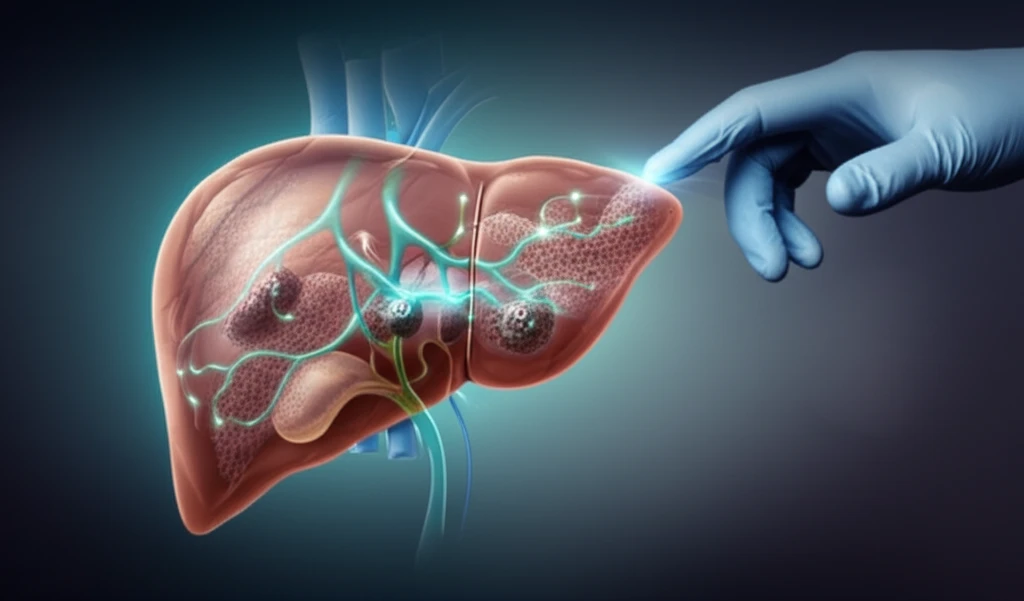
Surgical Success: How to Identify the Right Liver Cancer Patients

"A novel approach using localized therapy could revolutionize liver cancer treatment by carefully selecting patients who will benefit most from surgery."
Hepatocellular carcinoma (HCC), a type of liver cancer, often presents with a serious complication: portal vein tumor thrombosis (PVTT). This means the cancer has invaded the main vein that carries blood to the liver, making treatment challenging. Historically, HCC with PVTT has a poor prognosis, with patients surviving less than a year.
While surgery offers the best chance for long-term survival, it's not suitable for everyone. Identifying which patients will truly benefit from surgery is crucial. Researchers have been exploring ways to improve patient selection and outcomes, leading to innovative treatment strategies.
One such strategy involves using localized concurrent chemoradiotherapy (CCRT) followed by hepatic arterial infusion chemotherapy (HAIC). This approach aims to shrink the tumor and control its spread before considering surgery. A recent study investigated whether this combination can help identify optimal surgical candidates among HCC patients with PVTT.
Localized Therapy: A Game-Changer for Surgical Selection?
The study evaluated the impact of localized CCRT and HAIC on subsequent surgical resection. The goal was to determine if this combined treatment could effectively select patients who would benefit most from surgery. The researchers compared outcomes of patients who underwent immediate resection versus those who received CCRT/HAIC followed by resection if their tumors responded.
- Improved Resection Rates: Downstaging with CCRT led to a 26.5% resection rate.
- Second-Order PVTT Advantage: Patients with second-order PVTT (tumor thrombus further away from the main portal vein) had a higher resection rate (50%) compared to first-order PVTT (21%).
- Favorable Tumor Biology: Patients with second-order PVTT demonstrated better responses to treatment, suggesting a less aggressive tumor type.
The Future of Liver Cancer Treatment: Personalized Approaches
The study highlights the importance of personalized treatment strategies in liver cancer. As Blake Cady wisely stated, "biology is king, selection is queen." The presence of PVTT indicates aggressive tumor behavior, making careful patient selection crucial for successful surgical outcomes.
While surgical resection remains the primary hope for a cure, reliable patient selection criteria have been lacking. This research demonstrates that downstaging achieved with localized CCRT can serve as an effective tool for identifying optimal surgical candidates with favorable tumor biology.
However, the retrospective nature and limited sample size of the study call for further prospective research. Future investigations should focus on identifying factors associated with radiologic response after CCRT to refine the downstaging strategy and maximize patient benefits. Additionally, exploring factors that promote liver regeneration after localized CCRT is essential to increase resectability and improve outcomes.