
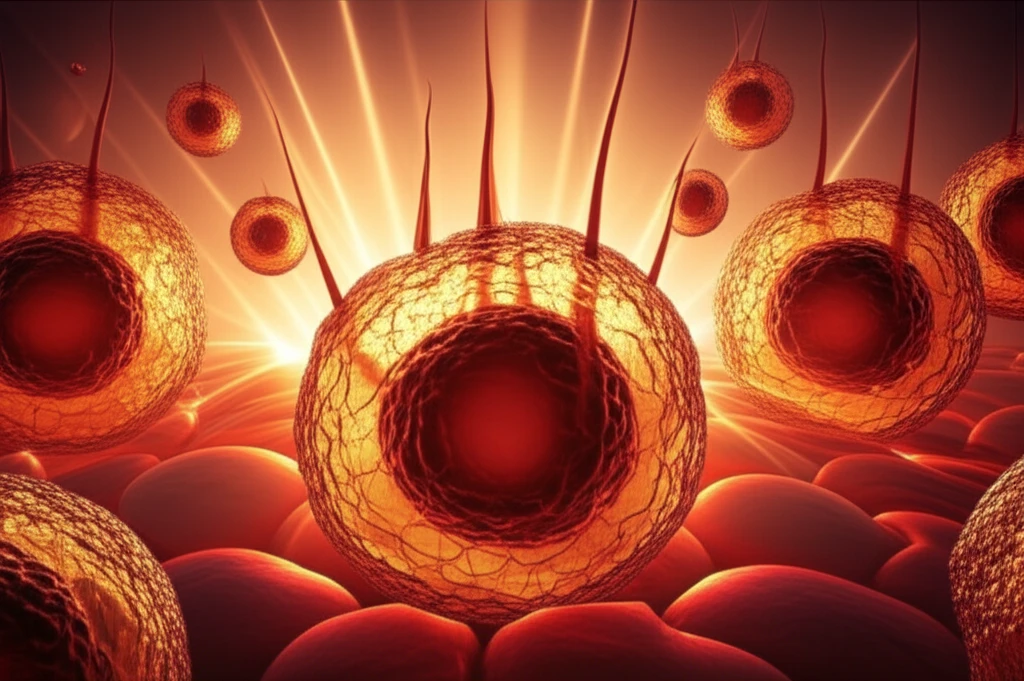
Sunscreen Revolution: Melanin-Inspired Nanoparticles Could Be the Future of Skin Protection

"Scientists are developing synthetic melanin nanoparticles that penetrate skin cells, offering superior defense against UV damage and a potential solution for skin disorders. Is this the end of sunburns?"
As summer approaches, the quest for better sun protection intensifies. Traditional sunscreens, while helpful, only provide a surface-level defense against the sun's harmful ultraviolet (UV) rays. But what if you could protect your skin from the inside out? Scientists are exploring innovative ways to enhance skin's natural defenses, and one of the most promising approaches involves melanin-imitating nanoparticles.
Melanin, the pigment responsible for skin color, is the body's natural shield against UV-induced DNA damage. People with conditions like albinism or vitiligo, who have impaired melanin production, are particularly vulnerable to sun damage. Researchers are now looking at synthetic melanin to fortify skin from within, creating a new frontier in sun protection.
This article delves into the groundbreaking research on skinlike sunscreen, exploring how melanin-inspired nanoparticles work, their potential benefits, and what this innovation could mean for the future of skincare. Whether you're a sunbather, outdoor enthusiast, or someone seeking better protection against UV rays, understanding this new technology can empower you to make informed choices about your skin health.
How Do Melanin Nanoparticles Work to Protect Skin?
The secret lies in mimicking the body's natural processes. Melanin is produced in specialized skin cells called melanocytes, which then transfer it to other skin cells, called keratinocytes. This melanin forms a protective barrier around the cell nuclei, shielding DNA from UV radiation. The new approach involves creating synthetic melanin nanoparticles that can be absorbed directly into skin cells, amplifying this protective effect.
- Mimicking Nature: The synthetic melanin nanoparticles behave similarly to natural melanin, distributing themselves around the cell nuclei.
- Enhanced Protection: These nanoparticles not only darken the skin but also structurally reinforce the cells' natural defenses.
- UV Defense: Studies show that skin cells treated with these nanoparticles are significantly more resistant to UV radiation.
What's Next for Skinlike Sunscreen?
While the initial results are encouraging, further research is needed to fully understand the absorption mechanism and long-term effects of these nanoparticles. The next step is to determine how effectively the synthetic melanin is absorbed into the skin and how it interacts with skin cells over time. Ultimately, the goal is to develop a safe and effective topical application that can provide enhanced sun protection for everyone, especially those with melanin deficiencies. The future of sunscreen may lie in harnessing the power of nature at the nanoscale.