
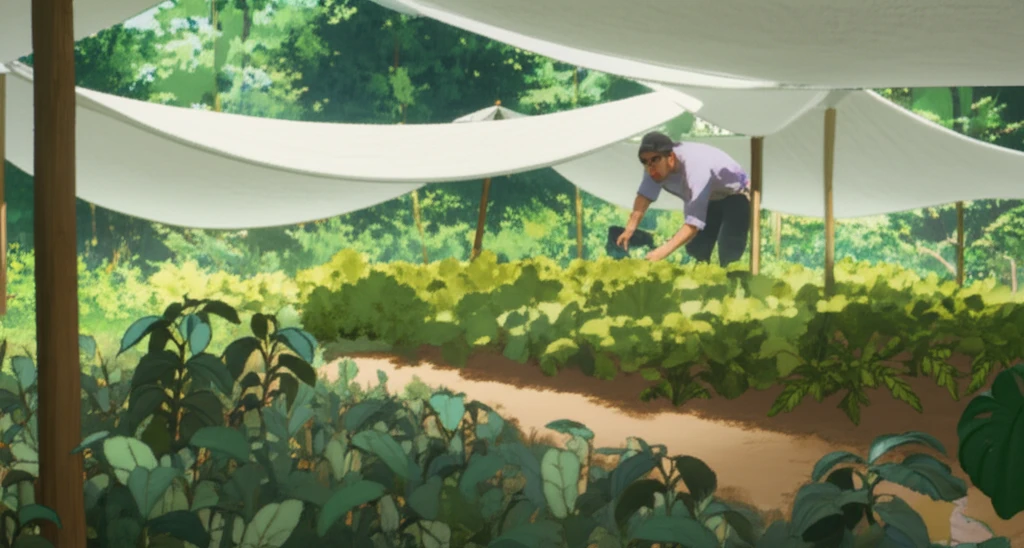
Garden with strategic shading to suppress Mary-Nightshade weeds

Struggling with Weeds? How Shading Techniques Can Help You Control Mary-Nightshade

"Discover how manipulating light levels can significantly impact the growth of this aggressive weed, potentially giving your garden a fighting chance."


Solanum americanum, or Mary-Nightshade, is a common weed known for its aggressive growth and ability to reduce the productivity of cultivated plants. This troublesome weed is frequently found infesting various vegetable crops, making it a significant challenge for gardeners and farmers alike. Understanding how to manage its growth is crucial for maintaining healthy and productive gardens.

One innovative approach to weed management involves manipulating the light environment. Plants, like all living organisms, respond to their surroundings, and light is a key factor influencing their growth and development. By understanding how Mary-Nightshade reacts to different levels of shade, we can develop strategies to suppress its growth and give desired plants a competitive advantage.

Recent research has explored the impact of shading on the growth and partitioning of resources in Mary-Nightshade plants. This article delves into the findings of a study that examined how different levels of shade affect the plant's growth rate, biomass distribution, and overall development. By understanding these responses, gardeners can harness shading as a tool to control this invasive weed.

How Does Shading Affect Mary-Nightshade Growth?

Garden with strategic shading to suppress Mary-Nightshade weeds

A study was conducted to analyze the growth and resource allocation of Mary-Nightshade plants under three different shading conditions: full sunlight, 35% shade, and 65% shade. The plants were monitored over several weeks, with researchers measuring key growth parameters such as total dry mass, leaf area, and the distribution of biomass among different plant parts (leaves, stems, and fruits).

The results revealed that Mary-Nightshade plants exhibit different growth patterns depending on the amount of light they receive. Here’s a breakdown of the key findings:

  • Full Sunlight: Plants in full sunlight showed strong initial growth, but their overall development was somewhat limited compared to those under moderate shade.
  • 35% Shade: This level of shade appeared to be the most favorable for Mary-Nightshade growth. Plants in this condition exhibited the highest total dry mass, leaf area, and fruit production.
  • 65% Shade: Plants under heavy shade experienced reduced growth and development. They had lower total dry mass and fruit production compared to the other two groups.
These findings suggest that Mary-Nightshade thrives in partially shaded environments, while its growth is suppressed under heavy shade. This information can be used to develop effective shading strategies for managing this weed in gardens and agricultural settings.

Practical Tips for Using Shading in Your Garden

Based on the research findings, here are some practical tips for using shading to manage Mary-Nightshade in your garden:<ul><li><b>Identify Vulnerable Areas:</b> Determine which areas of your garden are most susceptible to Mary-Nightshade infestation. These are the areas where shading strategies will be most beneficial.</li><li><b>Implement Strategic Shading:</b> Use shade cloth, taller plants, or other structures to create partially shaded environments in vulnerable areas. Aim for a shade level of around 35% to suppress Mary-Nightshade growth without harming your desired plants.</li><li><b>Monitor and Adjust:</b> Regularly monitor the effectiveness of your shading strategies. Adjust the level of shade as needed to optimize weed control and promote the growth of your desired plants.</li></ul>By implementing these shading techniques, you can create a less favorable environment for Mary-Nightshade, giving your garden a better chance to thrive.

About this Article -

This article was crafted using a human-AI hybrid and collaborative approach. AI assisted our team with initial drafting, research insights, identifying key questions, and image generation. Our human editors guided topic selection, defined the angle, structured the content, ensured factual accuracy and relevance, refined the tone, and conducted thorough editing to deliver helpful, high-quality information.See our About page for more information.

Everything You Need To Know

1

What is Mary-Nightshade, and why is it important to control its growth?

Mary-Nightshade, scientifically known as Solanum americanum, is an aggressive weed that can significantly reduce the productivity of cultivated plants, especially vegetable crops. It is important to control its growth because it competes with desired plants for resources like nutrients, water, and sunlight, hindering their development and yield. Managing Mary-Nightshade effectively is crucial for maintaining healthy and productive gardens.

2

How does shading affect the growth of Mary-Nightshade, and what are the implications of these effects?

Shading affects Mary-Nightshade growth by manipulating the amount of light the plant receives. Research indicates that Mary-Nightshade exhibits different growth patterns under varying levels of shade. Specifically, plants in full sunlight show strong initial growth but are somewhat limited in overall development. A 35% shade level appears most favorable, resulting in the highest total dry mass, leaf area, and fruit production. In contrast, plants under 65% shade experience reduced growth and fruit production. The implications are that by strategically using shade, you can suppress Mary-Nightshade growth, giving desired plants a competitive advantage. Utilizing different shading percentages can give different results.

3

What are the practical steps for using shading effectively to manage Mary-Nightshade in a garden?

To use shading to manage Mary-Nightshade in your garden, first identify the areas most susceptible to infestation. Then, implement strategic shading using shade cloth or taller plants to create partially shaded environments, ideally aiming for a shade level of around 35%. Regularly monitor the effectiveness of your shading strategies and adjust the level of shade as needed to optimize weed control while still promoting the growth of your desired plants. These techniques create a less favorable environment for Mary-Nightshade, improving your garden's overall health.

4

What is the most effective level of shade for controlling Mary-Nightshade, and what are the implications of using this level?

The most effective level of shade for controlling Mary-Nightshade is approximately 65%. While a 35% shade level appears to promote Mary-Nightshade growth, a heavier shade of 65% significantly reduces its growth and development. The implications of using 65% shade are that it suppresses the weed's ability to thrive, leading to lower total dry mass and fruit production, thereby limiting its spread and impact on your garden. However, it's important to monitor your desired plants to ensure they still receive enough light to grow.

5

What does strategic shading involve, and why is this approach important for managing Mary-Nightshade?

Strategic shading involves using shade cloth, taller plants, or other structures to create partially shaded environments in areas vulnerable to Mary-Nightshade infestation. The significance of this approach is that it allows you to manipulate the light environment to suppress weed growth without necessarily harming your desired plants. This is important because it provides a targeted and eco-friendly method of weed control, reducing the need for herbicides or other chemical interventions. By carefully monitoring and adjusting the level of shade, you can optimize weed control while still supporting the health and productivity of your garden.

Newsletter Subscribe

Subscribe to get the latest articles and insights directly in your inbox.