
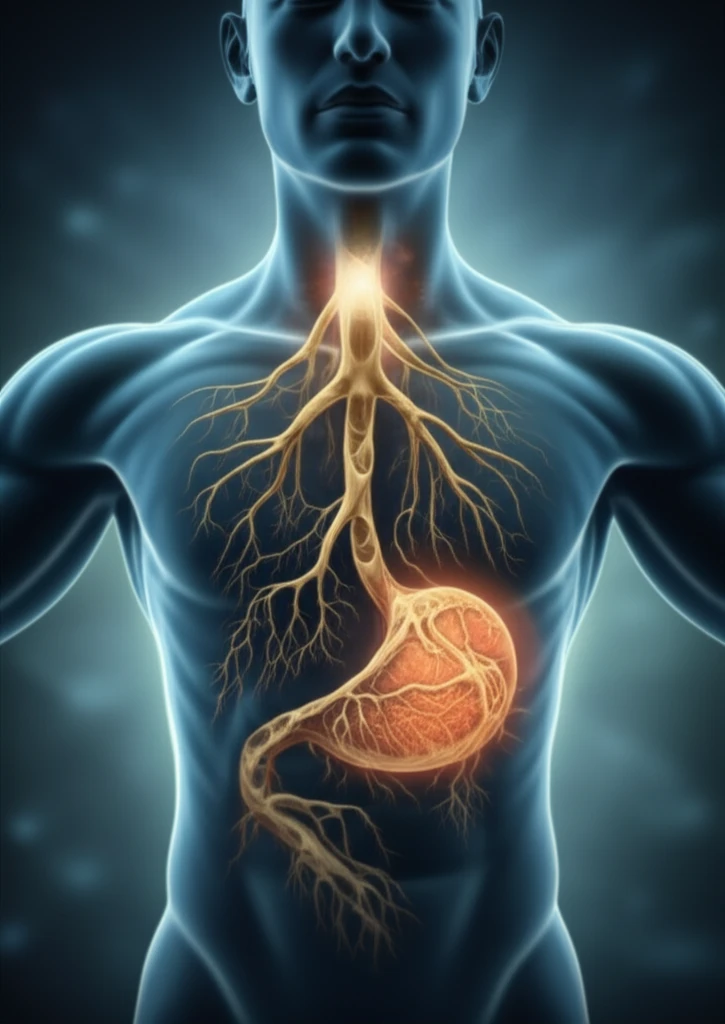
Illustration of throat with glowing light and plant roots around stomach symbolizing combined treatment for globus pharyngeus

Struggling with That Lump-in-Your-Throat Feeling? Relief May Be Closer Than You Think

"Innovative Combination Therapy Offers New Hope for Globus Pharyngeus Sufferers"


That persistent sensation of a lump or foreign object lodged in your throat, even when nothing is there? You're likely experiencing Globus Pharyngeus (GP), a frustratingly common complaint that brings many to the otolaryngologist's office. Often linked to laryngopharyngeal reflux disease (LPRD), GP can significantly impact your daily comfort and quality of life.

Proton pump inhibitors (PPIs) have become a go-to treatment for LPRD, aiming to reduce stomach acid and ease symptoms, but relief isn't always guaranteed. Traditional Japanese medicine offers another avenue. Rikkunshito, known for its prokinetic effects that stimulate gastrointestinal movement, has shown promise in managing gastroesophageal reflux disease (GERD) symptoms. The big question is can these be combined?

Now, a new study investigates the combined power of high-dose PPIs and rikkunshito for GP sufferers. By exploring this innovative approach, we aim to shed light on the potential for a more effective treatment strategy, especially for those who find PPIs alone aren't enough.

Unlocking the Potential: PPIs and Rikkunshito for GP Relief

Illustration of throat with glowing light and plant roots around stomach symbolizing combined treatment for globus pharyngeus

The study, published in the Journal of Medical Investigation, enrolled 106 patients struggling with GP, none of whom had any visible organic causes identified through endoscopic examination. The research team embarked on a two-step treatment process. Initially, all participants were given high-dose PPIs for a period of 4 to 8 weeks.

The initial results were encouraging: Roughly 61% of the patients experienced significant improvement in their GP symptoms with PPI treatment alone. For the remaining 41 patients who didn't respond to PPIs, the study took an interesting turn.

  • A subset of these PPI-refractory patients (22 individuals) were then treated with a combination of high-dose PPIs and rikkunshito.
  • The results demonstrated that roughly 63% of these patients experienced a notable reduction in their GP symptoms after four weeks.
  • The study emphasizes the existence of LPRD in those complaining about GP.
This suggests that, in addition to acid reflux, disrupted gastrointestinal motility may play a crucial role in the development of GP.

A Combined Approach: The Future of GP Treatment?

This research shines a light on the complexity of Globus Pharyngeus and suggests that effective treatment may require addressing more than just acid reflux. The promising results of combining PPIs with rikkunshito open new avenues for those seeking relief from this bothersome condition.

If you're experiencing a persistent lump-in-your-throat sensation, it's essential to consult with an otolaryngologist to determine the underlying cause. Discussing the potential benefits of both PPI therapy and alternative approaches like rikkunshito could be a crucial step towards finding the right solution for you.

While the study offers hope, it's important to remember that individual results may vary. Further research is needed to fully understand the mechanisms behind rikkunshito's effects and to identify which patients are most likely to benefit from this combined therapy. But for now, it's a promising step forward in the quest to conquer Globus Pharyngeus.

About this Article -

This article was crafted using a human-AI hybrid and collaborative approach. AI assisted our team with initial drafting, research insights, identifying key questions, and image generation. Our human editors guided topic selection, defined the angle, structured the content, ensured factual accuracy and relevance, refined the tone, and conducted thorough editing to deliver helpful, high-quality information.See our About page for more information.

This article is based on research published under:

DOI-LINK: 10.2152/jmi.63.227, Alternate LINK

Title: Efficacy Of Proton Pump Inhibitor In Combination With Rikkunshito In Patients Complaining Of Globus Pharyngeus

Subject: General Biochemistry, Genetics and Molecular Biology

Journal: The Journal of Medical Investigation

Publisher: University of Tokushima Faculty of Medicine

Authors: Sei-Ichi Nakano, Hidetaka Iwasaki, Eiji Kondo, Katsushi Miyazaki, Haruhiko Shizuku, Sei-Ichiro Kamimura, Junya Fukuda, Ryo Kanamura, Noriaki Takeda

Published: 2016-01-01

Everything You Need To Know

1

What exactly is Globus Pharyngeus (GP), and how does it affect daily life?

Globus Pharyngeus (GP) is that recurring feeling of having a lump or something stuck in your throat, even when there's nothing physically there. It's a common reason people visit ear, nose, and throat doctors. Laryngopharyngeal reflux disease (LPRD) is often associated with it and can really impact your day-to-day comfort.

2

What role do proton pump inhibitors (PPIs) and rikkunshito play in treating Globus Pharyngeus (GP)?

Proton pump inhibitors (PPIs) are frequently used to treat LPRD by reducing stomach acid. However, a traditional Japanese medicine called rikkunshito, which enhances gastrointestinal movement, has also been shown to help with gastroesophageal reflux disease (GERD) symptoms. The study looks at combining the two in treatment.

3

How was the study conducted, and what were the main results of combining PPIs and rikkunshito for Globus Pharyngeus (GP) sufferers?

The study, which was written about in the Journal of Medical Investigation, divided 106 patients with GP into two stages of treatment. The patients who did not get better with PPIs were given high doses of PPIs in conjunction with rikkunshito. Following this combined treatment, about 63% of these individuals reported a noticeable improvement in their symptoms.

4

What does the study suggest about the underlying causes of Globus Pharyngeus (GP)?

The findings imply that disrupted gastrointestinal motility, in addition to acid reflux, may be a significant role in the development of Globus Pharyngeus (GP). This suggests that treating GP may require addressing multiple underlying issues, rather than just focusing on acid reduction alone. More specifically, LPRD is found to have a correlation with GP complaints.

5

What are the broader implications of these findings for treating Globus Pharyngeus (GP), and what further research is needed?

The study found that a combination of PPIs and rikkunshito had promising results in reducing GP symptoms, especially for those who didn't find relief with PPIs alone. This suggests that a more comprehensive approach, addressing both acid reflux and gastrointestinal motility, could be the future of effectively managing this condition. However, further research is needed to fully understand the long-term benefits and optimal usage of this combined therapy, as well as to identify which specific patient profiles would benefit most from it. Future studies could also explore other potential contributing factors to GP, such as stress and muscle tension, to develop even more targeted and effective treatments.

Newsletter Subscribe

Subscribe to get the latest articles and insights directly in your inbox.