
Stronger & Lighter: How 'Friction Stir' Composites Could Transform Manufacturing

"Could a new twist on friction create stronger, lighter materials for everything from cars to aerospace?"
Magnesium alloys are gaining ground as lightweight materials for the automotive and aerospace industries. Among these, AZ series alloys are popular choices. However, to really push the limits of material performance, scientists are turning to metal matrix composites (MMCs) - hybrid materials that blend the best properties of different substances.
One promising technique for creating MMCs is friction stir processing (FSP). Unlike traditional methods, FSP is a solid-state process, meaning the materials don't melt. This offers significant advantages in controlling the final product's characteristics. Researchers have been exploring FSP to combine AZ31 magnesium alloy with fly ash, a readily available industrial byproduct, to create surface composites with enhanced properties.
This article dives into how FSP is used to create these unique AZ31-fly ash composites, and explores the impact on their microstructure, hardness, and wear resistance. The goal is to understand how this innovative approach can lead to stronger, more durable materials for a range of applications.
Friction Stir Processing: A Recipe for Stronger Materials
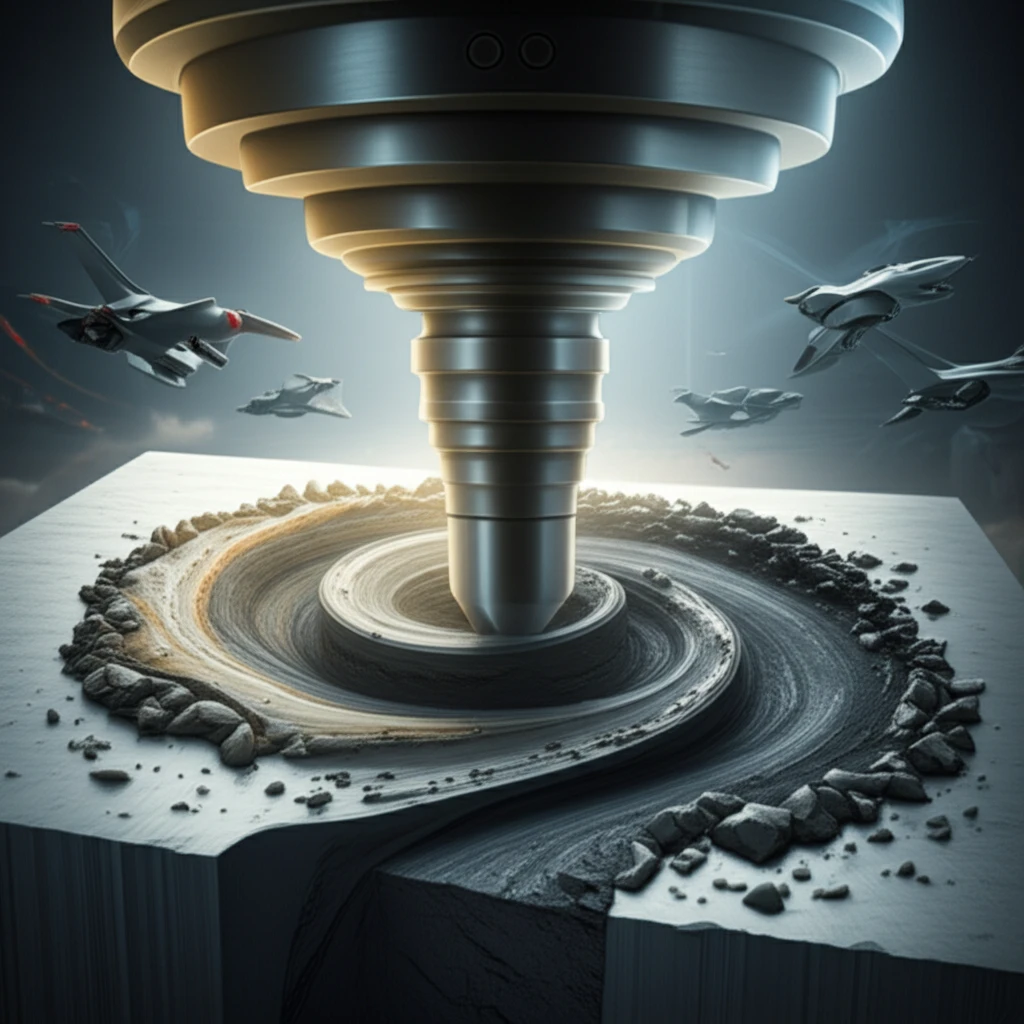
The process begins with AZ31 magnesium alloy sheets. Small holes are drilled into the surface, filled with fly ash particles, and then sealed. FSP uses a specialized tool with a rotating pin and shoulder. This tool is plunged into the material and moved along the surface, using friction to generate heat and mix the fly ash into the AZ31 alloy.
- Tool rotation speed: Higher speeds can generate more heat, but excessive speed may cause the material to stick to the tool.
- Travel speed: Slower speeds allow more time for heat to dissipate, preventing overheating.
- Tool Design: The shape of the pin and shoulder affects the mixing and distribution of the fly ash.
The Future of Friction Stir Composites
The study demonstrates the potential of FSP to create AZ31-fly ash composites with enhanced hardness and wear resistance. The key lies in carefully controlling the process parameters to ensure uniform distribution of the fly ash particles and a refined grain structure.
While the results are promising, further research is needed to fully understand the wear mechanisms at play and optimize the composite's properties for specific applications. This includes exploring different fly ash compositions, tool designs, and processing parameters.
Friction stir processing offers a pathway to create high-performance materials that are both lightweight and durable. As industries seek more sustainable and efficient solutions, FSP composites could play a significant role in shaping the future of manufacturing.