
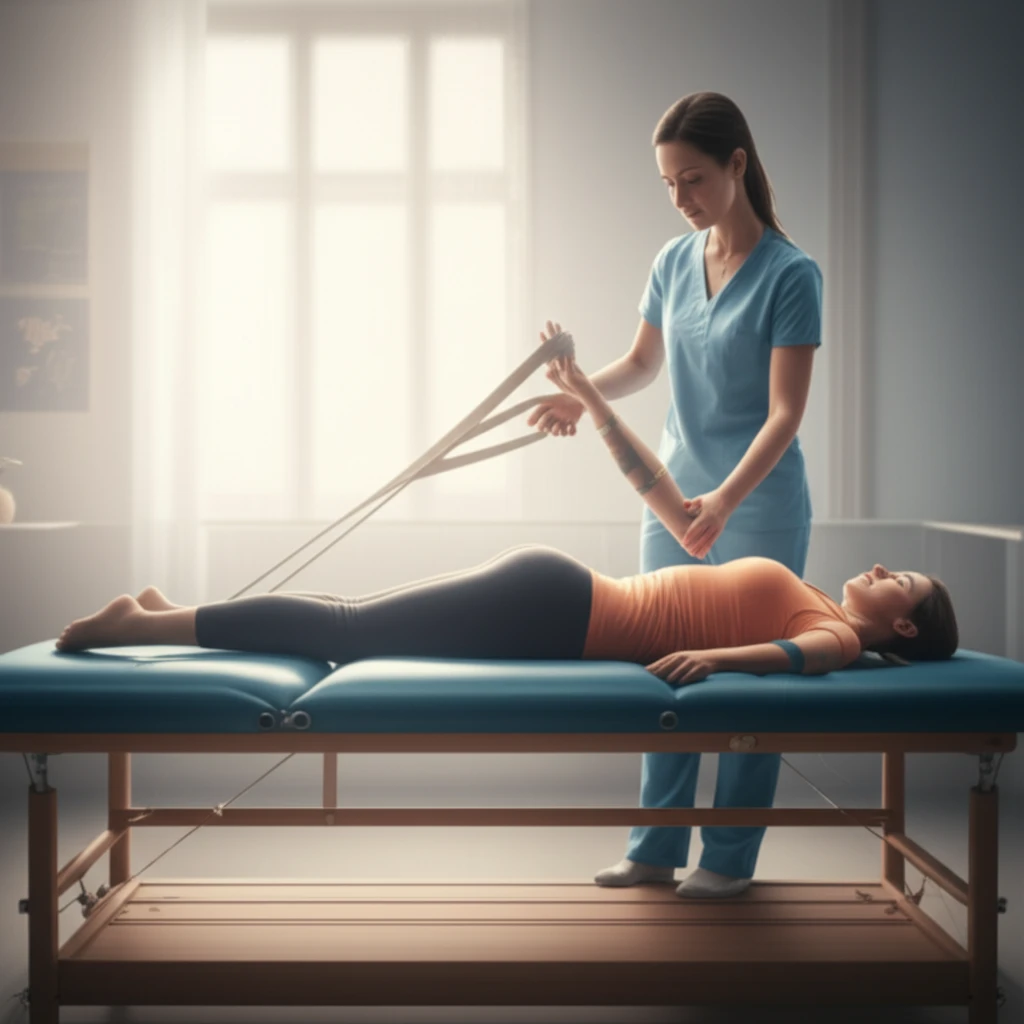
Stroke Recovery: How Combining Exercise and Non-Elastic Taping Can Improve Your Life

"Discover how combining exercise with non-elastic taping techniques can significantly aid in stroke recovery, enhancing motor function and improving daily life."
Stroke recovery is a journey filled with challenges, but also immense potential for improvement. Recent research has focused on enhancing motor function in stroke survivors, exploring various therapeutic approaches. Among these, the combination of exercise and non-elastic taping has emerged as a promising strategy. This article dives into the effectiveness of this combined approach, providing insights into how it can significantly impact the lives of those affected by stroke.
The primary goal in stroke rehabilitation is to restore motor function, enabling individuals to regain independence and improve their quality of life. Traditional methods like physical therapy and occupational therapy are crucial, but integrating innovative techniques can accelerate progress. Non-elastic taping, a technique used to support and stabilize muscles and joints, when combined with targeted exercises, offers a synergistic effect that can optimize motor function recovery.
This article presents an overview of how exercise combined with non-elastic taping aids stroke recovery. This exploration will cover the scientific basis for this approach, the benefits it offers, and practical considerations. Whether you are a stroke survivor, a caregiver, or a healthcare professional, understanding this innovative method can provide valuable information and hope for improved outcomes.
Understanding the Science Behind Non-Elastic Taping and Exercise
To grasp the effectiveness of combining exercise with non-elastic taping, it is essential to understand the underlying principles. Non-elastic taping, unlike elastic tapes, provides robust support and stability to muscles and joints. When applied correctly, it can improve joint alignment, reduce pain, and enhance muscle activation. This method is believed to optimize the body's biomechanics, creating a favorable environment for exercise.
- Improved Muscle Activation: Non-elastic taping helps to correctly align and support muscles, promoting optimal muscle activation during exercises.
- Enhanced Joint Stability: Provides stability to joints, reducing the risk of injury and allowing for more confident movements.
- Reduced Pain: Taping can alleviate pain, making it easier to perform exercises and improve overall comfort.
- Optimized Biomechanics: The correct application of non-elastic taping improves body mechanics, making exercises more effective.
- Enhanced Exercise Performance: The supportive effect of taping allows individuals to perform exercises with greater precision and control, leading to improved outcomes.
Embracing the Path to Recovery
The combination of exercise and non-elastic taping offers a promising approach for stroke recovery. By understanding the science, appreciating the benefits, and considering practical considerations, individuals can use this method to enhance their motor function, improve their quality of life, and regain independence. As research continues to advance, we can expect further refinements to the combination of exercise and non-elastic taping, which will offer hope and support to those affected by stroke. Remember, the journey to recovery is a collaborative effort. With the guidance of healthcare professionals and a commitment to exercise and innovative techniques, stroke survivors can achieve remarkable progress and live fulfilling lives.