
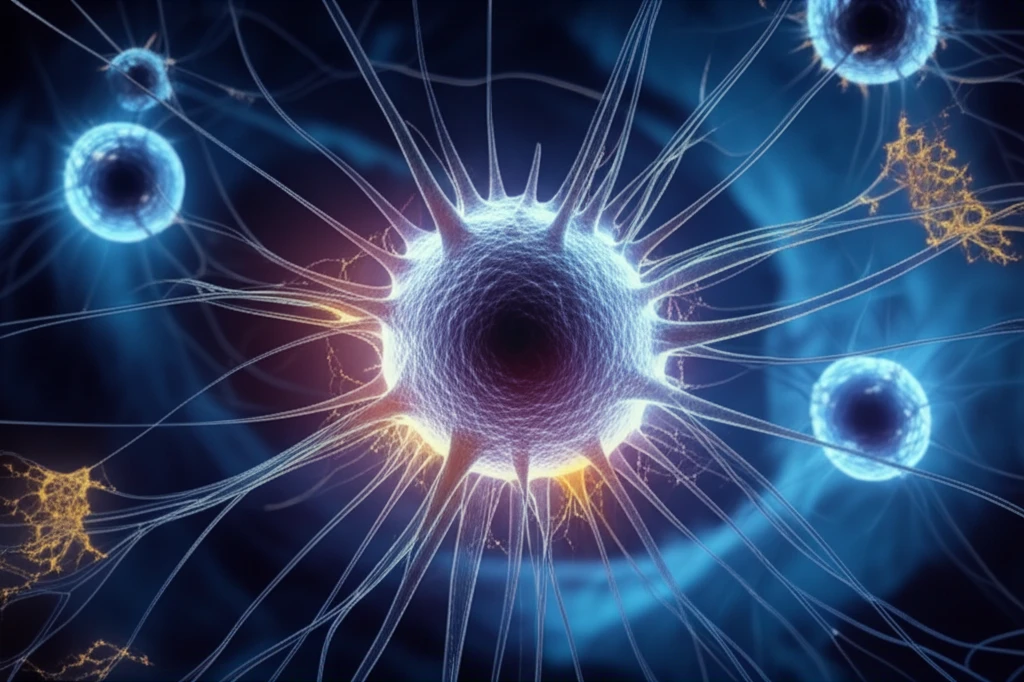
Stem cells regenerating brain connections after stroke.

Stroke Recovery: Can Stem Cells Help?

"Discover how autologous stem cell therapy is revolutionizing stroke rehabilitation by offering new hope for improved recovery and reduced brain damage."


Stroke, a major cause of disability and mortality, often leaves individuals with lasting impairments such as hemiplegia and aphasia. While there is no one-size-fits-all cure, cell-based therapies are emerging as promising treatment avenues. Among these, mesenchymal stem cells (MSCs), particularly those derived from adipose tissue (ADMSCs), are gaining traction for their therapeutic potential.

Compared to embryonic stem cells and bone marrow-derived MSCs, ADMSCs offer unique advantages. They are abundant, easily accessible with minimal invasiveness, and can be cultured to sufficient numbers for autologous transplantation, all while sidestepping ethical concerns. Furthermore, ADMSCs exhibit a shorter proliferation cycle and produce higher levels of growth factors, making them attractive candidates for stroke therapy.

A recent study published in the Journal of Translational Medicine sheds light on the immunogenicity of rat ADMSCs, comparing the effects of autologous (auto-ADMSCs) and allogeneic (allo-ADMSCs) transplantation in rats after the acute phase of middle cerebral artery occlusion (MCAO). The findings offer valuable insights into the potential of ADMSCs for stroke recovery.

Autologous vs. Allogeneic ADMSCs: Understanding the Key Differences

Stem cells regenerating brain connections after stroke.

The study, led by Zhang Yu and colleagues, aimed to analyze the immunogenicity of rat ADMSCs by comparing the immunological effects of intraparenchymal administration of autologous and allogeneic ADMSCs after MCAO. Researchers transplanted either auto-ADMSCs or allo-ADMSCs into rats eight days post-MCAO and then assessed the immune response, viability, migration, and differentiation of the transplanted cells.

One of the critical aspects examined was the immunogenicity of ADMSCs. Immunogenicity refers to the ability of a substance to provoke an immune response in the body. In the context of stem cell therapy, a lower immunogenicity is desirable to minimize the risk of rejection and ensure the transplanted cells can effectively integrate into the host tissue.

  • Lower Immunogenicity: Auto-ADMSCs exhibited lower immunogenicity and evoked weaker immunological responses compared to allo-ADMSCs.
  • Reduced Immune Response: Allo-ADMSCs triggered a significantly stronger protein expression of interleukin-2 and interferon-gamma, along with local accumulation of CD4+ T lymphocytes, CD8+ T lymphocytes, and microglial cells.
  • Enhanced Viability: Auto-ADMSCs demonstrated higher survival rates, longer survival time, wider migratory scope, and fewer apoptotic cells.
These findings suggest that auto-ADMSCs may offer a more favorable profile for stroke therapy due to their reduced immunogenicity and enhanced ability to integrate and survive within the brain tissue. Moreover, the study also explored the differentiation potential of transplanted ADMSCs.

The Future of Stroke Treatment

The study underscores the potential of autologous ADMSC transplantation for stroke recovery, highlighting their superior viability, migratory ability, and differentiation potential compared to allogeneic ADMSCs. While further research is needed to confirm these findings and elucidate the underlying mechanisms, this study provides a solid foundation for the development of improved cell-based therapies for stroke.

About this Article -

This article was crafted using a human-AI hybrid and collaborative approach. AI assisted our team with initial drafting, research insights, identifying key questions, and image generation. Our human editors guided topic selection, defined the angle, structured the content, ensured factual accuracy and relevance, refined the tone, and conducted thorough editing to deliver helpful, high-quality information.See our About page for more information.

This article is based on research published under:

DOI-LINK: 10.1186/s12967-018-1709-y, Alternate LINK

Title: Immunological Effects Of The Intraparenchymal Administration Of Allogeneic And Autologous Adipose-Derived Mesenchymal Stem Cells After The Acute Phase Of Middle Cerebral Artery Occlusion In Rats

Subject: General Biochemistry, Genetics and Molecular Biology

Journal: Journal of Translational Medicine

Publisher: Springer Science and Business Media LLC

Authors: Zhang Yu, Tang Wenyan, Su Xuewen, Dong Baixiang, Wang Qian, Wang Zhaoyan, Yang Yinxiang, Qu Suqing, Luan Zuo

Published: 2018-12-01

Everything You Need To Know

1

What is the current focus of research regarding stroke treatment?

Stroke, a major cause of disability and mortality, often leads to lasting impairments like hemiplegia and aphasia. The current research focuses on Autologous Stem Cell Therapy using Adipose-Derived Stem Cells (ADMSCs). This innovative approach aims to enhance recovery and minimize brain damage.

2

Why is Autologous Stem Cell Therapy considered important in stroke treatment?

Autologous Stem Cell Therapy is important because it utilizes a patient's own Adipose-Derived Stem Cells (ADMSCs). This approach minimizes the risk of immune rejection, a common problem with Allogeneic Stem Cells. This is crucial for the survival and effectiveness of the transplanted cells, thereby improving the chances of successful stroke recovery.

3

What are Adipose-Derived Stem Cells (ADMSCs), and what advantages do they offer in stroke therapy?

Adipose-Derived Stem Cells (ADMSCs) are mesenchymal stem cells derived from fat tissue. Compared to embryonic stem cells and bone marrow-derived mesenchymal stem cells (MSCs), ADMSCs are easily accessible and abundant, making them a practical choice for autologous transplantation. Their ability to proliferate quickly and produce growth factors further enhances their therapeutic potential in stroke treatment.

4

What is immunogenicity, and why is it important in stem cell therapy for stroke?

Immunogenicity is the ability of a substance to provoke an immune response. In the context of stem cell therapy, lower immunogenicity is desirable to prevent rejection. The study compared Autologous ADMSCs (auto-ADMSCs) and Allogeneic ADMSCs (allo-ADMSCs), showing that auto-ADMSCs have lower immunogenicity and evoke weaker immune responses. This means auto-ADMSCs are less likely to be attacked by the body's immune system, increasing their survival and integration into the brain tissue.

5

What are the key implications of the recent study on Autologous Stem Cell Therapy for stroke?

The implications of the research include a potential shift towards Autologous ADMSC transplantation for stroke recovery. The study highlights the superior viability, migratory ability, and differentiation potential of auto-ADMSCs compared to allo-ADMSCs. While more research is needed, this study provides a basis for developing improved cell-based therapies to help stroke patients.

Newsletter Subscribe

Subscribe to get the latest articles and insights directly in your inbox.