
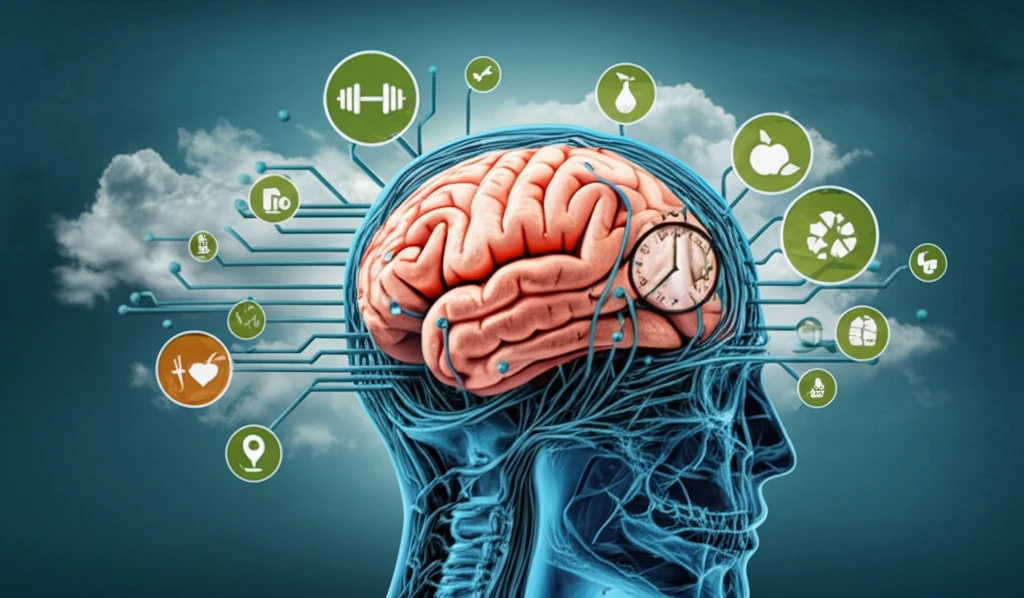
Stroke Prevention and Recovery: New Insights for a Healthier Brain

"Discover the latest advancements in stroke research, from extended treatment windows to lifestyle changes for better brain health and improved recovery."
The year 2018 marked a significant period for stroke research, delivering advancements that are reshaping how we approach prevention and treatment. From extending the critical time windows for intervention to refining the use of medications and devices, the developments hold promise for better outcomes and improved brain health.
One of the most notable achievements was the extension of the treatment window for recanalization therapies. Traditionally limited to 4.5 hours after the onset of stroke symptoms, new research demonstrated successful outcomes with treatments administered up to 16 or even 24 hours post-stroke, or in patients with unknown onset times. These interventions, including thrombectomy and intravenous thrombolytic therapy, are guided by advanced imaging techniques to identify suitable candidates.
These trials used imaging to select patients according to perfusion imaging, acute ischaemic lesion, and mismatch between neurological deficit and infarct volume. Delivering thrombectomy remains problematic in many settings and patients who undergo the procedure without general anaesthetic have better outcomes than those who have a general anaesthetic.
Stroke by the Numbers
Stroke strikes about 700,000 Americans each year, but the vast majority of people survive. Close to 5 million stroke survivors are managing their health today. These figures highlight why prevention and recovery matter to so many families.
The Prevention Playbook
People may prevent stroke by maintaining healthy choices and managing any existing health conditions, and experts emphasize the importance of knowing your stroke risk factors and following the advice of your health care provider. Yet the accepted approach relies heavily on individual awareness, early recognition, and consistent behavior change.
From CVA to Modern Care
Cerebrovascular accident, or CVA, is the medical term for a stroke, defined as blood flow to part of the brain being stopped by a blockage or the rupture of a blood vessel. The terminology itself draws on a long medical tradition, including roots such as "encephal/o," derived from the Greek "enkephalos," meaning brain.
Extending Treatment Windows and Refining Therapies
The breakthrough in extending treatment windows has revolutionized acute stroke care. Clinical trials have shown that recanalization therapy can be effective well beyond the traditional 4.5-hour limit, provided that patients are carefully selected based on advanced imaging criteria. These techniques, such as perfusion imaging and diffusion-weighted MRI, help identify individuals who stand to benefit most from intervention, even when treatment is administered up to 24 hours after the onset of symptoms. This shift has expanded the pool of eligible patients and offers new hope for improved outcomes.
- Recanalisation therapy broke the crucial 4.5 h time barrier.
- Greater benefit of recanalisation therapy than of standard of care therapy, without excess hazard.
- “Time every brain” should be the new maxim.
- Change in licence criteria for intravenous alteplase treatment is long overdue.
New Tools for Brain Care
Brain health services now make it easier to take control of cognitive health and monitor it over time, reflecting a growing emphasis on proactive brain care. Daily habits, nutrition, and clean supplements are highlighted as practical, real-life ways to support brain health, focus, and mental clarity.
The Cost of Delay
Promptly spotting stroke symptoms leads to faster treatment and less damage to the brain, which means delayed recognition remains a serious failure point. Because a stroke is defined by blood flow to the brain being interrupted by a blockage or rupture, every minute lost can increase harm.
Clot Versus Rupture
Strokes fall into two broad categories: ischemic strokes, caused by a blood clot interrupting blood flow to the brain, and hemorrhagic strokes, caused by a burst blood vessel. Both disrupt blood flow to the brain, but their different causes mean prevention and treatment approaches must also differ.
The Power of Lifestyle and Future Directions
While medical interventions play a crucial role in stroke management, primary prevention through lifestyle modification remains paramount. The American Heart Association's Life's Simple 7 campaign underscores the importance of diet, exercise, weight control, blood pressure management, blood sugar regulation, cholesterol management, and smoking cessation. Encouragingly, studies show that adopting healthy lifestyle habits can significantly reduce the risk of stroke, even in individuals with genetic predispositions. As research continues to uncover new insights into the complexities of stroke, a holistic approach that combines medical advancements with lifestyle interventions holds the key to promoting long-term brain health and preventing this devastating condition.
What Experts Agree On
Experts agree that prevention begins with knowing your stroke risk factors and following the advice of your health care provider, while promptly spotting stroke symptoms leads to faster treatment and less damage to the brain. Combining everyday healthy choices with careful management of existing health conditions offers the most practical path forward.
Monitoring and Daily Habits
The future of stroke prevention points toward continuous cognitive monitoring and everyday brain-health habits. New services make it possible to take control of cognitive health and monitor it over time, while daily habits, nutrition, and clean supplements are increasingly promoted as accessible supports for brain health.
A Whole-Body Responsibility
Because the human brain is responsible for all of the body's functions, protecting it carries systemic importance. With roughly 700,000 Americans struck each year, prevention is a broad challenge that spans healthcare systems and requires managing existing health conditions alongside everyday choices.
Life After Stroke
Close to 5 million stroke survivors are managing their health today, and the vast majority of people who experience a stroke survive. That makes recovery, rehabilitation, and long-term management a real-world priority for millions of individuals and their families.