
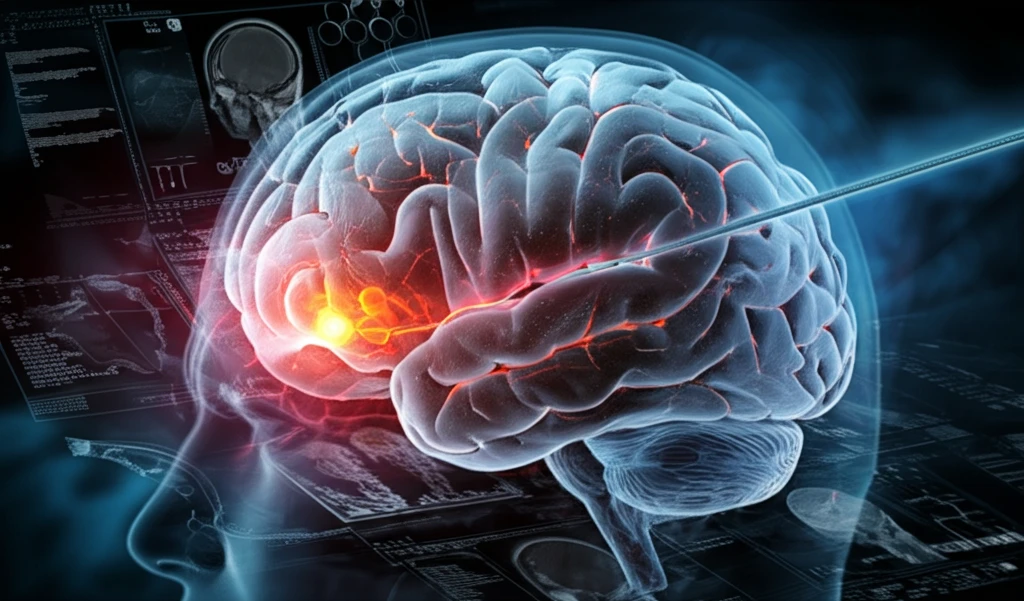
Stroke Breakthrough: Revolutionizing Treatment with Advanced Brain Imaging

"New research unveils how a tailored approach to stroke treatment, combining embolic occlusion techniques with sophisticated MRI, could transform patient outcomes."
Stroke remains a leading cause of disability and death worldwide, underscoring the urgent need for more effective treatments. Pre-clinical studies play a crucial role in the development of new therapies, often relying on animal models to mimic the complexities of human stroke. These models help researchers test the potential of thrombolytic agents and neuroprotective strategies before they reach clinical trials.
Traditionally, many stroke models have lacked the precision needed to accurately replicate the conditions seen in human patients. For example, some methods involve inducing blood clots in the common carotid artery, which can lead to unpredictable blockages in various parts of the brain. This makes it difficult to assess the true impact of potential treatments.
But what if we could create a more precise model, one that closely mirrors the way strokes occur in humans? A new study published in the Journal of Neuroscience Methods details a groundbreaking technique for selectively blocking the middle cerebral artery (MCA) in rabbits. This method, combined with advanced brain imaging, offers a promising platform for pre-clinical stroke research.
How Does Selective Embolic Occlusion Work?
The key to this new technique lies in its precision. Researchers at UCLA developed a method using fluoroscopic-guided microcatheter placement to target the MCA. Here's a step-by-step breakdown:
- Using real-time imaging, the microcatheter is advanced into the internal carotid artery, past the posterior communicating artery.
- A cerebral angiogram confirms the catheter's position and ensures the anterior cerebral artery (ACA) and MCA are clear.
- A small, pre-formed blood clot is then injected through the microcatheter to create a blockage in the proximal MCA.
The Future of Stroke Research
This innovative rabbit model offers a significant step forward in pre-clinical stroke research. By combining selective embolic occlusion with advanced MRI techniques, researchers can gain a more detailed understanding of how strokes evolve and how potential therapies might impact recovery. While further investigation is needed, this approach holds great promise for developing new and more effective treatments for stroke patients in the future.