
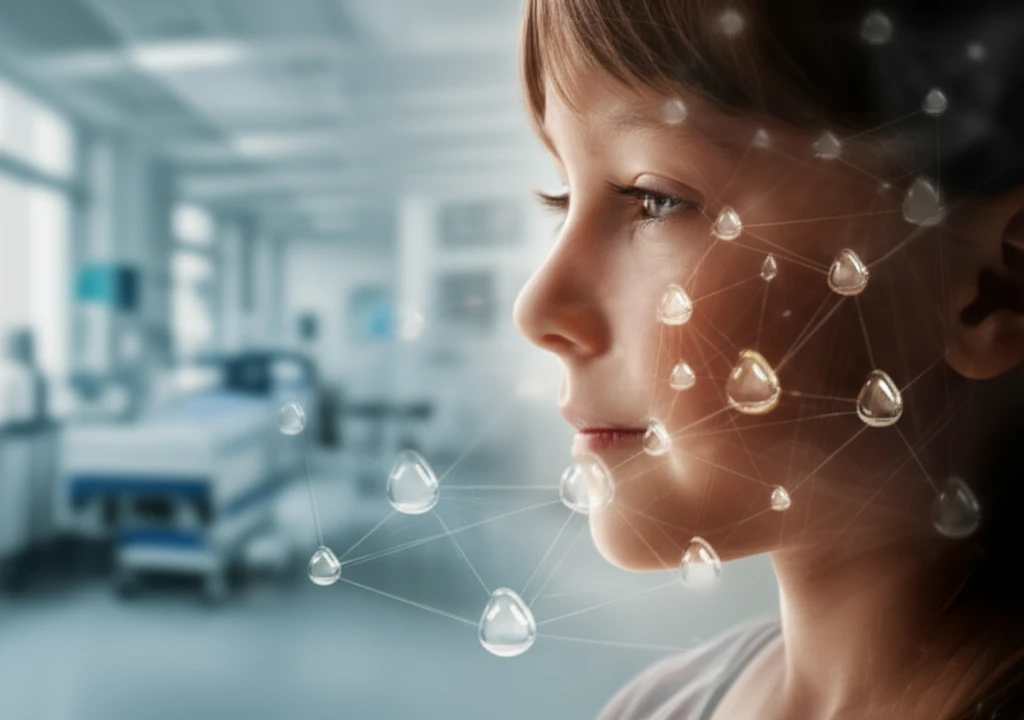
Surreal image of child's face merging with glowing saliva droplets, representing the connection between health and non-invasive diagnostics

Stress Detectives: Can Saliva Unlock Secrets to Children's Health?

"New research explores how salivary biomarkers could provide a non-invasive way to measure stress responses in critically ill children, potentially leading to earlier interventions and better health outcomes."


In the high-stakes world of pediatric intensive care, doctors constantly seek better ways to understand what's happening inside their young patients' bodies. One promising avenue of exploration involves something surprisingly simple: saliva. Researchers are investigating whether measuring certain substances in saliva, known as biomarkers, can provide valuable clues about how critically ill children are responding to stress.

Why saliva? Because it offers a non-invasive window into the body's complex systems. Collecting blood samples can be stressful, especially for children already battling serious health issues. Saliva, on the other hand, is easy to obtain, making it a much gentler option. Scientists believe that analyzing salivary biomarkers like cortisol (a stress hormone), alpha-amylase (an enzyme linked to the nervous system), and immunoglobulin A (an antibody that plays a role in immunity) could offer valuable insights into a child's overall condition.

New research published in SAGE Open Medicine dives into this very topic. The study explores the potential of salivary biomarkers to measure stress responses in critically ill children, aiming to correlate these markers with disease severity and other important clinical factors. Let’s break down what the researchers discovered and what it could mean for the future of pediatric care.

Decoding Salivary Biomarkers: What the Study Revealed

Surreal image of child's face merging with glowing saliva droplets, representing the connection between health and non-invasive diagnostics

The study, conducted over a two-year period, enrolled 79 children admitted to a pediatric intensive care unit (PICU). Researchers collected saliva samples at three specific times of day – 8 a.m., 2 p.m., and 8 p.m. – to examine potential disruptions in the body's natural daily rhythms. Ultimately, data from 65 patients were analyzed.

So, what did the saliva samples reveal? Here's a breakdown of the key findings:

  • Elevated Biomarkers: Overall, the levels of salivary biomarkers were increased in the critically ill children compared to what's typically seen in healthy children.
  • Cortisol Rhythms Disrupted: The normal daily pattern of cortisol secretion was often disturbed, particularly in children with higher Pediatric Risk Index of Mortality (PRISM) scores, indicating more severe illness.
  • Age Matters: Children younger than 6 years old showed significantly higher cortisol and IgA levels.
  • Amylase Holds Steady: While cortisol rhythms were disrupted, alpha-amylase rhythms tended to remain more stable, especially in children with shorter hospital stays.
These findings suggest that salivary biomarkers can indeed reflect the stress responses of critically ill children. The disrupted cortisol rhythms, in particular, seem to be linked to disease severity. But what does this mean in practice?

The Future of Salivary Biomarkers in Pediatric Care

This research offers a promising glimpse into the potential of salivary biomarkers as a non-invasive tool for assessing stress in critically ill children. While more research is needed, these findings suggest that measuring substances in saliva could help doctors identify high-risk children earlier, guide treatment decisions, and ultimately improve the quality of care. The next step involves larger studies to confirm these findings and explore how salivary biomarkers can be integrated into existing clinical practices. By unlocking the secrets hidden within saliva, we may be able to provide more personalized and effective care for our most vulnerable young patients.

About this Article -

This article was crafted using a human-AI hybrid and collaborative approach. AI assisted our team with initial drafting, research insights, identifying key questions, and image generation. Our human editors guided topic selection, defined the angle, structured the content, ensured factual accuracy and relevance, refined the tone, and conducted thorough editing to deliver helpful, high-quality information.See our About page for more information.

This article is based on research published under:

DOI-LINK: 10.1177/2050312118802452, Alternate LINK

Title: Salivary Biomarkers May Measure Stress Responses In Critically Ill Children

Subject: General Medicine

Journal: SAGE Open Medicine

Publisher: SAGE Publications

Authors: Despoina Tzira, Anargyroula Prezerakou, Ioannis Papadatos, Artemis Vintila, Anastasia Bartzeliotou, Filia Apostolakou, Ioannis Papassotiriou, Vassiliki Papaevangelou

Published: 2018-01-01

Everything You Need To Know

1

What are salivary biomarkers, and how are they used in this context?

The article introduces the use of salivary biomarkers as a non-invasive method to measure stress responses in critically ill children. These biomarkers, such as cortisol, alpha-amylase, and immunoglobulin A, are measured from saliva samples. This approach aims to offer a less stressful way to monitor a child's health compared to traditional methods like blood samples. The research suggests a correlation between these biomarkers and the severity of the child's illness, potentially aiding in earlier interventions and better health outcomes.

2

Why is cortisol significant in this research, and what do the findings suggest?

Cortisol is a stress hormone, and its levels and rhythms can be indicators of stress in the body. In the context of the research, measuring cortisol levels in saliva helps assess the stress responses of critically ill children. The study found that the normal daily patterns of cortisol secretion were disrupted in children with more severe illnesses, as indicated by higher Pediatric Risk Index of Mortality (PRISM) scores. This disruption is significant because it suggests that salivary cortisol can be a valuable marker for disease severity, potentially allowing for more timely interventions.

3

What role does alpha-amylase play in this study, and what were the key findings related to it?

Alpha-amylase is an enzyme linked to the nervous system and is another biomarker investigated in the research. The study examined how alpha-amylase levels varied in critically ill children. The findings indicated that while cortisol rhythms were often disrupted, alpha-amylase rhythms tended to remain more stable, especially in children with shorter hospital stays. This stability suggests that alpha-amylase could be less directly affected by the immediate stress of critical illness compared to cortisol, and may offer different insights into the child's condition and stress response.

4

What specific biomarkers were analyzed, and what were the key findings regarding them?

The study specifically looked at three biomarkers: cortisol, alpha-amylase, and immunoglobulin A (IgA). Cortisol is a stress hormone, alpha-amylase is an enzyme linked to the nervous system, and IgA is an antibody that plays a role in immunity. The research found that the levels of these salivary biomarkers were generally elevated in critically ill children compared to healthy children. Moreover, children under 6 years old showed significantly higher cortisol and IgA levels. These findings suggest that these biomarkers can reflect stress responses, disease severity, and even age-related differences in critically ill children.

5

Where was the research conducted, and why is it important to the study's implications?

The Pediatric Intensive Care Unit (PICU) is the setting where the study was conducted. In this high-stakes environment, doctors constantly seek better ways to understand what's happening inside young patients' bodies. The research explored the use of salivary biomarkers to measure stress responses in critically ill children within the PICU, collecting saliva samples at specific times of day to observe the body's natural rhythms. Findings in the PICU could help doctors identify high-risk children earlier, guide treatment decisions, and ultimately improve the quality of care.

Newsletter Subscribe

Subscribe to get the latest articles and insights directly in your inbox.