
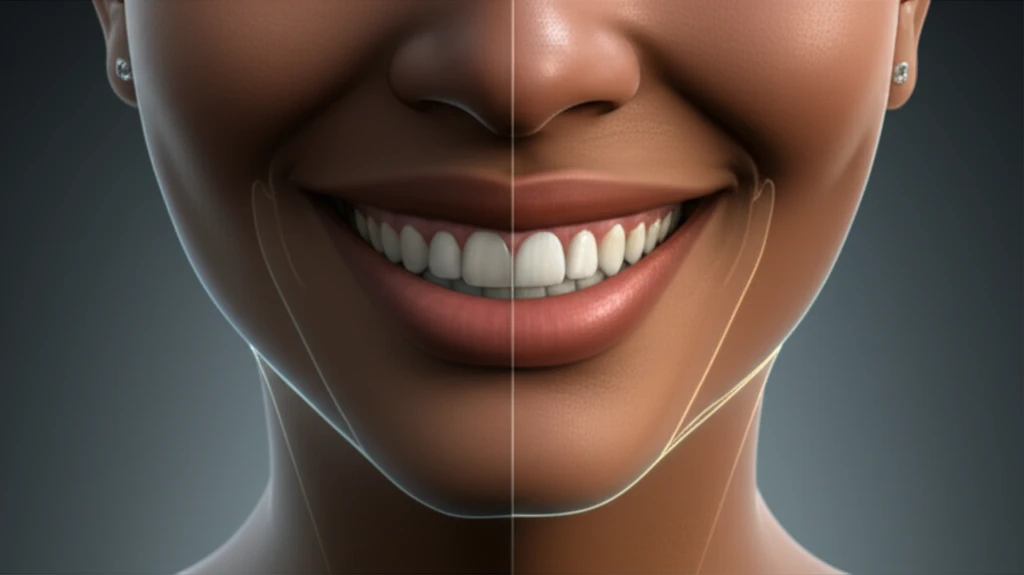
Straightening Smiles: What You Need to Know About Incisor Retraction and Your Jaw

"Is moving your front teeth back a safe bet? Here's a simple look at how orthodontists keep your smile healthy during incisor retraction."
Orthodontic treatment is about more than just straight teeth; it's about creating a balanced and healthy smile that lasts. Achieving this often requires moving teeth, and in some cases, significant movement of the incisors (the front teeth) is necessary. This can address both functional and aesthetic concerns, ensuring a smile that not only looks great but also functions properly.
Moving incisors isn't a simple process. Orthodontists must consider several factors, including the bone structure supporting the teeth, the length of the tooth roots, and the overall health of the surrounding tissues. Moving teeth too far or too quickly can lead to undesirable outcomes, such as bone loss or root damage. Therefore, a careful and comprehensive approach is crucial.
Traditionally, orthodontists have relied on X-rays to plan and monitor tooth movement. However, these images have limitations, including distortion and difficulty in assessing the three-dimensional structure of the jaw. Cone-beam computed tomography (CBCT) offers a more detailed view, allowing orthodontists to assess the bone and teeth in three dimensions, leading to more precise and predictable treatment.
How Does Incisor Retraction Work?
Incisor retraction is a common orthodontic procedure used to correct protruding front teeth. This process involves moving the incisors back into a more aligned position, improving both the appearance and function of the smile. Orthodontists use various techniques to achieve this, often involving braces and other appliances.
- Extraction of first premolars to create space.
- Use of archwires with loops to apply controlled force.
- Careful monitoring to prevent tipping or extrusion of incisors.
- Use of transpalatal arches or extraoral traction to maintain anchorage.
What Does This Mean for You?
The study's findings are reassuring: the forces used in this specific incisor retraction method did not cause significant changes in tooth length or alveolar bone thickness. However, it's important to remember that this is just one study, and individual results may vary. If you're considering orthodontic treatment involving incisor retraction, discuss the potential risks and benefits with your orthodontist. They can assess your individual situation and develop a treatment plan that's right for you.