
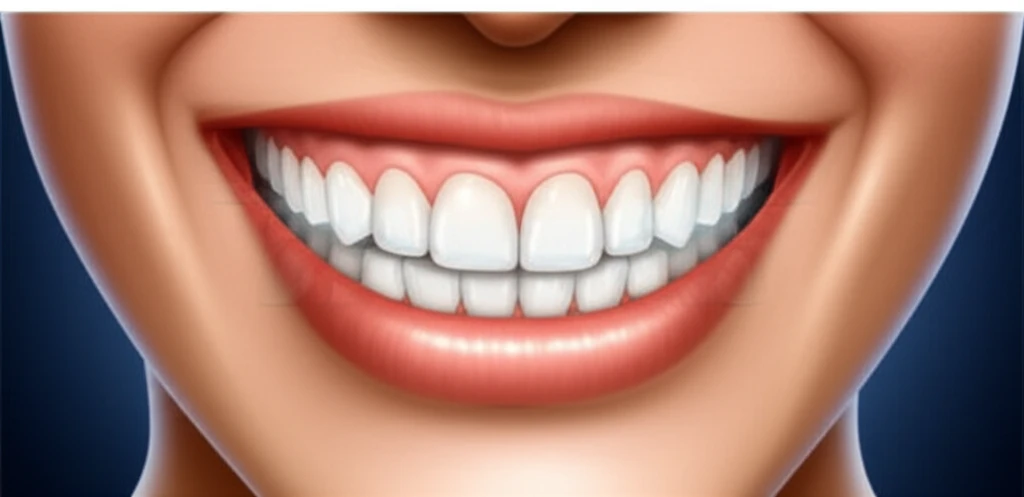
Straightening Smiles: What Happens to Your Gums and Teeth?

"A Preliminary Study Reveals How Braces Impact Your Jaw"
Modern orthodontic treatment aims for more than just straight teeth; it strives for a balanced bite, lasting results, and an aesthetically pleasing smile. Achieving these goals sometimes requires significant movement of the incisors (the front teeth).
Moving teeth, especially incisors, isn't a simple task. Orthodontists must carefully consider factors like the amount of bone supporting the teeth, the length of the tooth roots, and the condition of the gums. Moving teeth too far or too fast can lead to problems.
Traditional X-rays have limitations when assessing the three-dimensional structure of the jaw. However, the development of cone-beam computed tomography (CBCT) allows orthodontists to see detailed images of the teeth and surrounding bone.
What Happens to Your Jaw When You Get Braces?
A recent preliminary study published in the Dental Press Journal of Orthodontics investigated the impact of incisor retraction on tooth length and alveolar bone thickness. Alveolar bone is the bone that surrounds and supports the roots of your teeth.
- Measurements were taken on seven axial slices of the premaxilla (the front part of the upper jaw) using Dolphin Imaging™ software.
- The distance from the outer (buccal) to inner (palatal) cortical bone was measured at five points on each slice.
- Tooth length was measured on sagittal slices.
- Measurements were repeated after two weeks to check for consistency.
So, Are Braces Safe for Your Gums and Teeth?
The study found no statistically significant differences in tooth length or alveolar thickness after incisor retraction. This suggests that the forces used in this study did not cause significant changes to the teeth or surrounding bone. However, it's important to remember that this was a preliminary study with a small sample size. The authors recommend further research with larger sample sizes to confirm these findings.