
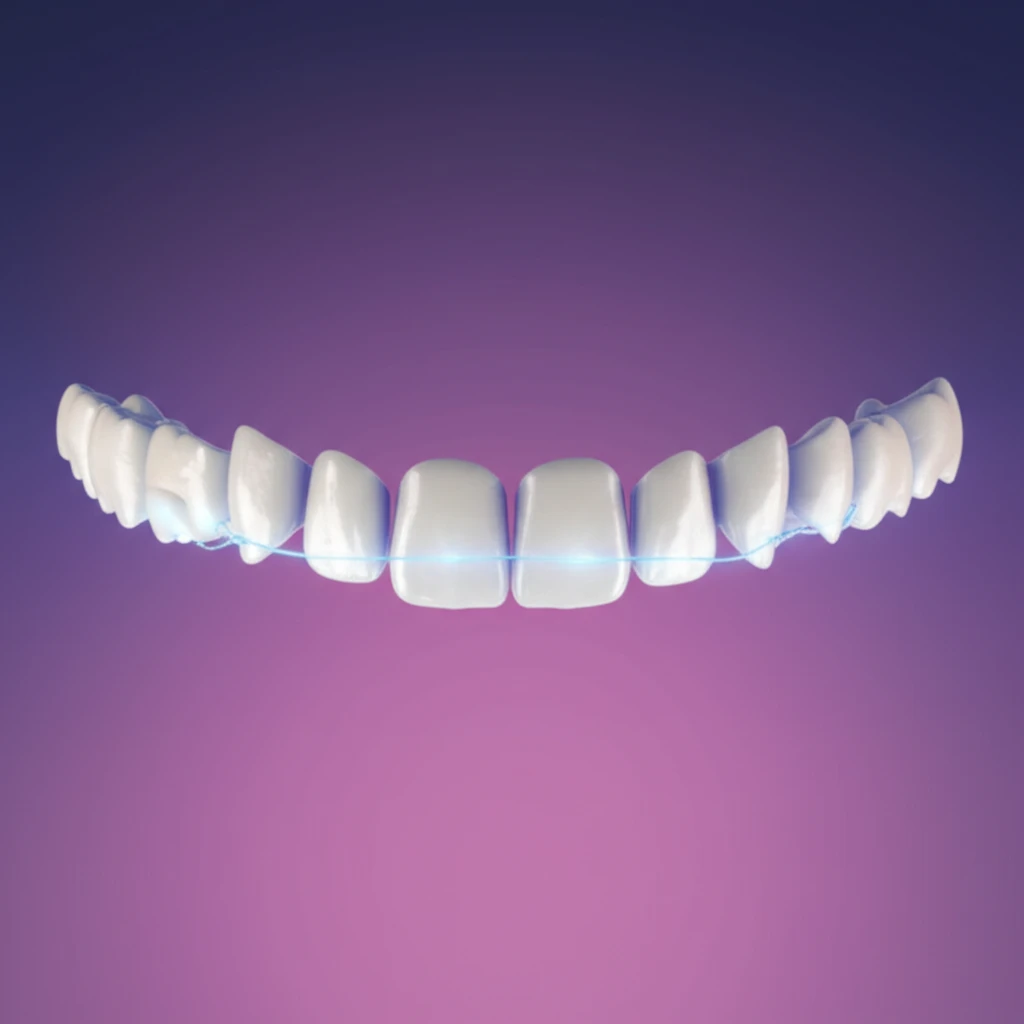
Illustration of teeth shifting, then realigning

Straight Talk: Do You Really Need That Permanent Retainer?

"Unraveling the Mystery of Mandibular Retention: A Fresh Look at Keeping Your Smile Perfect"


So, you've finally reached the end of your orthodontic journey. The braces are off, and you're sporting a dazzling new smile. But then comes the question of retention – specifically, whether you need a permanent, bonded retainer on your lower teeth. It's a common recommendation, but is it always necessary? What happens if you don't get one?

Relapse, particularly the re-emergence of crowding in the lower front teeth, is a frustrating reality for many who have undergone orthodontic treatment. It can feel like a step backward, undoing all the time, effort, and expense of braces or aligners. Understanding what causes this relapse is crucial to ensuring the long-term stability of your newly aligned smile.

This article explores a systematic review investigating the factors that contribute to the relapse of mandibular anterior crowding. By examining the available scientific evidence, we aim to shed light on whether a permanent retainer is always mandatory and what other factors play a significant role in maintaining a perfectly aligned lower arch.

The Great Debate: Permanent Retention vs. Natural Stability

Illustration of teeth shifting, then realigning

Orthodontic relapse is not a new concern. For decades, orthodontists have sought the best ways to ensure that teeth stay in their corrected positions after treatment. While retainers, especially fixed or bonded retainers, have become a standard solution, the question remains: are they always the only solution?

A systematic review, the type discussed in the source article, is a powerful tool. Researchers sift through numerous studies, analyze their methodologies, and synthesize the findings to arrive at evidence-based conclusions. By focusing on studies related to mandibular anterior crowding, we can get a clearer picture of the factors at play.

  • Extraction vs. Non-Extraction: Did the initial treatment involve removing teeth to create space? Some studies suggest that extraction cases may have a higher risk of relapse.
  • Residual Growth: Even after adolescence, subtle changes in jaw growth can continue, potentially impacting tooth alignment.
  • Facial Divergence: The overall shape and structure of the face can influence the stability of the lower arch.
  • Periodontal Factors: The health of the gums and supporting bone plays a crucial role.
  • Incisor Morphology: The size and shape of the lower incisors themselves may contribute to crowding.
  • Quality of Occlusion: How well the teeth fit together after treatment can impact long-term stability.
It’s important to note that some factors, while investigated, didn’t show a clear correlation with relapse. The quality of the finished occlusion, for example, has been traditionally emphasized, but more recent research has not always confirmed this link.

Making Informed Decisions About Your Smile

So, is a permanent retainer mandatory? The answer, it seems, is not a straightforward yes. While retainers play a valuable role in maintaining alignment, understanding the multifaceted factors influencing relapse is key. Discuss these factors with your orthodontist to determine the best retention strategy for your unique situation, so you can be confident your smile will stay as perfect as possible.

About this Article -

This article was crafted using a human-AI hybrid and collaborative approach. AI assisted our team with initial drafting, research insights, identifying key questions, and image generation. Our human editors guided topic selection, defined the angle, structured the content, ensured factual accuracy and relevance, refined the tone, and conducted thorough editing to deliver helpful, high-quality information.See our About page for more information.

This article is based on research published under:

DOI-LINK: 10.1016/j.ortho.2018.01.013, Alternate LINK

Title: Is Systematic Mandibular Retention Mandatory? A Systematic Review

Subject: Orthodontics

Journal: International Orthodontics

Publisher: Elsevier BV

Authors: Hajar Ben Mohimd, Loubna Bahije, Fatima Zaoui, Abdelali Halimi, Hicham Benyahia

Published: 2018-03-01

Everything You Need To Know

1

What is the primary topic discussed, and what is the main question being addressed?

The source material suggests that whether a permanent retainer is always necessary is not a simple yes or no. Relapse, especially in the mandibular anterior region (lower front teeth), is a common concern after orthodontic treatment. A systematic review examines various factors to understand their impact on the stability of the lower arch post-treatment. These factors help determine the best retention strategy.

2

What are the main factors that influence the long-term stability of the lower front teeth after orthodontic treatment?

Several factors influence the stability of the mandibular anterior region after orthodontic treatment. These include whether teeth were extracted during the initial treatment, residual growth patterns, facial divergence, the health of the periodontal tissues, incisor morphology, and the quality of occlusion. The systematic review examines these factors to offer a comprehensive understanding of what contributes to relapse.

3

What is a systematic review, and why is it important in this context?

A systematic review is a research method that synthesizes findings from multiple studies. Researchers analyze the methodologies and results of numerous studies, allowing them to draw evidence-based conclusions. This approach provides a broader perspective on the factors contributing to mandibular anterior crowding relapse, offering a more reliable basis for making decisions about retention strategies.

4

What are the potential consequences if a permanent retainer is not used after orthodontic treatment?

The implications of not using a permanent retainer, or not having an effective retention strategy, include the potential for orthodontic relapse. Relapse is the tendency for teeth to shift back towards their original positions after treatment. This can lead to a return of crowding, particularly in the lower front teeth (mandibular anterior crowding), which can be frustrating after investing time and money in orthodontic work.

5

How can someone determine the best approach to maintaining their smile after orthodontic treatment?

Making informed decisions requires a discussion with your orthodontist. The source material emphasizes that the need for a permanent retainer is not always absolute. Understanding individual factors, such as extraction history, growth patterns, and other elements influencing stability, is key. Your orthodontist can assess your specific situation and recommend the most appropriate retention strategy to ensure the long-term stability of your smile.

Newsletter Subscribe

Subscribe to get the latest articles and insights directly in your inbox.