
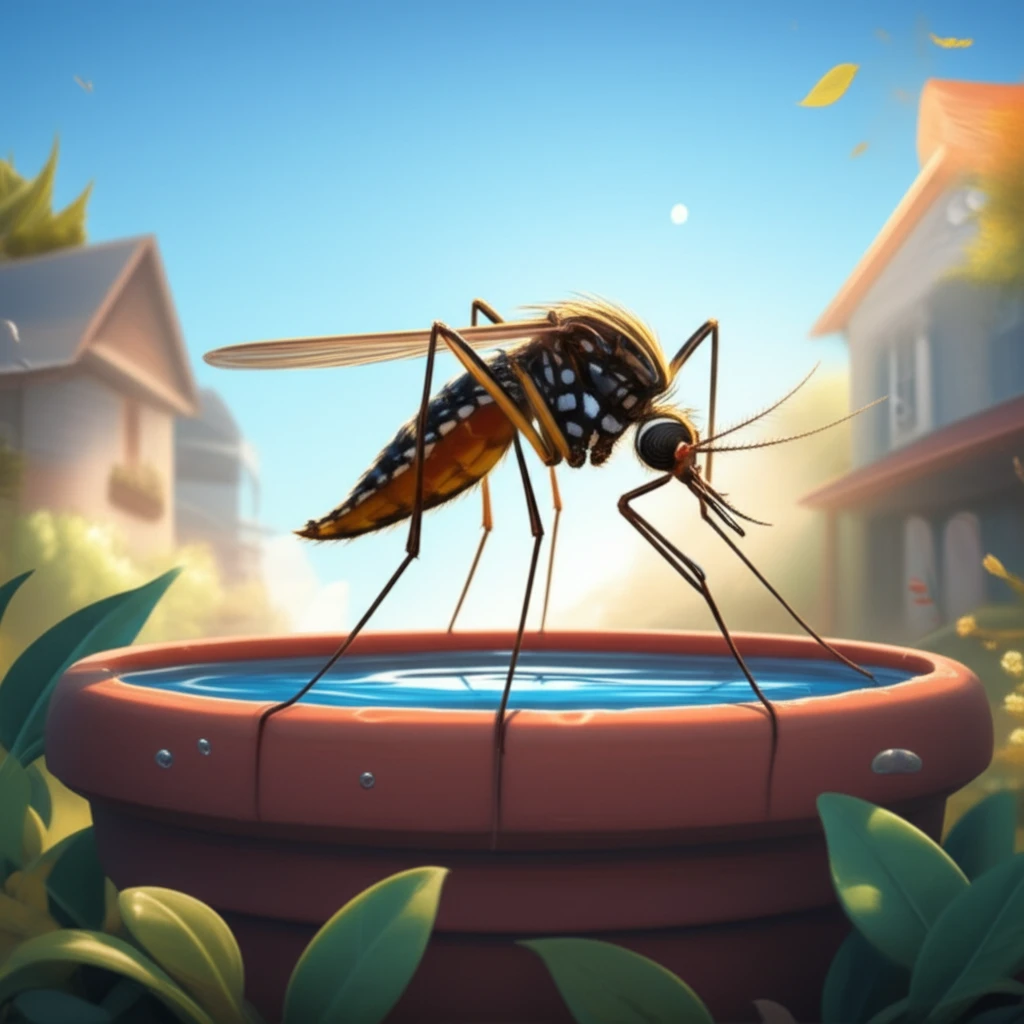
Illustration depicting the Aedes aegypti mosquito near a flower pot, symbolizing dengue prevention.

Stop the Bite: Decoding Dengue Fever and the Tiny Culprit Lurking in Your Backyard

"New research unveils the hidden hotspots where dengue-carrying mosquitoes thrive, offering a roadmap for protecting your home and community."


Dengue fever, often called "breakbone fever," is a viral infection transmitted to humans through the bite of infected mosquitoes. While the disease can range from mild, flu-like symptoms to severe, life-threatening complications, the global impact is undeniable. Millions of people are infected each year, with a significant burden on public health systems worldwide. As climate change and urbanization alter ecosystems, the threat of dengue continues to grow, making understanding and controlling the vectors crucial.

The primary culprit behind dengue transmission is the Aedes aegypti mosquito, a species well-adapted to thriving in and around human environments. These mosquitoes have a preference for breeding in artificial containers, like water storage tanks, flower pots, and discarded items. Understanding their habitat preferences is key to effective prevention strategies. A recent study conducted in Southern Taiwan provides valuable insights into these preferences, highlighting the specific locations and conditions that fuel mosquito breeding.

This article explores the findings of the Taiwan study, offering a clear, accessible guide to the mosquito's preferred breeding grounds and the implications for effective dengue prevention. By understanding these hidden hotspots, you can take proactive steps to reduce your risk and contribute to a safer community. We'll translate complex research into practical, everyday actions, empowering you to protect yourself and your family from the threat of dengue fever.

Unveiling the Mosquito's Secrets: What the Research Reveals

Illustration depicting the Aedes aegypti mosquito near a flower pot, symbolizing dengue prevention.

The research, conducted in Kaohsiung City and Pingtung County, Taiwan, from November 2013 to July 2015, provides a detailed look at where Aedes aegypti mosquitoes thrive. The study meticulously examined various water-holding containers, identifying key factors linked to the presence and abundance of mosquito larvae and pupae. The scientists used a "hurdle model" to analyze the data, a statistical approach well-suited for understanding why mosquitoes choose some containers over others.

The study's findings revealed several significant patterns. Mosquitoes were far more prevalent in the urban areas than in the rural settings. The wet season was a boom time for mosquito breeding, with significantly more larvae and pupae found during these months. Surprisingly, the study also indicated that containers on private property harbored more mosquitoes than those on government property. The type of container also played a crucial role.

  • Urban vs. Rural: Mosquitoes heavily favored the urban environment.
  • Wet Season Surge: Significantly higher mosquito populations were observed during the wet season.
  • Private Property Hotspot: Containers on private property were more likely to harbor mosquitoes.
  • Indoor vs. Outdoor: Indoor water storage containers were hotspots for pupae.
  • Container Types Matter: The specific function of the container, such as water storage or discarded items, influenced mosquito presence.
These findings paint a clear picture of the mosquito's preferences and behaviors. They provide a valuable framework for targeted prevention efforts, focusing on high-risk areas and container types.

Taking Action: Protecting Your Home and Community

The research from Taiwan offers a crucial reminder: effective dengue prevention is a community effort. By understanding the mosquito's preferred habitats, we can take targeted action. This means regularly inspecting and eliminating potential breeding sites in and around our homes. It means advocating for community-wide initiatives, such as public awareness campaigns and coordinated mosquito control programs. By working together, we can reduce the burden of dengue fever and protect ourselves and our communities from this global threat.

About this Article -

This article was crafted using a human-AI hybrid and collaborative approach. AI assisted our team with initial drafting, research insights, identifying key questions, and image generation. Our human editors guided topic selection, defined the angle, structured the content, ensured factual accuracy and relevance, refined the tone, and conducted thorough editing to deliver helpful, high-quality information.See our About page for more information.

This article is based on research published under:

DOI-LINK: 10.1371/journal.pntd.0006882, Alternate LINK

Title: Location, Seasonal, And Functional Characteristics Of Water Holding Containers With Juvenile And Pupal Aedes Aegypti In Southern Taiwan: A Cross-Sectional Study Using Hurdle Model Analyses

Subject: Infectious Diseases

Journal: PLOS Neglected Tropical Diseases

Publisher: Public Library of Science (PLoS)

Authors: Chia-Hsien Lin, Karin Linda Schiøler, Claus Thorn Ekstrøm, Flemming Konradsen

Published: 2018-10-15

Everything You Need To Know

1

What is Dengue Fever and why is it a growing global concern?

Dengue fever, also known as "breakbone fever," is a viral infection transmitted to humans through the bite of infected Aedes aegypti mosquitoes. It ranges from mild, flu-like symptoms to severe, life-threatening complications. Its global impact is undeniable, with millions infected yearly, significantly burdening public health systems. Climate change and urbanization are altering ecosystems, escalating the threat and emphasizing the need to control the Aedes aegypti mosquitoes, the vectors of this disease. Further research is needed to see how this viral infection can be stopped.

2

According to the Taiwan study, what are the key environments where Aedes aegypti mosquitoes prefer to breed?

The study conducted in Southern Taiwan identified that Aedes aegypti mosquitoes favor urban environments, with a surge in mosquito populations during the wet season. Breeding occurs more frequently in containers on private property rather than government property. Indoor water storage containers are pupae hotspots. The function of the water container, whether for water storage or as discarded items, significantly influences mosquito presence. Other studies could indicate ways to limit breeding.

3

How does the 'hurdle model' contribute to understanding mosquito breeding habits, as mentioned in the Taiwan study?

The "hurdle model" is a statistical approach used in the Taiwan study to analyze the factors influencing Aedes aegypti mosquito breeding. It helps researchers understand why mosquitoes choose certain containers over others for breeding. By identifying these preferences, targeted prevention efforts can focus on high-risk areas and container types, leading to more effective mosquito control strategies. The study's findings revealed significant patterns, such as the mosquitoes' preference for urban areas and wet seasons, highlighting the importance of this model in understanding mosquito behavior. More can be discovered about the mosquitos by using this "hurdle model".

4

What practical steps can individuals take at home, based on the Taiwan research, to prevent the spread of Dengue Fever?

Based on the Taiwan research, individuals should regularly inspect and eliminate potential breeding sites for Aedes aegypti mosquitoes in and around their homes. This includes checking and emptying water storage tanks, flower pots, and discarded items where water can accumulate. Because the study showed private properties can be hot spots, individuals can take actions to reduce the burden of dengue fever and protect themselves, their families and communities. Community-wide initiatives are also suggested such as awareness campaigns and coordinated mosquito programs.

5

What are the broader implications of the Taiwan study's findings for dengue prevention strategies worldwide?

The Taiwan study emphasizes that effective dengue prevention requires a community effort, focusing on the Aedes aegypti mosquito. The study highlights the importance of understanding the mosquito's preferred breeding habitats to implement targeted action. The implications are that prevention strategies should focus on high-risk areas (urban environments and private properties) and container types. This knowledge can inform public awareness campaigns and coordinated mosquito control programs, contributing to reduced dengue fever incidence worldwide. Future studies may reveal other factors of mosquito's breeding habits.

Newsletter Subscribe

Subscribe to get the latest articles and insights directly in your inbox.