
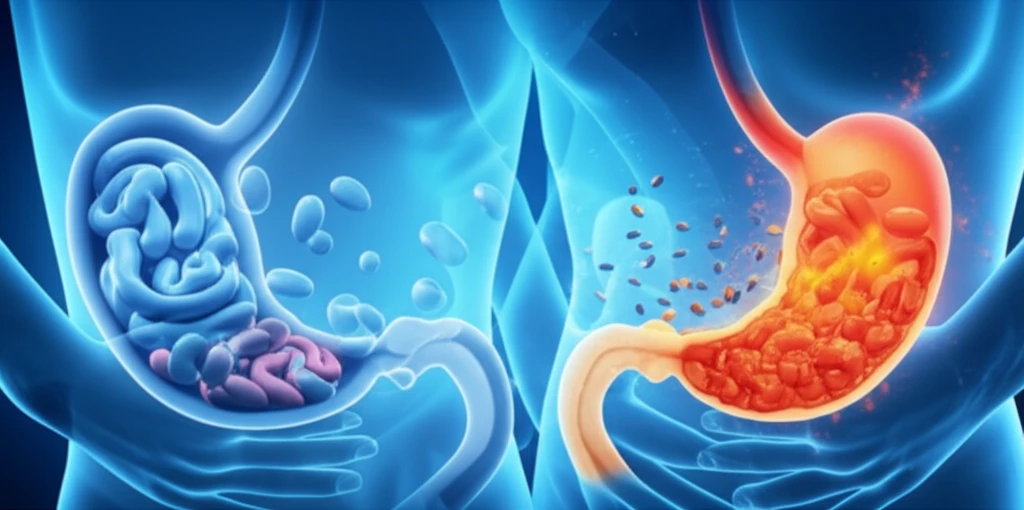
Digital illustration symbolizing the battle against stomach discomfort with rabeprazole and itopride.

Stomach Troubles? Discover How Rabeprazole and Itopride Can Help!

"A comprehensive look at a Japanese study comparing two popular treatments for functional dyspepsia."


Do you often experience discomfort after eating, such as persistent abdominal pain, feeling full quickly, or bloating? If so, you might be dealing with functional dyspepsia (FD), a common condition characterized by these symptoms without any underlying organic disease. It's a frustrating issue that affects many, and finding the right treatment can feel like a maze.

Functional dyspepsia is categorized into two main types: postprandial distress syndrome (PDS), which involves feeling full quickly and early satiety, and epigastric pain syndrome (EPS), characterized by stomach pain and burning. While various medications like acid suppressors, prokinetic agents, and antidepressants are used, managing FD remains a significant challenge.

To provide better solutions, a recent study in Japan compared two common treatments: rabeprazole (RPZ), a proton pump inhibitor (PPI) that reduces stomach acid, and itopride (ITO), a prokinetic agent that helps with stomach emptying. The study aimed to determine which medication is more effective for FD and how each addresses the specific symptoms of PDS and EPS.

Rabeprazole vs. Itopride: Which One Works Best for Your Dyspepsia?

Digital illustration symbolizing the battle against stomach discomfort with rabeprazole and itopride.

The clinical trial, known as the NAGOYA study, involved 134 participants diagnosed with FD according to the Rome III criteria. These participants were randomly assigned to receive either 10 mg of rabeprazole or 150 mg of itopride daily for four weeks. Researchers then evaluated the effectiveness of each treatment by monitoring changes in FD scores and assessing improvements in both EPS and PDS symptoms.

The study revealed some key differences in how each medication performed. Rabeprazole showed a significant decrease in FD scores within the first week, and this improvement was sustained throughout the four-week treatment period. In comparison, itopride only showed a significant reduction in FD scores after four weeks. Moreover, rabeprazole proved more effective overall, demonstrating a greater impact on FD symptoms than itopride at all evaluation points.

  • Rabeprazole (RPZ):
    • Showed a significant decrease in the Rate of Change (RC) in FD score within 1 week.
    • Significant effect compared with Itopride (ITO) at all evaluation points.
    • Significant decrease in FD score in subjects with both EPS and PDS.
  • Itopride (ITO):
    • Significant decrease in the RC was only shown in those with predominant PDS.
The findings also indicated that rabeprazole significantly reduced FD scores in individuals with both EPS and PDS. Conversely, itopride only demonstrated a significant decrease in the rate of change for those with predominant PDS. These results suggest that rabeprazole, with its acid-suppressing properties, may be particularly beneficial for managing both types of functional dyspepsia in Japanese patients.

Making Sense of Your Stomach Symptoms

Ultimately, this study highlights the potential benefits of rabeprazole for managing functional dyspepsia, especially for those experiencing both epigastric pain and postprandial distress. If you're struggling with persistent stomach discomfort, consulting with your healthcare provider is essential to determine the best course of action for your specific needs. They can help you explore whether rabeprazole or other treatments might be right for you, paving the way to a happier, healthier digestive system.

About this Article -

This article was crafted using a human-AI hybrid and collaborative approach. AI assisted our team with initial drafting, research insights, identifying key questions, and image generation. Our human editors guided topic selection, defined the angle, structured the content, ensured factual accuracy and relevance, refined the tone, and conducted thorough editing to deliver helpful, high-quality information.See our About page for more information.

Everything You Need To Know

1

What is Functional Dyspepsia (FD), and what are its common symptoms?

Functional Dyspepsia (FD) is a common condition characterized by persistent or recurring upper abdominal symptoms without any clear underlying organic cause. Common symptoms include postprandial distress such as feeling full quickly and early satiety, and epigastric pain syndrome, which involves stomach pain and burning sensation. These symptoms can significantly impact a person's quality of life, making it difficult to eat comfortably or enjoy daily activities. The diagnosis of FD is often made after ruling out other potential causes of these symptoms through medical evaluations.

2

What is the difference between Rabeprazole (RPZ) and Itopride (ITO), and how do they treat Functional Dyspepsia?

Rabeprazole (RPZ) is a proton pump inhibitor (PPI) that reduces stomach acid production, which can help alleviate symptoms such as epigastric pain and burning associated with FD. Itopride (ITO), on the other hand, is a prokinetic agent that enhances the movement of food through the stomach, thus improving stomach emptying. This can be particularly helpful for those experiencing postprandial distress symptoms like feeling full quickly and bloating. The choice between RPZ and ITO depends on the specific symptoms a patient experiences and their overall condition. RPZ's acid-reducing action targets the acid-related aspects of FD, while ITO focuses on improving gastric motility.

3

In the NAGOYA study, which medication, Rabeprazole (RPZ) or Itopride (ITO), showed better results for managing FD, and why?

The NAGOYA study found that Rabeprazole (RPZ) was more effective overall in managing Functional Dyspepsia (FD) compared to Itopride (ITO). RPZ showed a significant decrease in FD scores within the first week, and this improvement was sustained throughout the four-week treatment period. Itopride (ITO) only showed a significant reduction in FD scores after four weeks. RPZ demonstrated a greater impact on FD symptoms at all evaluation points. RPZ's efficacy is likely attributed to its acid-suppressing properties, which can address both epigastric pain and postprandial distress symptoms effectively.

4

How did Rabeprazole (RPZ) and Itopride (ITO) perform differently in treating the two main types of Functional Dyspepsia (FD): Postprandial Distress Syndrome (PDS) and Epigastric Pain Syndrome (EPS)?

Rabeprazole (RPZ) showed a significant decrease in FD scores in individuals with both Epigastric Pain Syndrome (EPS) and Postprandial Distress Syndrome (PDS). This indicates that RPZ effectively addresses the symptoms of both types of FD. Conversely, Itopride (ITO) only demonstrated a significant decrease in the rate of change for those with predominant PDS. This suggests that ITO is particularly beneficial for patients whose primary symptoms are related to feeling full quickly and early satiety, but it may not be as effective for those with significant stomach pain or burning sensations.

5

What are the implications of these findings for individuals experiencing Functional Dyspepsia (FD), and what steps should they take?

The findings suggest that Rabeprazole (RPZ) may be a more effective treatment option for managing Functional Dyspepsia (FD), particularly for individuals experiencing both epigastric pain and postprandial distress symptoms. However, it's important to note that individual responses to medications can vary. If you are struggling with persistent stomach discomfort, consulting with your healthcare provider is crucial. They can assess your specific symptoms, conduct necessary evaluations, and determine the best course of action. This might involve exploring whether RPZ or other treatments are suitable for your specific needs, ensuring personalized care for a healthier digestive system.

Newsletter Subscribe

Subscribe to get the latest articles and insights directly in your inbox.