
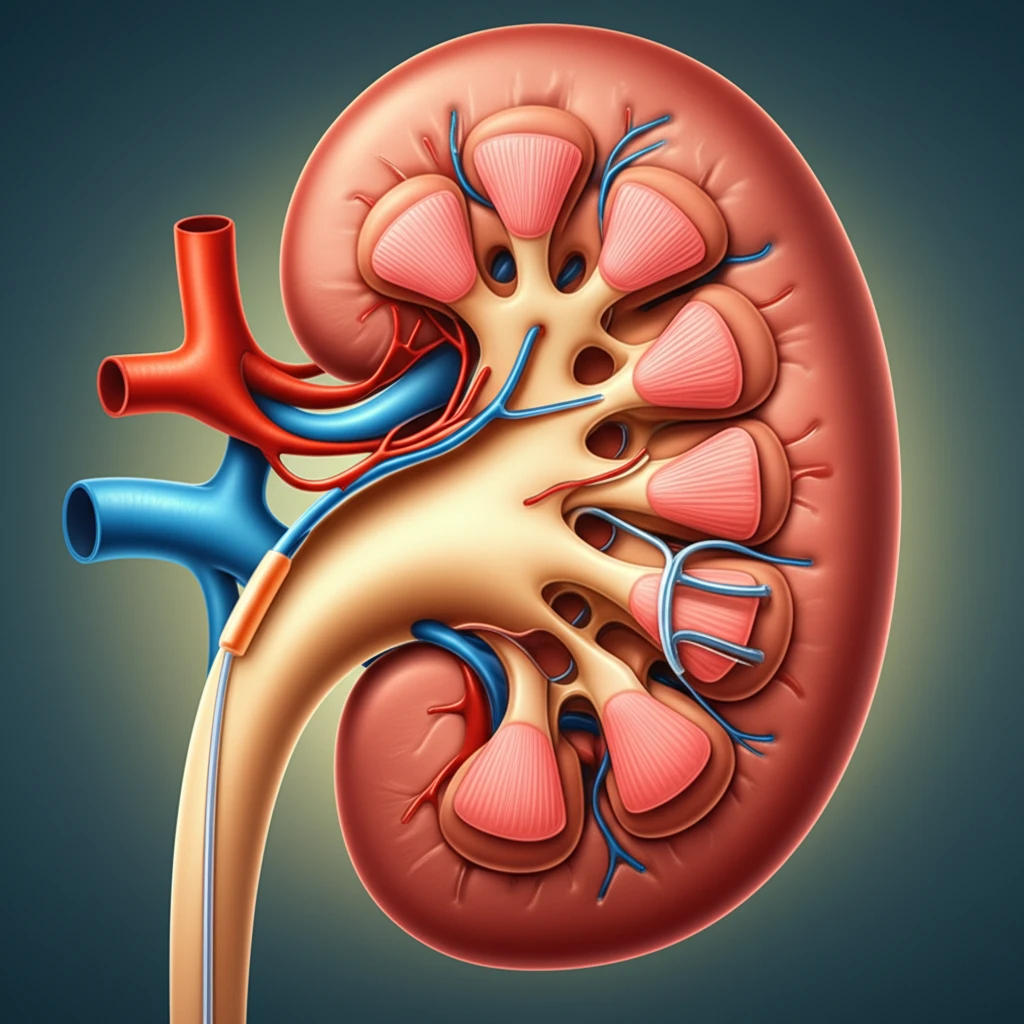
Illustration of a child's kidney with an EUP stent, symbolizing gentle drainage and healing.

Stent Showdown: Is External Drainage Better for Pediatric Pyeloplasty?

"A closer look at how drainage techniques impact outcomes in children undergoing pyeloplasty, comparing externalized uretero-pyelostomy (EUP) with traditional double-J stents."


Pyeloplasty, a reconstructive surgery to correct ureteropelvic junction obstruction (UPJO) in children, often requires a drainage strategy to support healing. The traditional approach involves double-J (DJ) stents, which internally splint the ureter. However, these stents aren't without their drawbacks – they necessitate a second procedure for removal, exposing children to additional anesthesia and potential discomfort.

Enter externalized uretero-pyelostomy (EUP) stents, an alternative gaining traction. EUP stents offer the advantage of external drainage, potentially reducing the need for a second surgery. By diverting urine externally, they may minimize complications associated with internal stents and streamline the recovery process.

A recent study published in the Canadian Urological Association Journal explored the impact of drainage techniques on pediatric pyeloplasty, comparing EUP stents with DJ stents in a cohort of children undergoing UPJO repair. The findings shed light on the safety and efficacy of EUP stents, offering valuable insights for parents and healthcare providers alike.

EUP vs. DJ Stents: Weighing the Pros and Cons of Pediatric Pyeloplasty Drainage

Illustration of a child's kidney with an EUP stent, symbolizing gentle drainage and healing.

Researchers retrospectively analyzed data from 76 children who underwent pyeloplasty for UPJO, with 24 receiving EUP stents and 38 receiving DJ stents. The study aimed to determine if EUP stents offered any advantages over DJ stents in terms of operative time, length of hospital stay, complication rates, and the need for additional procedures.

While the study revealed some differences between the two groups – such as age and the proportion of open versus laparoscopic procedures – key outcomes were comparable. There were no statistically significant differences in operative time, hospital stay, or overall complication rates. This suggests that EUP stents are a safe and effective alternative to DJ stents in pediatric pyeloplasty.

  • Reduced Need for Second Anesthesia: EUP stents eliminate the need for a second anesthetic procedure for stent removal, a significant advantage for young patients.
  • Tailored Approach: EUP stents can be customized to reach the mid-ureter, minimizing trauma to the uretero-vesical junction (UVJ) and reducing lower urinary tract symptoms.
  • Easy Management: EUP stents can be easily managed in an ambulatory setting, allowing for drainage adjustments and potential nephrostograms without sedation.
One notable finding was that all patients with EUP stents avoided a second anesthetic for stent removal. This is a major benefit, considering the potential neurotoxicity associated with anesthesia in young children. However, it's important to acknowledge that some patients in the EUP group did require a second anesthetic for other reasons, such as re-stenosis.

The Verdict: EUP Stents – A Promising Alternative for Pediatric Pyeloplasty?

While the study acknowledges limitations such as small sample size and potential selection bias, the findings suggest that EUP stents offer a valuable alternative to DJ stents in pediatric pyeloplasty. By eliminating the need for a second anesthetic for stent removal and providing easy management in an ambulatory setting, EUP stents may streamline the recovery process and improve the overall experience for young patients and their families. As research continues and techniques evolve, EUP stents could become an increasingly popular choice for drainage following pediatric pyeloplasty.

About this Article -

This article was crafted using a human-AI hybrid and collaborative approach. AI assisted our team with initial drafting, research insights, identifying key questions, and image generation. Our human editors guided topic selection, defined the angle, structured the content, ensured factual accuracy and relevance, refined the tone, and conducted thorough editing to deliver helpful, high-quality information.See our About page for more information.

Everything You Need To Know

1

What are the main differences between externalized uretero-pyelostomy (EUP) stents and double-J (DJ) stents used in pediatric pyeloplasty?

The primary difference between externalized uretero-pyelostomy (EUP) stents and double-J (DJ) stents lies in their drainage method and removal process. Double-J (DJ) stents are internal and require a second procedure under anesthesia for removal. Externalized uretero-pyelostomy (EUP) stents, on the other hand, allow for external drainage, often eliminating the need for a second anesthesia for stent removal. Externalized uretero-pyelostomy (EUP) stents also offer the possibility of adjustments and nephrostograms in an ambulatory setting without sedation, facilitating easier management. While both support healing after pyeloplasty, their management and the necessity for repeat anesthesia are key differentiating factors.

2

What are the potential benefits of using externalized uretero-pyelostomy (EUP) stents over traditional double-J (DJ) stents in pediatric pyeloplasty?

Externalized uretero-pyelostomy (EUP) stents offer several potential benefits compared to traditional double-J (DJ) stents in pediatric pyeloplasty. Notably, externalized uretero-pyelostomy (EUP) stents can eliminate the need for a second anesthetic procedure solely for stent removal, reducing potential neurotoxicity risks in young children. They can be tailored to reach the mid-ureter, minimizing trauma to the uretero-vesical junction (UVJ) and potentially reducing lower urinary tract symptoms. Also, externalized uretero-pyelostomy (EUP) stents allow for easier management in an ambulatory setting, enabling drainage adjustments and potential nephrostograms without the need for sedation. While double-J (DJ) stents internally splint the ureter, they necessitate an additional procedure for removal, which externalized uretero-pyelostomy (EUP) stents aim to avoid.

3

Are there any drawbacks to using externalized uretero-pyelostomy (EUP) stents in pediatric pyeloplasty, and what factors should be considered when choosing between externalized uretero-pyelostomy (EUP) and double-J (DJ) stents?

While externalized uretero-pyelostomy (EUP) stents offer benefits, there can be drawbacks. Some patients with externalized uretero-pyelostomy (EUP) stents may still require a second anesthetic for reasons other than stent removal, such as re-stenosis. When choosing between externalized uretero-pyelostomy (EUP) and double-J (DJ) stents, factors to consider include the child's overall health, the complexity of the ureteropelvic junction obstruction (UPJO), and the potential need for additional procedures. The ease of management in an ambulatory setting with externalized uretero-pyelostomy (EUP) stents versus the need for a second procedure with double-J (DJ) stents must also be weighed. Although the overall complication rates may be comparable, the specific advantages of avoiding a second anesthesia for stent removal with externalized uretero-pyelostomy (EUP) stents should be carefully considered.

4

How do externalized uretero-pyelostomy (EUP) stents minimize trauma to the uretero-vesical junction (UVJ), and why is this important?

Externalized uretero-pyelostomy (EUP) stents minimize trauma to the uretero-vesical junction (UVJ) because they can be customized to reach only the mid-ureter. By not extending the stent down to the uretero-vesical junction (UVJ), there is less irritation and potential damage to this sensitive area. This is important because trauma to the uretero-vesical junction (UVJ) can lead to lower urinary tract symptoms, such as frequency, urgency, and pain. Minimizing such trauma can improve the child's comfort and overall recovery experience following pyeloplasty. Double-J (DJ) stents, which typically extend to the bladder, may pose a higher risk of uretero-vesical junction (UVJ) irritation compared to the tailored approach offered by externalized uretero-pyelostomy (EUP) stents.

5

What does the research suggest about the effectiveness of externalized uretero-pyelostomy (EUP) stents compared to double-J (DJ) stents in pediatric pyeloplasty?

Research indicates that externalized uretero-pyelostomy (EUP) stents are a safe and effective alternative to double-J (DJ) stents in pediatric pyeloplasty. Studies have shown that there are no statistically significant differences in operative time, hospital stay, or overall complication rates between the two drainage methods. A key advantage of externalized uretero-pyelostomy (EUP) stents is the elimination of a second anesthetic procedure for stent removal, which is a significant benefit for young patients. While acknowledging limitations such as small sample sizes and potential selection bias in some studies, the findings suggest that externalized uretero-pyelostomy (EUP) stents offer a valuable option for drainage following pediatric pyeloplasty, streamlining the recovery process and potentially improving the overall experience for children and their families.

Newsletter Subscribe

Subscribe to get the latest articles and insights directly in your inbox.