
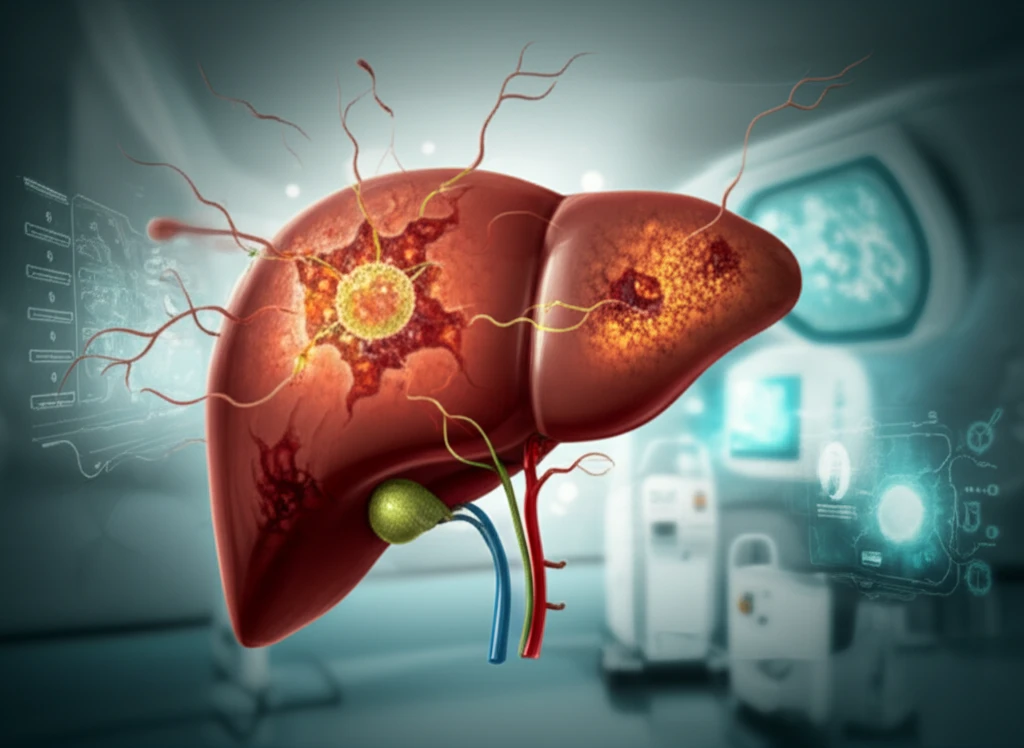
Illustration representing stem cells repairing a liver, highlighting the potential of regenerative medicine.

Stem Cells and Liver Disease: A Beacon of Hope for Liver Health

"Exploring the Potential of Regenerative Medicine in Combating Liver Ailments"


Liver disease, a global health crisis, affects millions worldwide. From viral hepatitis to cirrhosis and hepatocellular carcinoma, the impact is immense, often leading to debilitating conditions and a pressing need for effective treatments. While liver transplantation offers a lifeline, the scarcity of donor organs and the complexities of post-transplant care highlight the urgent need for alternative solutions. This is where the promising field of stem cell research steps in, offering a potential paradigm shift in how we approach liver health.

Stem cells, the body's remarkable repair system, have the potential to regenerate damaged tissues and revolutionize medicine. They can theoretically divide without limit, replenishing other cells and potentially correcting genetic errors. This capacity has sparked immense interest in liver disease, where stem cell therapies could alleviate symptoms, support liver recovery, and even offer a cure.

In this comprehensive guide, we'll explore the different types of stem cells, the diseases they could treat, and the current state of research. We will also discuss the ethical considerations, the challenges of cell culture, and the future of regenerative medicine in liver disease.

Understanding Stem Cells and Their Role in Liver Disease

Illustration representing stem cells repairing a liver, highlighting the potential of regenerative medicine.

Stem cells are the basic cells of all multicellular organisms that have the potential to differentiate into a wide range of adult cells. Based on their differentiation potential, stem cells can be classified into three broad categories: totipotent, pluripotent, and multipotent. Totipotent stem cells, found in early embryos, can form a complete organism. Pluripotent stem cells, found in the inner cell mass of the blastocyst, can form any of the 200 different cell types in the body. Multipotent stem cells, derived from fetal tissue, cord blood, and adult stem cells, have a more limited ability to differentiate, but they have already shown success in cell-based therapies.

In liver disease, the focus is often on the role of multipotent stem cells. These cells can be derived from various sources, including bone marrow and even the liver itself. The ability of these cells to repair and regenerate damaged liver tissue is a key area of research. Scientists are studying how these cells can be guided to replace damaged liver cells, potentially providing a new treatment for conditions such as cirrhosis and liver failure.

  • Totipotent stem cells: These are the most versatile, capable of forming an entire organism.
  • Pluripotent stem cells: Can differentiate into almost any cell type in the body.
  • Multipotent stem cells: Have a more limited differentiation capacity but are still crucial for tissue repair.
Stem cells' potential has sparked interest in liver disease. The hope is that they can offer new treatments and, in some cases, cures. Bone marrow stem cells and mesenchymal stem cells are two main types that researchers are exploring. Bone marrow stem cells can potentially restore liver function and reduce fibrosis, while mesenchymal stem cells have regenerative properties. However, this field is still full of challenges and hurdles.

The Future of Liver Health: Embracing the Promise of Stem Cell Therapy

Stem cell therapy has emerged as a promising frontier in the fight against liver disease. As research continues to advance and the understanding of stem cells deepens, the potential for transformative treatments becomes increasingly clear. While challenges remain, the hope for a healthier future, where liver diseases are effectively treated or even cured, is now within reach. Embracing innovation and supporting ongoing research are vital steps toward realizing the full potential of regenerative medicine and improving the lives of millions affected by liver ailments.

About this Article -

This article was crafted using a human-AI hybrid and collaborative approach. AI assisted our team with initial drafting, research insights, identifying key questions, and image generation. Our human editors guided topic selection, defined the angle, structured the content, ensured factual accuracy and relevance, refined the tone, and conducted thorough editing to deliver helpful, high-quality information.See our About page for more information.

Everything You Need To Know

1

What are the main types of stem cells being studied for potential use in treating liver disease, and what are their key characteristics?

The main types of stem cells being explored are totipotent, pluripotent, and multipotent. Totipotent stem cells are the most versatile and can form an entire organism. Pluripotent stem cells can differentiate into almost any cell type in the body. Multipotent stem cells have a more limited differentiation capacity but are still crucial for tissue repair. In the context of liver disease, multipotent stem cells, including bone marrow stem cells and mesenchymal stem cells, are of particular interest due to their potential to repair and regenerate damaged liver tissue. Totipotent stem cells are found in early embryos, Pluripotent stem cells, found in the inner cell mass of the blastocyst, can form any of the 200 different cell types in the body, while Multipotent stem cells can be derived from fetal tissue, cord blood, and adult stem cells.

2

How does stem cell therapy offer hope for individuals suffering from conditions like cirrhosis and liver failure?

Stem cell therapy offers hope by using the regenerative properties of stem cells to repair damaged liver tissue. Specifically, multipotent stem cells, such as those derived from bone marrow, can be guided to replace damaged liver cells, potentially restoring liver function and reducing fibrosis. This approach could alleviate symptoms, support liver recovery, and even offer a potential cure for conditions like cirrhosis and liver failure, which are currently difficult to treat effectively with conventional methods.

3

What are some of the challenges and hurdles associated with using stem cell therapies to treat liver disease, and what future research directions might address these?

While stem cell therapy shows promise, there are challenges, including the complexity of cell culture and ethical considerations. Future research directions will likely focus on refining cell culture techniques to produce a consistent supply of high-quality stem cells, understanding how to precisely control their differentiation into specific liver cell types, and addressing ethical concerns through transparent guidelines and regulations. Additionally, more research is needed to understand the long-term effects and safety of stem cell therapies in treating liver disease.

4

Could stem cell therapy eliminate the need for liver transplantation in the future, and what advancements are needed to make this a reality?

While it's a long-term goal, stem cell therapy has the potential to reduce the need for liver transplantation by regenerating damaged liver tissue and restoring function. Advancements needed to realize this vision include improving the efficiency and precision of stem cell differentiation, ensuring the long-term survival and integration of transplanted cells into the liver, and developing methods to prevent immune rejection of the new cells. Further research into the underlying mechanisms of liver regeneration and the interactions between stem cells and the liver microenvironment is also crucial.

5

What is the difference between totipotent, pluripotent and multipotent stem cells and which are being explored for liver disease treatments?

Totipotent stem cells can become any cell in the body, including all the cells of early embryos and the placenta. Pluripotent stem cells can differentiate into any of the three germ layers: ectoderm, mesoderm, or endoderm, and therefore can become any cell in the body. Multipotent stem cells can differentiate into a limited number of cell types within a particular lineage. Multipotent stem cells are being explored for liver disease treatments.

Newsletter Subscribe

Subscribe to get the latest articles and insights directly in your inbox.