
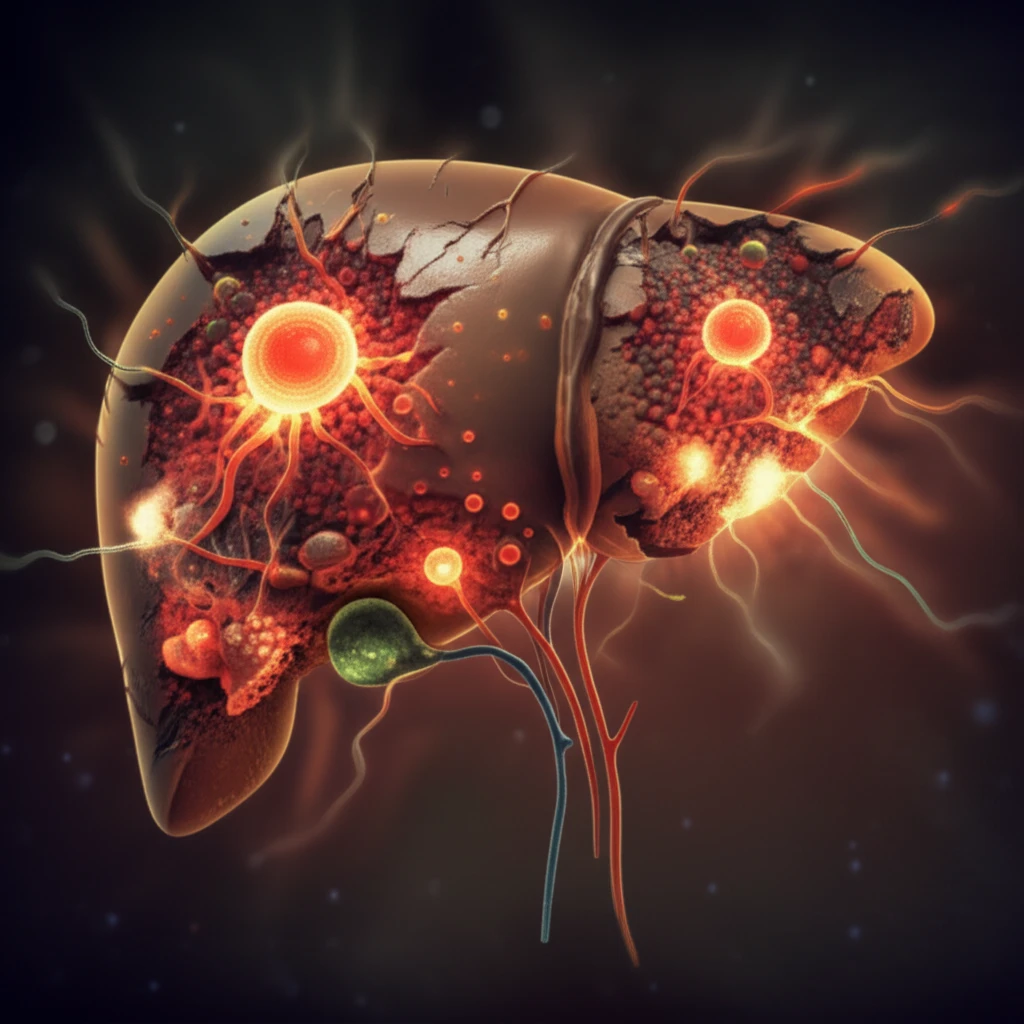
Stem Cells: A New Hope for Liver Disease?

"Explore how cutting-edge stem cell research is revolutionizing the treatment of liver diseases, offering hope where traditional methods fall short."
Liver disease poses a significant global health challenge, affecting over 450 million individuals through viral hepatitis and hepatocellular carcinoma (HCC). Traditional treatments, primarily liver transplantation, are often hindered by a severe shortage of donor organs, coupled with complications related to rejection and the necessity for long-term immunosuppression. This scarcity creates an ever-widening gap between the number of patients needing transplants and the availability of suitable organs.
Stem cell research and regenerative medicine offer a promising alternative. These innovative approaches aim to revolutionize medicine by focusing on the body's innate ability to repair and regenerate damaged tissues and organs. Stem cells, which can divide without limit to replenish other cells, hold the potential to serve as a natural repair system, mitigating the symptoms of liver disease and, in some cases, correcting underlying genetic errors through gene therapy.
For patients with acute liver failure, stem cell therapies could provide crucial support, giving the liver the necessary time to recover. This emerging field offers a beacon of hope for those awaiting life-saving treatments, promising to reshape how we approach liver disease management and potentially reduce the reliance on traditional transplantation methods.
How Can Stem Cells Revolutionize Liver Treatment?
Stem cell therapy offers a groundbreaking approach to treating liver diseases by leveraging the unique regenerative properties of stem cells. Unlike traditional treatments that often involve managing symptoms or replacing the damaged organ entirely, stem cell therapy aims to repair and regenerate the diseased liver tissue. This method could potentially restore liver function, reduce the need for transplants, and improve patient outcomes.
- Totipotent Stem Cells: Found in early embryos, these cells can form a complete organism.
- Pluripotent Stem Cells: Derived from the inner cell mass of the blastocyst, they can differentiate into any cell type in the body.
- Multipotent Stem Cells: Obtained from fetal tissue, cord blood, and adult stem cells, these are more limited in their differentiation ability but have shown success in cell-based therapies.
The Future of Stem Cell Therapy for Liver Disease
Stem cell therapy holds immense promise for revolutionizing the treatment of liver diseases. While challenges remain, ongoing research and clinical trials are paving the way for more effective and accessible therapies. By continuing to explore the potential of stem cells, we can offer hope to millions affected by liver disease and transform the future of regenerative medicine.