
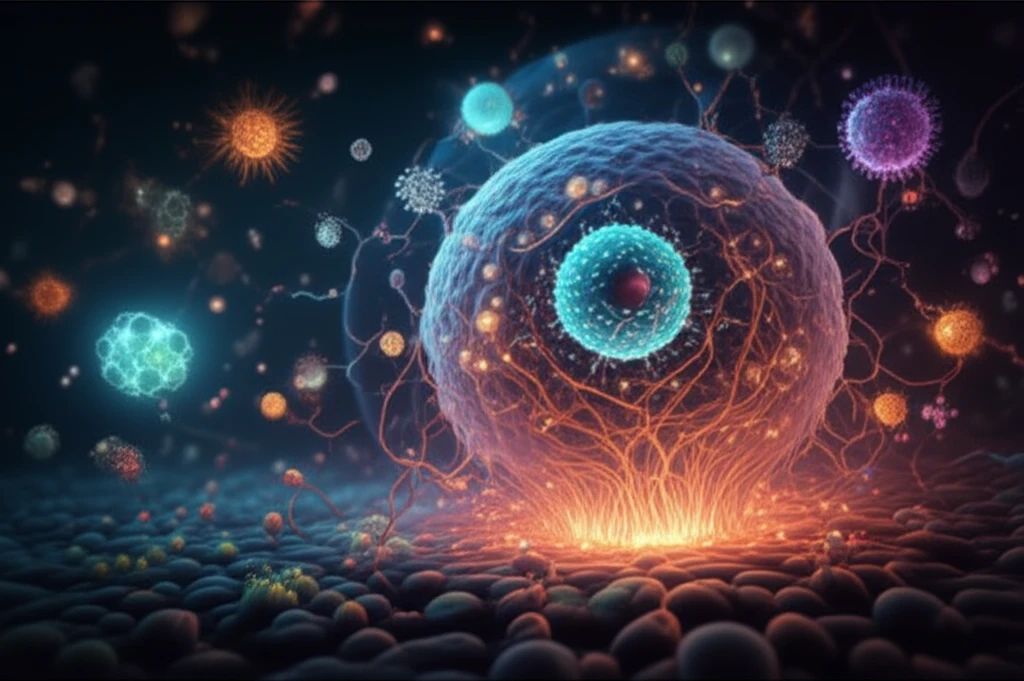
Stem Cell Niches: How These Microenvironments Impact Disease

"Unlocking the secrets of stem cell pathology to improve diagnostics, regenerative medicine, and cancer treatment."
Stem cells, with their unique ability to self-renew and differentiate, hold immense potential in understanding and treating diseases. These cells reside in specific microenvironments called niches, which protect them and influence their fate. Understanding these niches is key to unraveling how diseases develop and finding new ways to intervene.
Stem cell research is a rapidly evolving field, with breakthroughs in areas like induced cell reprogramming and regenerative medicine. These advances have led to new insights into the origins of diseases like cancer, diabetes, and neurodegeneration, opening up exciting possibilities for therapeutic intervention.
Now, advanced tools and techniques are enabling us to study stem cell niches with unprecedented detail. Techniques like lineage tracing in genetically modified mice are revealing how these niches function in various tissues and how their dysfunction contributes to disease. This review explores how stem cell pathology, a field dedicated to studying stem cells in disease, is helping us interpret these novel findings and develop better diagnostic and therapeutic strategies.
Stem Cell Niches and Their Role in Disease
Stem cell pathology focuses on understanding how stem cells contribute to disease, evaluating the effects of stem cell transplantation, and assessing the safety of genetic and epigenetic modifications. Pathologists, with specialized training, can provide informed evaluations of stem cell niche defects, even in routine tissue samples. These evaluations can be further validated with immunohistochemistry, providing a foundation for functional studies conducted in collaboration with stem cell researchers.
- Immunodetection with markers like CD44 and CD49f can highlight potential stem cells, but isn't always specific enough on its own.
- Functional assays that measure enzymatic activity (like ALDH) or compound efflux aren't specific.
- Label retention assays can point to slowly cycling cells, but some stem cells divide quickly.
- Sphere and organoid formation in the lab are valuable, but might not fully mimic stem cell behavior in the body.
The Future of Stem Cell Pathology
While much of stem cell niche research has focused on animal models, it's crucial to delineate these niches in human tissues as well, considering the anatomical and physiological differences. Furthermore, there's a need for new animal models that allow specific targeting of cell types and stages, from stem cells to differentiated progeny.
As regenerative medicine advances, pathology must play a greater role in systematically assessing complications of stem cell transplantation. Side effects of genetic and epigenetic manipulations also need careful evaluation. Pathologists are also needed to discover stem cell niches and understanding why stem cell populations reside in specific locations, like transitional zones.
To meet these growing needs, specialized training in stem cell pathology is essential. Diagnostic pathology sections specializing in this area, staffed by comparative pathologists experienced in animal models, would greatly facilitate research. These sections would focus on accurate specimen collection and evaluation, as well as the development of multiplexed approaches for detecting stem cells. Ultimately, integrating stem cell pathology with animal modeling and in vivo imaging will significantly advance our understanding of diseases associated with stem cell niche disorders.