
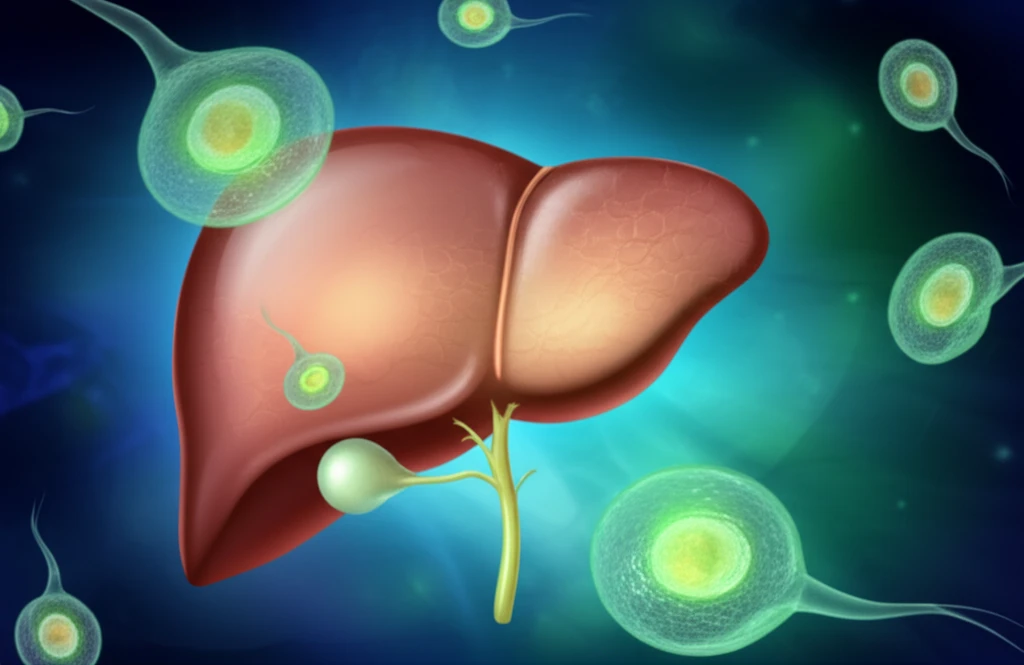
Stem Cell Breakthroughs: A New Hope for Liver Disease?

"Unlocking the Potential of Stem Cells to Repair and Regenerate the Liver"
Liver disease affects millions worldwide, posing a significant global health challenge. From viral hepatitis to cirrhosis and hepatocellular carcinoma, the spectrum of liver ailments is vast and the need for effective treatments is critical. Traditional treatments like liver transplantation are often limited by donor organ availability and the complexities of post-transplant care.
However, an exciting frontier in medicine, stem cell research, is offering new hope. Stem cells, with their unique ability to self-renew and differentiate into various cell types, hold immense potential for repairing and regenerating damaged liver tissue. This article delves into the current state of stem cell research in liver disease, exploring the science, the challenges, and the promising future it holds.
We'll explore how stem cells work, the different types being investigated, and the potential impact they could have on treating and even curing various liver conditions. Moreover, we will navigate the ethical considerations and ongoing research that bring us closer to realizing the full potential of stem cell therapies.
Understanding Stem Cells and Their Role in Liver Repair
Stem cells are the body's master cells, capable of both self-renewal and differentiation into specialized cells. This dual capability makes them ideal candidates for regenerative medicine. In the context of liver disease, stem cells offer the possibility of replacing damaged liver cells (hepatocytes), promoting tissue repair, and potentially even reversing the course of the disease.
- Hematopoietic stem cells (HSCs): Primarily known for their role in blood production, HSCs have also shown the ability to differentiate into liver cells.
- Mesenchymal stem cells (MSCs): Found in various tissues, MSCs have regenerative properties and can promote tissue repair.
- Embryonic stem cells (ESCs): Derived from early-stage embryos, ESCs possess the highest potential for differentiation, but their use raises ethical concerns.
- Induced pluripotent stem cells (iPSCs): Created by reprogramming adult cells, iPSCs offer a way to generate patient-specific cells without the ethical issues associated with ESCs.
The Future of Liver Disease Treatment
Stem cell research represents a paradigm shift in how we approach liver disease. While challenges remain, the progress made so far is undeniably promising. With continued research and clinical trials, stem cell therapies could revolutionize the treatment landscape, offering new hope and improved outcomes for millions affected by liver disease. The journey toward regenerative medicine is ongoing, but the potential to transform lives is within reach.