
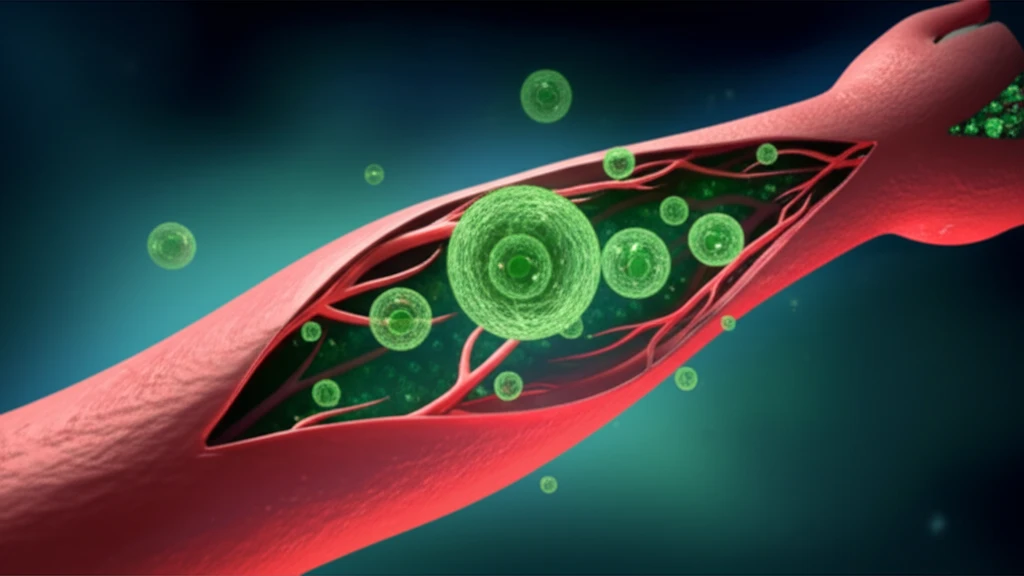
Extracellular vesicles promoting angiogenesis and healing damaged blood vessels.

Stem Cell Breakthrough: How Tiny Vesicles Could Revolutionize Ischemia Treatment

"Extracellular vesicles from mesenchymal stem cells activate VEGF receptors, accelerating recovery from hindlimb ischemia and offering new hope for regenerative medicine."


For years, scientists have explored mesenchymal stem cells (MSCs) as potential therapies for a variety of diseases. These cells, known for their ability to develop into various cell types, hold immense promise in regenerative medicine. However, the exact mechanisms behind their therapeutic efficacy, particularly in promoting angiogenesis (the formation of new blood vessels), have remained unclear. But what if the key to unlocking their potential lies in tiny vesicles they release?

New research illuminates how MSCs exert their regenerative effects, focusing on extracellular vesicles (EVs). These EVs, derived from MSCs, have shown remarkable capabilities in activating VEGF receptors and accelerating recovery from hindlimb ischemia. This breakthrough not only deepens our understanding of stem cell therapies but also opens up new avenues for treating ischemic conditions, where blood flow is restricted.

The study highlights how these MSC-derived EVs can stimulate angiogenesis, a critical process for tissue repair and recovery in ischemic diseases. By understanding the mechanisms through which EVs activate VEGF receptors, scientists are paving the way for more targeted and effective treatments. This discovery could transform how we approach regenerative medicine, offering hope for improved outcomes in various ischemic conditions.

Unlocking the Potential of MSC-EVs: Activating VEGF Receptors for Enhanced Recovery

Extracellular vesicles promoting angiogenesis and healing damaged blood vessels.

The research team began by isolating MSC-EVs from mouse cell cultures, employing meticulous techniques such as transmission electron microscopy and nanoparticle analysis to characterize these vesicles. These methods confirmed the purity and structure of the isolated EVs, setting the stage for in vitro experiments to assess their angiogenic potential. The analysis confirmed that the MSC-EVs had a average diameter of 134.8 nm, and contained proteins ALIX and CD63, but not other proteins.

To evaluate the angiogenic capabilities of MSC-EVs, a series of in vitro assays were conducted, focusing on key processes involved in blood vessel formation. These experiments aimed to mimic the conditions necessary for angiogenesis, providing insights into how MSC-EVs influence these processes:

  • Migration Assays: Endothelial cells were treated with MSC-EVs to observe changes in their ability to migrate, a crucial step in angiogenesis.
  • Proliferation Assays: The impact of MSC-EVs on endothelial cell growth was examined, assessing whether these vesicles could stimulate cell division and expansion.
  • Tube Formation Assays: Endothelial cells were cultured on a matrix gel to assess their capacity to form tube-like structures, mimicking the formation of new blood vessels.
The results revealed that MSC-EVs significantly enhanced each of these processes. Endothelial cells exhibited increased migration, proliferation, and tube formation when treated with MSC-EVs, indicating a potent angiogenic effect. These findings suggested that MSC-EVs could play a vital role in promoting new blood vessel growth, a key factor in tissue repair and recovery from ischemia.

Toward Clinical Applications: Future Directions and Therapeutic Potential

This study marks a significant step forward in understanding the therapeutic potential of MSC-EVs. By elucidating the mechanisms through which these vesicles activate VEGF receptors and promote angiogenesis, researchers are paving the way for innovative treatments for ischemic diseases. As the field progresses, future studies will likely focus on optimizing EV-based therapies for clinical use, potentially transforming the lives of individuals affected by these debilitating conditions. Ultimately, this research underscores the power of regenerative medicine and the potential of stem cell-derived therapies to revolutionize healthcare.

About this Article -

This article was crafted using a human-AI hybrid and collaborative approach. AI assisted our team with initial drafting, research insights, identifying key questions, and image generation. Our human editors guided topic selection, defined the angle, structured the content, ensured factual accuracy and relevance, refined the tone, and conducted thorough editing to deliver helpful, high-quality information.See our About page for more information.

Everything You Need To Know

1

What are extracellular vesicles (EVs) and how do they relate to mesenchymal stem cells (MSCs) in the context of this research?

Extracellular vesicles (EVs) are tiny vesicles released by mesenchymal stem cells (MSCs). In this research, the focus is on how these EVs, specifically those derived from MSCs, play a crucial role in treating ischemia. The study reveals that these EVs can activate VEGF receptors and promote angiogenesis, which is the formation of new blood vessels. This is a key finding because it shows how MSCs, known for their regenerative capabilities, exert their therapeutic effects through these EVs, offering a novel approach to regenerative medicine.

2

How do MSC-derived EVs stimulate angiogenesis, and why is this important for treating ischemia?

MSC-derived EVs stimulate angiogenesis by activating VEGF receptors, which are critical for the formation of new blood vessels. The research conducted in vitro utilized three key assays: migration assays, proliferation assays, and tube formation assays. These assays demonstrated that MSC-EVs significantly enhanced each of these processes, including endothelial cell migration, proliferation, and tube formation. Angiogenesis is vital in treating ischemia because it helps to restore blood flow to tissues where blood supply is restricted. By promoting new blood vessel growth, MSC-EVs aid in tissue repair and recovery, which is particularly important in ischemic conditions like hindlimb ischemia.

3

What specific methods were used to analyze and characterize the MSC-EVs?

The research team used several meticulous techniques to analyze and characterize the MSC-EVs. These included transmission electron microscopy and nanoparticle analysis to confirm the purity and structure of the isolated EVs. These methods were essential to understanding the physical properties of the EVs, such as their average diameter of 134.8 nm, and to confirm the presence of specific proteins like ALIX and CD63. These analyses were crucial for validating the experimental results and ensuring that the EVs used in the in vitro assays were of high quality and suitable for the study's objectives.

4

What are the potential clinical applications and future directions for MSC-EV-based therapies?

The study's findings open the door to innovative treatments for ischemic diseases. Future studies will likely focus on optimizing EV-based therapies for clinical use. This could involve refining methods for isolating and delivering MSC-EVs to target tissues, as well as exploring the use of these therapies in a wider range of ischemic conditions. This approach underscores the power of regenerative medicine and the potential of stem cell-derived therapies to revolutionize healthcare, offering improved outcomes for individuals affected by debilitating conditions.

5

Can you explain the role of VEGF receptors and their importance in the context of MSC-EVs and ischemia treatment?

VEGF (Vascular Endothelial Growth Factor) receptors are crucial in the process of angiogenesis. These receptors, when activated, signal the formation of new blood vessels. In the context of MSC-EVs and ischemia treatment, the research highlights that MSC-EVs activate VEGF receptors. This activation stimulates angiogenesis, a critical process for tissue repair and recovery in ischemic diseases. The ability of MSC-EVs to enhance endothelial cell migration, proliferation, and tube formation, all of which are influenced by VEGF signaling, offers a targeted approach to restoring blood flow and promoting healing in ischemic conditions. This makes VEGF receptors a pivotal element in the therapeutic potential of MSC-EVs.

Newsletter Subscribe

Subscribe to get the latest articles and insights directly in your inbox.