
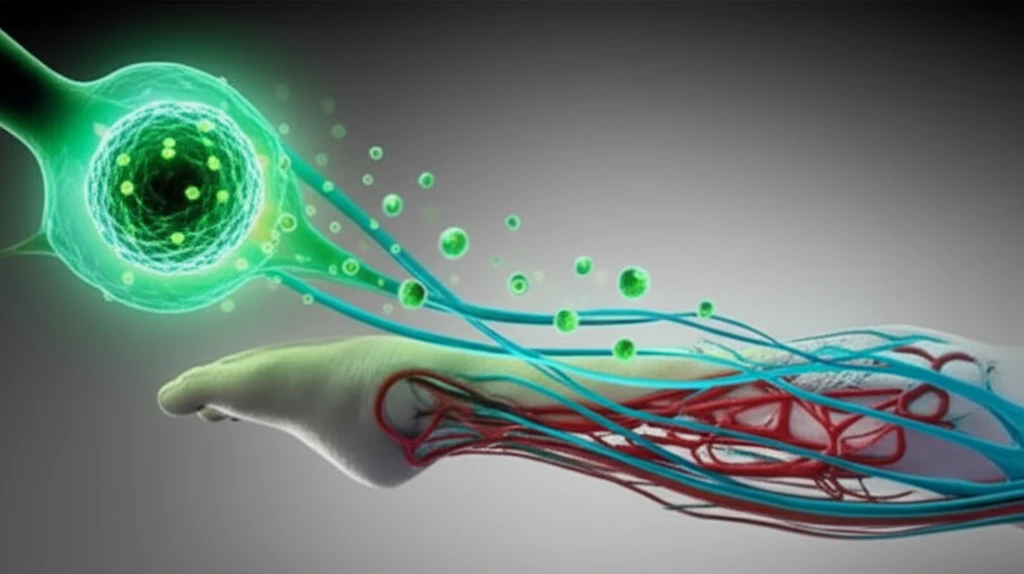
Stem Cell Breakthrough: Can Tiny Vesicles Heal Limb Ischemia?

"New research explores how extracellular vesicles from mesenchymal stem cells could revolutionize treatment for limb ischemia and accelerate recovery."
Limb ischemia, characterized by reduced blood flow to the limbs, poses a significant threat to millions worldwide. This condition can lead to severe pain, ulcers, and in the most extreme cases, amputation. While conventional treatments such as surgery and medication offer some relief, innovative therapeutic strategies are eagerly sought to improve patient outcomes and quality of life.
In recent years, stem cell therapy has emerged as a promising avenue for treating a variety of diseases, including limb ischemia. Mesenchymal stem cells (MSCs), known for their regenerative properties, have garnered considerable attention. However, the exact mechanisms by which MSCs exert their therapeutic effects have remained elusive.
Now, exciting new research sheds light on a potential game-changer in the field: extracellular vesicles (EVs). These tiny vesicles, secreted by MSCs, are packed with a variety of bioactive molecules, including proteins and genetic material, that can influence the behavior of other cells. Scientists are increasingly focused on how EVs can be harnessed to stimulate tissue repair and regeneration. A groundbreaking study has now demonstrated the remarkable ability of MSC-derived EVs to activate VEGF receptors and accelerate recovery in a mouse model of hindlimb ischemia, paving the way for innovative treatments.
How Do MSC-Derived EVs Activate VEGF Receptors and Accelerate Healing?
The study, led by Prakash Gangadaran and colleagues, delves into the therapeutic potential of extracellular vesicles (EVs) derived from mesenchymal stem cells (MSCs). These EVs, naturally secreted by MSCs, carry a cargo of proteins and genetic material that can influence recipient cells. The researchers hypothesized that MSC-EVs could stimulate angiogenesis (the formation of new blood vessels) and accelerate recovery from hindlimb ischemia, a condition mimicking reduced blood flow to the limbs.
- MSC-EVs Promote Angiogenesis: In vitro experiments showed that MSC-EVs significantly enhanced the migration, proliferation, and tube formation of endothelial cells, which are essential for blood vessel formation.
- Activation of VEGF Receptors: MSC-EVs were found to increase the expression of VEGF receptors (VEGFR1 and VEGFR2) in endothelial cells. These receptors play a crucial role in angiogenesis.
- Downstream Signaling Pathways: The study revealed that MSC-EVs activated key signaling pathways (SRC, AKT, and ERK) involved in angiogenesis.
- In Vivo Efficacy: In a mouse model of hindlimb ischemia, administration of MSC-EVs improved blood flow and accelerated recovery.
- Enhanced Retention with Matrigel: Combining MSC-EVs with Matrigel, a gel-like substance, further enhanced their therapeutic effect by prolonging their retention in the ischemic area.
The Future of MSC-EV Therapy for Ischemic Diseases
This groundbreaking research highlights the exciting potential of MSC-EVs as a novel therapeutic approach for treating limb ischemia and other ischemic diseases. By activating VEGF receptors and stimulating angiogenesis, MSC-EVs offer a promising alternative to traditional treatments, with the potential to improve patient outcomes and quality of life. Further research is needed to fully elucidate the mechanisms of action of MSC-EVs and to optimize their delivery for clinical applications, however, this study represents a significant step forward in the field of regenerative medicine and offers hope for individuals suffering from ischemic conditions.