
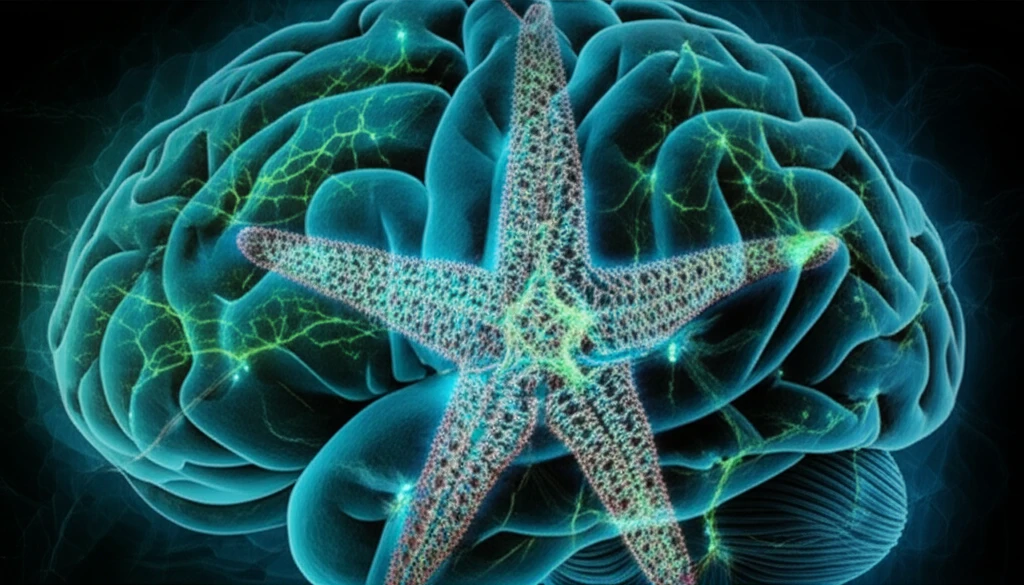
Starfish Secrets: How Brain-Like Chemicals Control Appetite and Movement

"Decoding NGFFYamide: The unexpected link between starfish feeding habits, locomotion, and human anxiety research."
Starfish, those captivating creatures of the sea, possess a feeding behavior unlike any other: they can evert their stomachs outside of their bodies to devour their prey. But how is this bizarre behavior, along with their locomotion, regulated? Scientists have been seeking answers within the starfish's nervous system, focusing on neuropeptides – the chemical messengers of the brain.
A recent study published in Frontiers in Endocrinology sheds light on a particular neuropeptide called NGFFYamide and its crucial role in controlling feeding and movement in the starfish Asterias rubens. What makes this research even more intriguing is the connection it draws to similar systems in humans, particularly those involved in anxiety and appetite control.
This article explores the fascinating world of NGFFYamide, explaining how it affects starfish behavior, what this reveals about the evolution of brain-like chemicals, and the potential implications for our understanding of human biology.
What is NGFFYamide and Why Should You Care?
NGFFYamide belongs to a family of neuropeptides found in various animal species. In starfish, it acts as a signaling molecule, communicating instructions between cells, especially within the nervous system. Scientists have identified NGFFYamide as the key that fits into a specific receptor, named the NPS/CCAP-type receptor, on starfish cells.
- Regulating anxiety and arousal
- Controlling appetite and feeding behavior
- Influencing locomotor activity
Starfish as a Window into Our Own Brains
The discovery of NGFFYamide's role in starfish is more than just an interesting biological fact. It highlights how studying seemingly simple creatures can offer profound insights into complex human systems.
By understanding how NGFFYamide and its related receptors function in starfish, scientists can gain a better understanding of drug design for human neurological and metabolic disorders. This research suggests that the fundamental mechanisms controlling mood, movement, and appetite have ancient roots, stretching back to our shared evolutionary ancestors.
Further research is needed to fully understand the intricacies of the NGFFYamide system in starfish and its implications for human health. However, this study serves as a compelling reminder that the answers to some of our most pressing questions may lie in the most unexpected corners of the natural world.