
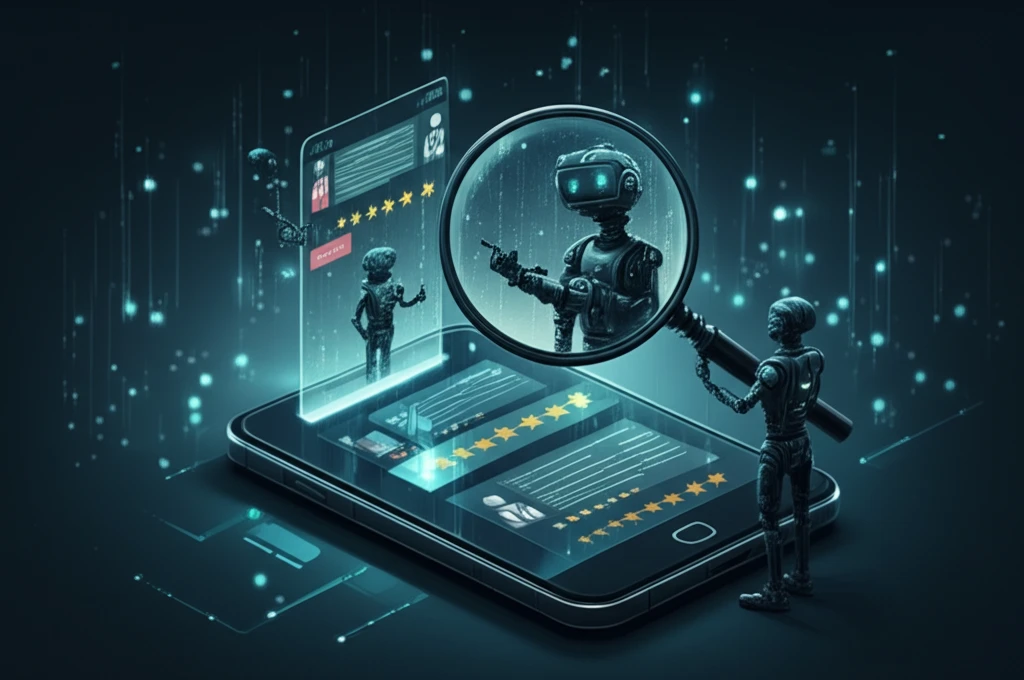
A magnifying glass over a phone showing tiny AI robots writing restaurant reviews.

Spotting Fake Restaurant Reviews: How to Protect Yourself and Your Favorite Eateries

"A deep dive into the world of online restaurant reviews, revealing the truth about AI-generated fakes and what you can do about it."


In today's digital age, online reviews are the modern-day word-of-mouth, heavily influencing our dining decisions. A stellar rating can draw crowds, while a string of negative comments can sink a restaurant's reputation. But what if those reviews aren't genuine? What if they're crafted by artificial intelligence, designed to mislead and manipulate?

A recent study from William Howard Taft University sheds light on the growing problem of fake online restaurant reviews generated by AI. The research uncovers the surprisingly persuasive power of these fabricated testimonials and offers insights into how consumers can protect themselves from deception.

With AI tools becoming increasingly sophisticated, it's more important than ever to understand how to spot a fake review and support the restaurants you genuinely love. This article will break down the key findings of the study and provide actionable tips for navigating the online review landscape.

The Rise of the AI Reviewer: A New Threat to Trust

A magnifying glass over a phone showing tiny AI robots writing restaurant reviews.

The study highlights the increasing ease with which AI can generate convincing online reviews. Tools like ChatGPT and Rytr can whip up inauthentic narratives that blur the lines between genuine customer experiences and fabricated stories. The problem is so prevalent and has been analyzed so deep that, distinguishing AI sentences from those created by humans is becoming increasingly challenging, and to the extent that “this technology has also the potential to produce spam, ransomware, and other harmful outputs, which is substantially worrisome for our societies.

This influx of AI-generated content poses a significant threat to both consumers and restaurants:

  • For Consumers: Fake reviews can lead to poor dining choices, wasted money, and a general sense of distrust in online information.
  • For Restaurants: Deceptive reviews can unfairly damage reputations, skew ratings, and ultimately drive away customers.
The study found that consumers are more likely to fall for fake reviews when they are positive. This is because people tend to be more trusting of positive information, especially when it confirms their existing beliefs. The study also found that consumers are more likely to believe fake reviews when they are well-written and use specific details. This makes the reviews seem more authentic and believable.

Protecting Yourself from Deceptive Reviews

The digital marketplace relies on trust. By staying informed and employing critical thinking, you can help maintain the integrity of online reviews and support businesses that earn their reputations honestly. Next time, if you see an online review, make sure you are double sure if the comment is actually made by a real person!

About this Article -

This article was crafted using a human-AI hybrid and collaborative approach. AI assisted our team with initial drafting, research insights, identifying key questions, and image generation. Our human editors guided topic selection, defined the angle, structured the content, ensured factual accuracy and relevance, refined the tone, and conducted thorough editing to deliver helpful, high-quality information.See our About page for more information.

This article is based on research published under:

DOI-LINK: https://doi.org/10.48550/arXiv.2401.11345,

Title: Fake Google Restaurant Reviews And The Implications For Consumers And Restaurants

Subject: econ.gn q-fin.ec

Authors: Shawn Berry

Published: 20-01-2024

Everything You Need To Know

1

Why is it important to be able to spot fake online restaurant reviews?

Spotting fake online restaurant reviews is crucial for several reasons. For consumers, it prevents being misled into poor dining choices and wasting money. For restaurants, it safeguards against unfair damage to their reputation and skewed ratings caused by deceptive reviews. The rise of AI-generated content, as highlighted by the William Howard Taft University study, poses a significant threat to the trust consumers place in online information and the well-being of legitimate businesses. Distinguishing authentic reviews from those generated by tools like ChatGPT and Rytr ensures informed decisions and supports restaurants that earn their reputations honestly.

2

How are AI tools like ChatGPT and Rytr contributing to the problem of fake online reviews?

AI tools such as ChatGPT and Rytr make it easier to generate convincing, yet inauthentic, online reviews. These tools can produce fabricated narratives that blur the lines between genuine customer experiences and made-up stories. The sophistication of these AI-generated reviews makes it challenging to distinguish them from human-written reviews. This influx of AI-generated content threatens consumers and restaurants by potentially misinforming the public and unfairly damaging business reputations. The William Howard Taft University study emphasizes the growing need to understand and counteract this deceptive practice.

3

What did the William Howard Taft University study reveal about consumers' susceptibility to fake reviews?

The William Howard Taft University study revealed that consumers are more likely to fall for fake online reviews when they are positive. People tend to trust positive information more readily, especially if it confirms their existing beliefs. The study also found that well-written reviews with specific details are more likely to be believed, as they appear more authentic and believable. These findings highlight the deceptive power of AI-generated content and emphasize the importance of critical thinking when evaluating online feedback.

4

How can fake reviews impact restaurants, according to the information presented?

Fake reviews can significantly damage restaurants. Deceptive reviews can unfairly damage a restaurant's reputation, skew its ratings, and ultimately drive away potential customers. These fabricated testimonials, often generated by AI tools like ChatGPT and Rytr, can mislead consumers and undermine the trust that is essential for a restaurant's success. Combating fake reviews is vital for maintaining a fair marketplace where businesses are judged on genuine customer experiences, not fabricated narratives.

5

What broader implications does the rise of AI-generated fake reviews have on online trust and information integrity?

The rise of AI-generated fake reviews has profound implications for online trust and information integrity. The increasing sophistication of tools like ChatGPT and Rytr in creating deceptive content erodes the reliability of online reviews, making it harder for consumers to make informed decisions. As the William Howard Taft University study suggests, this technology's potential extends beyond fake reviews, posing a risk of producing spam, ransomware, and other harmful outputs. Addressing this challenge requires a multi-faceted approach, including technological solutions, consumer education, and regulatory measures, to safeguard the integrity of online information and maintain public trust.

Newsletter Subscribe

Subscribe to get the latest articles and insights directly in your inbox.