
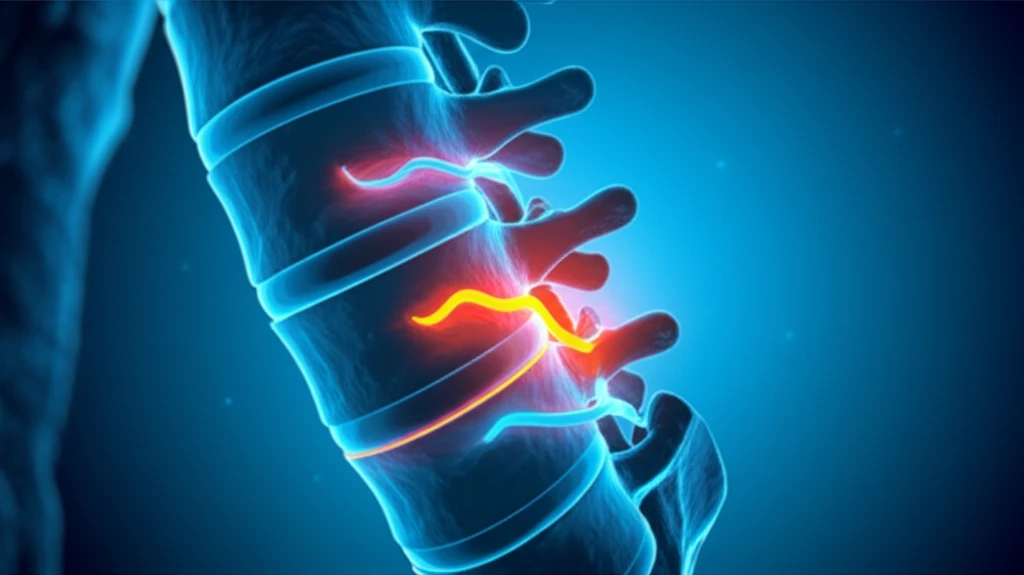
Resilient Threads: Healing from Spinal Cord Injury

Spinal Cord Surprise: When a Nail Gun Leads to Unexpected Resilience

"Discover how a rare case of a nail gun injury bisecting the spinal cord reveals the body's surprising ability to adapt and recover."


Spinal cord injuries (SCIs) are often devastating, leading to significant neurological deficits and long-term disabilities. These injuries can result from various causes, including motor vehicle accidents, falls, sports injuries, and acts of violence. Among these, penetrating spinal injuries (PSIs) are particularly complex and carry a high risk of complications.

PSIs occur when an object pierces the spinal cord or surrounding structures. While missile injuries from firearms are a common cause, non-missile PSIs can result from knives, tools, or other sharp objects. The severity of the injury depends on several factors, including the object's velocity, trajectory, and the specific structures damaged. Neurological outcomes can range from complete paralysis to relatively minor sensory deficits.

Now, a rare case has emerged that challenges our understanding of spinal cord injuries. The report details a 35-year-old male who accidentally shot himself in the back with a nail gun, resulting in a nail bisecting his thoracic spinal canal. What makes this case extraordinary is the lack of significant neurological deficits, defying expectations and raising questions about the spinal cord's capacity for resilience and adaptation.

Atypical Accident: Nail Gun Incident Reveals Midline Cord Syndrome

Resilient Threads: Healing from Spinal Cord Injury

In a construction site incident, a 35-year-old male was admitted to the Emergency Department of AIIMS Rishikesh, seven hours after accidentally being shot in the back with a nail gun. Prior to arrival, he received a tetanus toxoid injection and analgesics. The chief complaint was excruciating back pain (9/10 on the Visual Analog Scale).

Upon examination, an iron nail head was seen protruding from the mid-back region, without active bleeding. The patient demonstrated no motor loss; however, sensory deficits were noted, including bilateral loss of pinprick sensation from L1 to L3 and proprioception loss in the left lower limb. These findings led to a diagnosis of T12 AIS E spinal cord injury (SCI).

The diagnostic imaging revealed:
  • Radiographs: Intact foreign body in the T8-T9 intervertebral space.
  • CT Scan: Metallic foreign body (iron nail) entering along the right margin of the T9 spinous process, bisecting through the spinal canal, and reaching the T8-T9 disc space.
Following these findings, the patient was immediately started on prophylactic broad-spectrum antibiotics to prevent potential complications like meningitis.
Prompt surgical intervention was planned. The patient was placed in a prone position and the T8-T9 spinous process was approached using a dorsal midline incision. The nail was seen passing through the interlaminar space on the right margin of the D9 spinous process. A partial T8 and upper T9 laminectomy was performed, being cautious to preserve the facet joints. The surgical team discovered the nail penetrating the dura. The nail (5.7 cm length and 0.5 cm diameter) was carefully removed, and the dural rent was repaired with 6-0 prolene and sealed with TISSEEL. The seal was reinforced with an autologous fascial graft, and a Valsalva maneuver confirmed no CSF leak.

Defying Expectations: A Glimmer of Hope for Spinal Cord Injuries?

This case underscores the complexity of spinal cord injuries and highlights the potential for unexpected resilience. While the patient experienced sensory deficits, the absence of significant motor impairment suggests that the spinal cord can sometimes adapt to traumatic insults. Further research is needed to understand the mechanisms underlying this phenomenon and to explore potential therapeutic interventions that could promote recovery in individuals with more severe SCIs. This case serves as a reminder that every patient is unique and that outcomes can vary even in seemingly similar injuries. It also highlights the importance of ongoing research to unlock the secrets of the spinal cord and to develop more effective treatments for those living with SCI.

About this Article -

This article was crafted using a human-AI hybrid and collaborative approach. AI assisted our team with initial drafting, research insights, identifying key questions, and image generation. Our human editors guided topic selection, defined the angle, structured the content, ensured factual accuracy and relevance, refined the tone, and conducted thorough editing to deliver helpful, high-quality information.See our About page for more information.

This article is based on research published under:

DOI-LINK: 10.1038/s41394-018-0136-x, Alternate LINK

Title: Penetrating Spine Injury Bisecting Thoracic Spinal Canal With No Significant Neurological Deficits—The Midline Cord Syndrome

Subject: Dermatology

Journal: Spinal Cord Series and Cases

Publisher: Springer Science and Business Media LLC

Authors: Bhaskar Sarkar, Kaustubh Ahuja, Arghya Kundu Choudhury, Rohit Jain

Published: 2018-11-13

Everything You Need To Know

1

What is a Spinal Cord Injury?

A Spinal Cord Injury (SCI) is damage to the spinal cord that can result in significant neurological deficits and long-term disabilities. These injuries stem from various causes, including motor vehicle accidents, falls, sports injuries, and acts of violence, with penetrating spinal injuries (PSIs) being particularly complex. In the context of the case, the patient's injury from the nail gun is a PSI, highlighting the potential for unexpected outcomes and the body's resilience.

2

What defines a Penetrating Spinal Injury?

A Penetrating Spinal Injury (PSI) occurs when an object pierces the spinal cord or the surrounding structures. Missile injuries from firearms are a common cause, but non-missile PSIs can result from knives, tools, or other sharp objects. In this case, the nail from the nail gun caused a PSI by bisecting the thoracic spinal canal. The severity depends on the object's velocity, trajectory, and the specific structures damaged. The patient's PSI, while severe in nature, surprisingly led to minimal neurological damage, challenging conventional expectations.

3

What is the significance of the thoracic spinal canal in this scenario?

The thoracic spinal canal is the bony structure within the spine that encases and protects the spinal cord in the thoracic region. This region is crucial for transmitting signals between the brain and the body. In the reported case, the nail from the nail gun bisected this canal. While such an injury is typically expected to cause significant damage, the patient experienced surprisingly minimal neurological deficits. The incident highlights the spine's resilience and its capacity to adapt to traumatic events.

4

What is a partial laminectomy and what role did it play in this case?

A partial laminectomy is a surgical procedure where a portion of the lamina, the bony arch of a vertebra, is removed to access the spinal cord. In the case study, a partial T8 and upper T9 laminectomy was performed to remove the nail and repair the dural rent. The surgical team carefully preserved the facet joints. This intervention was crucial to remove the foreign object and address any associated damage. The subsequent repair of the dura and use of an autologous fascial graft underscores the complexity of the treatment.

5

What are sensory deficits, and why are they important in understanding this particular injury?

Sensory deficits refer to a loss or impairment of the ability to perceive sensations such as touch, pain, temperature, and proprioception. In the case study, the patient experienced bilateral loss of pinprick sensation from L1 to L3 and proprioception loss in the left lower limb. The patient's sensory deficits, in the context of the spinal cord injury, represent a disruption in the sensory pathways within the spinal cord. The absence of significant motor impairment suggests that the spinal cord can sometimes adapt to traumatic insults.

Newsletter Subscribe

Subscribe to get the latest articles and insights directly in your inbox.