
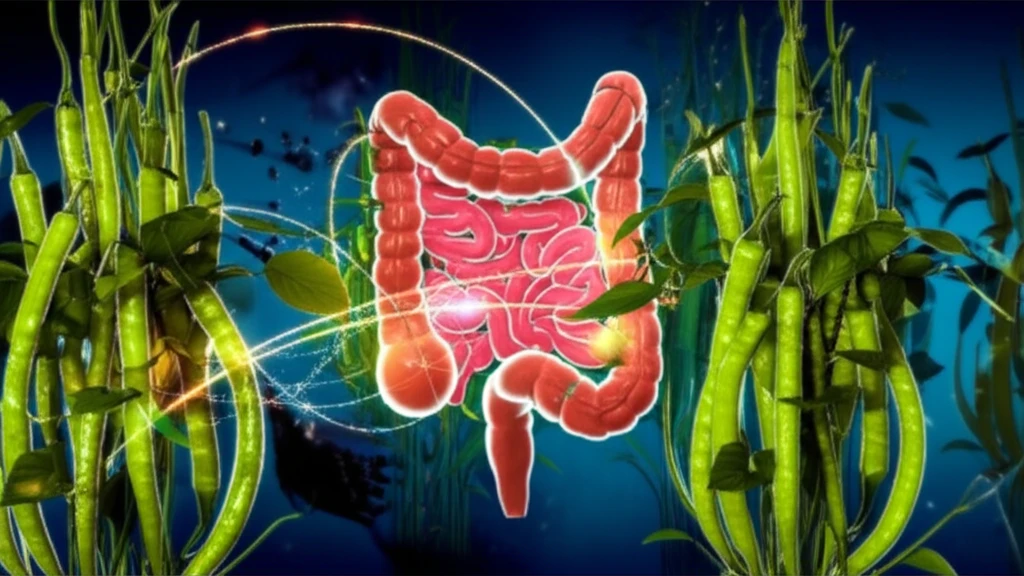
Illustration of a healthy colon protected by long pepper plants, representing piperlongumine's role in colon cancer prevention.

Spice Up Your Health: Piperlongumine's Promising Fight Against Colon Cancer

"Discover how this natural alkaloid targets key signaling pathways to inhibit tumor growth, offering a potential new approach to colon cancer prevention."


Colorectal cancer (CRC) is a major global health challenge, being one of the most commonly diagnosed cancers worldwide. With projections estimating a significant increase in cases and deaths in the coming years, the need for effective prevention and treatment strategies has never been more critical. While conventional treatments like surgery, chemotherapy, and radiotherapy remain the standard of care, they often come with severe side effects that can diminish a patient's quality of life. This has spurred interest in exploring alternative approaches, particularly chemoprevention using natural products.

Chemoprevention involves using natural compounds to prevent cancer development, offering a potentially safer and more cost-effective alternative to traditional cancer therapies. These natural products, often derived from plants, have the ability to modulate multiple pathways involved in tumor initiation, promotion, and progression, while also enhancing the host immune system and sensitizing cancer cells to cytotoxic agents. As such, research into these compounds has become increasingly vital.

Among the many natural compounds being investigated, piperlongumine (PL), an alkaloid found in the long pepper plant (Piper longum Linn), has shown promising anticancer effects in various in vitro studies. However, its potential in preventing colon cancer has remained largely unexplored – until now. Recent research has begun to shed light on PL's chemopreventive capabilities in experimentally induced colon cancer, particularly its ability to target key signaling pathways that drive tumor growth.

Piperlongumine: Targeting the Roots of Colon Cancer Growth

Illustration of a healthy colon protected by long pepper plants, representing piperlongumine's role in colon cancer prevention.

A new study delves into the chemopreventive potential of piperlongumine (PL) in a mouse model of colon cancer induced by DMH+DSS. The research focuses on PL's impact on the Ras/PI3K/Akt/mTOR signaling axis, a crucial pathway that promotes tumor cell growth, proliferation, and survival by inhibiting apoptosis. The study's findings reveal PL's potent antineoplastic activity against colon cancer cells, achieved by specifically targeting Ras proteins and the PI3K/Akt signaling cascade.

Key highlights of the study underscore PL's multi-faceted approach to combating colon cancer:

  • Ras Protein Inhibition: PL effectively reduces the levels of Ras proteins, a critical component in signaling pathways that drive cancer cell growth.
  • PI3K/Akt Pathway Suppression: By inhibiting the PI3K protein, PL curtails the activity of the Akt/NF-κB, c-Myc, and cyclin D1 proteins, all of which are implicated in cancer progression.
  • Cell Cycle Arrest: PL halts the progression of cancer cells at the G2/M phase, preventing them from dividing and multiplying.
  • Apoptosis Induction: PL promotes the mitochondrial apoptotic pathway by downregulating Bcl-2 levels, encouraging programmed cell death in cancerous cells.
  • Safety Profile: Importantly, the study found no evidence of liver or kidney toxicity in the animals treated with PL, suggesting it is well-tolerated.
These results indicate that PL exhibits potent antineoplastic activity against colon cancer cells, achieved by targeting Ras proteins and the PI3K/Akt signaling cascade. PL-mediated inhibition of tumor cell growth was associated with reduced levels of Ras protein and its preferred companion protein PI3K, which led to suppressed activity of Akt/NF-κB, c-Myc, and cyclin D1. Furthermore, PL arrested cell cycle progression at the G2/M phase and induced the mitochondrial apoptotic pathway by downregulating Bcl-2 levels. Importantly, liver and kidney toxicity results suggest that PL exhibits no toxicity in animals. The results suggest that PL may be an effective chemopreventive agent for colon cancer.

A Promising Path Forward

This research highlights the potential of piperlongumine as a safe and effective chemopreventive agent for colon cancer. By targeting key signaling pathways and promoting apoptosis, PL offers a multi-faceted approach to inhibiting tumor growth. Further studies are needed to fully elucidate PL's mechanisms of action and its potential for clinical application, but these findings offer hope for new strategies in the fight against colon cancer.

About this Article -

This article was crafted using a human-AI hybrid and collaborative approach. AI assisted our team with initial drafting, research insights, identifying key questions, and image generation. Our human editors guided topic selection, defined the angle, structured the content, ensured factual accuracy and relevance, refined the tone, and conducted thorough editing to deliver helpful, high-quality information.See our About page for more information.

Everything You Need To Know

1

What is piperlongumine, and what is its potential in relation to colon cancer?

Piperlongumine (PL) is a natural alkaloid found in the long pepper plant (Piper longum Linn). Research indicates that PL exhibits promising anticancer effects. Specifically, it shows potential as a chemopreventive agent for colon cancer. PL targets key signaling pathways like Ras and PI3K/Akt, which are crucial for tumor growth, offering a potential new approach to colon cancer prevention and treatment.

2

How does piperlongumine work to combat colon cancer at a molecular level?

Piperlongumine (PL) combats colon cancer by several mechanisms. First, it reduces levels of Ras proteins, critical components in pathways driving cancer cell growth. Second, PL inhibits the PI3K/Akt signaling cascade, suppressing the activity of Akt/NF-κB, c-Myc, and cyclin D1 proteins, all involved in cancer progression. Third, PL halts the cell cycle at the G2/M phase, preventing cancer cell division. Fourth, it promotes the mitochondrial apoptotic pathway by downregulating Bcl-2 levels, thus encouraging programmed cell death in cancerous cells.

3

What is the significance of the Ras/PI3K/Akt/mTOR signaling axis in colon cancer, and how does piperlongumine interact with it?

The Ras/PI3K/Akt/mTOR signaling axis is a critical pathway that promotes tumor cell growth, proliferation, and survival by inhibiting apoptosis. In colon cancer, this pathway is often overactive, contributing to uncontrolled cell growth. Piperlongumine (PL) targets this axis at multiple points: by reducing the levels of Ras proteins, inhibiting PI3K, and suppressing the activity of downstream proteins like Akt. This multi-faceted approach disrupts the signaling cascade, effectively inhibiting tumor growth and promoting apoptosis.

4

Besides targeting cancer cell growth, what other benefits does piperlongumine offer, as highlighted in the research?

Besides targeting cancer cell growth, piperlongumine (PL) offers several benefits. The research highlights that PL induced the mitochondrial apoptotic pathway by downregulating Bcl-2 levels which is also important. Importantly, the study found no evidence of liver or kidney toxicity in the animals treated with PL, suggesting it is well-tolerated. This safety profile is crucial because it suggests PL could be a safer alternative to traditional treatments.

5

What are the next steps in researching piperlongumine for colon cancer treatment?

Further studies are needed to fully elucidate piperlongumine's (PL) mechanisms of action and its potential for clinical application. This includes more in-depth research into the specific ways PL interacts with the Ras/PI3K/Akt/mTOR signaling axis and other relevant pathways. Also, more research should focus on how PL behaves in clinical trials and in combination with current therapies. The goal is to validate these findings in humans and to determine the optimal dosage, administration methods, and long-term effects of PL in colon cancer patients.

Newsletter Subscribe

Subscribe to get the latest articles and insights directly in your inbox.