
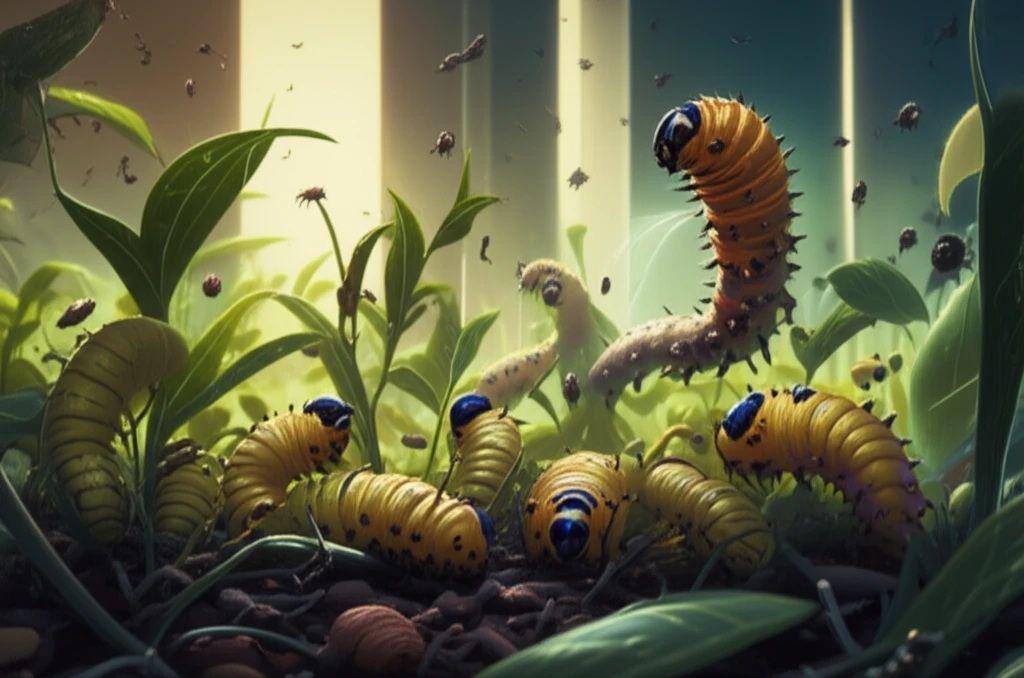
Southern Armyworm Survival Guide: Keeping Your Garden Safe

"Uncover the secrets to protecting your plants from Southern Armyworm infestations. Learn about their life cycle, preferred hosts, and effective control strategies."
The Southern armyworm, Spodoptera eridania, is a widespread pest known for its ability to devour a wide range of plants. While native to the Americas, its adaptability has made it a concern for both annual crops and perennial gardens. Understanding this pest's habits is crucial for anyone looking to maintain a healthy, productive garden.
One of the biggest challenges with S. eridania is its polyphagous nature – meaning it feeds on many different plant species. This makes it difficult to predict where it will strike next. From soybeans and tomatoes to apples and peaches, this armyworm has a broad palate, causing significant losses in various agricultural settings.
This guide provides a comprehensive look into the life and habits of Spodoptera eridania, drawing from scientific research to offer practical strategies for managing and minimizing their impact on your precious plants. We'll explore their development, host preferences, and effective methods to keep your garden safe from infestation.
Decoding the Armyworm's Diet: What They Eat and Why
Research has revealed that Spodoptera eridania larvae have specific preferences when it comes to food. While they can survive on a variety of plants, their development and reproduction are significantly influenced by the host they consume. Some key findings include:
- Artificial Diet Advantage: Larvae fed artificial diet reached adulthood quickly, the total cycle being 28.5 days.
- Clover Boost: The research revealed that larvae flourished most when munching on white clover (Trifolium repens), showing the highest total viability (54.3%) and showing it as a great host.
- Apple Leaf Drawbacks: Caterpillars that were fed on apple leaves faced a long development time of 62.8 days.
Protecting Your Plants: Practical Steps for Armyworm Management
Based on the research, several strategies can be employed to manage Spodoptera eridania populations and minimize damage to your plants:
Understanding the armyworm's preference for plants like white clover opens avenues for targeted management. By reducing or eliminating these preferred hosts, you can disrupt their life cycle and minimize infestations. In apple and peach orchards, managing ground cover vegetation can significantly reduce the risk of armyworm damage to the fruits themselves.
By understanding the Spodoptera eridania's life cycle and dietary preferences, gardeners and farmers can implement proactive and effective strategies to protect their plants. With careful management and attention to detail, it's possible to keep your garden thriving, even in the face of this adaptable pest.