
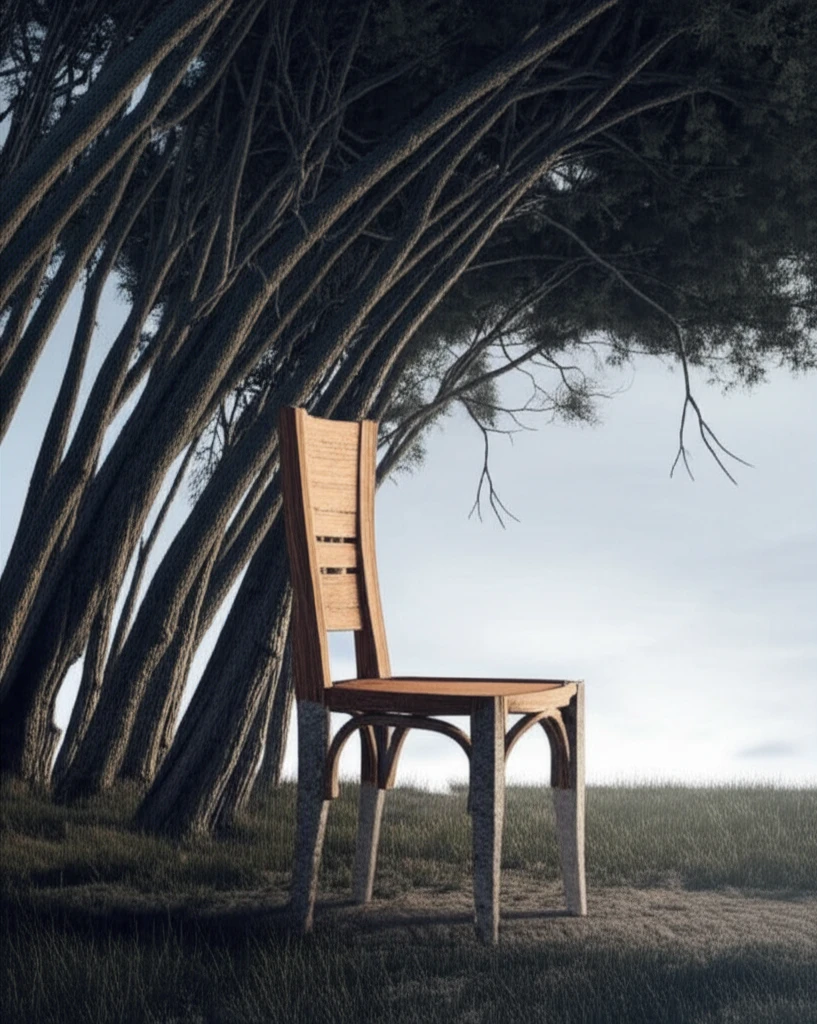
Wooden chair transforming into stone, symbolizing cyclic loading on wood.

Solid vs. Laminated Beech Wood: Which Bends But Doesn't Break?

"Uncover the surprising impact of cyclic loading on the elasticity of beech wood and how it affects furniture durability."


Beech wood, prized for its strength and appealing grain, is a staple in furniture making. Whether in solid form or as laminated veneer lumber (LVL), beech offers versatility and beauty. But how does it stand up to the everyday stresses and strains of furniture use? The answer lies in understanding cyclic loading and its effect on the wood's elasticity.

Cyclic loading, simply put, is the repeated application of stress—think of a chair being sat on and stood up from countless times. This constant cycle of stress can impact the long-term performance and durability of wooden furniture. The central question explored in the research is: Does this repeated stress affect the elasticity of beech wood, and does it differ between solid wood and LVL?

This article explores findings on how cyclic loading affects the elastic modulus (a measure of stiffness) of both solid and laminated beech wood. Understanding these effects is crucial for designing furniture that not only looks good but also withstands the test of time.

The Science of Stress: Cyclic Loading and Beech Wood

Wooden chair transforming into stone, symbolizing cyclic loading on wood.

The study investigated the impact of cyclic loading on beech wood's elasticity by subjecting both solid and laminated samples to repeated bending stress. The researchers mimicked real-world furniture use by applying cycles of force and measuring how the wood's stiffness changed over time.

To determine the elastic modulus, a three-point static bending test was performed. Samples of both solid beech and laminated beech wood, with varying thicknesses, were subjected to cyclic stress. The changes in their elasticity were then compared to control samples that didn't undergo cyclic loading.

  • Solid Beech: Pieces were selected from the sapwood fraction to ensure equal density across test samples.
  • Laminated Beech: Constructed from thin veneers (approx. 3mm) glued together with PVAC adhesive (Duvilax D3 Rapid), ensuring the wood grains ran parallel.
  • Cyclic Loading: Samples underwent 0, 1000, 2000, and 3000 cycles, with flexure measured at the center using a bending pin.
The experiment aimed to simulate the kinds of stresses furniture components face daily. By measuring the elastic modulus after different cycles, the study could determine whether repeated stress weakens the wood's ability to resist bending.

Key Takeaways: Designing for Durability

The research reveals key differences in how solid and laminated beech wood respond to cyclic loading. Laminated wood showed remarkable resilience, with no significant change in elasticity even after thousands of cycles. Solid wood, however, experienced a noticeable decrease in elasticity under the same conditions.

These findings suggest that laminated beech wood may be a superior choice for furniture components that are subjected to high levels of cyclic stress. Its ability to maintain its stiffness over time translates to increased durability and a longer lifespan for the furniture piece.

Ultimately, understanding the science behind how materials respond to stress empowers designers and manufacturers to create furniture that's not only aesthetically pleasing but also built to last. By considering the effects of cyclic loading, we can ensure that furniture remains functional and beautiful for years to come.

About this Article -

This article was crafted using a human-AI hybrid and collaborative approach. AI assisted our team with initial drafting, research insights, identifying key questions, and image generation. Our human editors guided topic selection, defined the angle, structured the content, ensured factual accuracy and relevance, refined the tone, and conducted thorough editing to deliver helpful, high-quality information.See our About page for more information.

This article is based on research published under:

DOI-LINK: 10.15376/biores.9.3.4288-4296, Alternate LINK

Title: Effect Of Cyclic Loading On The Elasticity Of Beech Solid And Laminated Wood

Subject: Waste Management and Disposal

Journal: BioResources

Publisher: BioResources

Authors: Milan Gaff, Jozef Gáborík

Published: 2014-06-03

Everything You Need To Know

1

What exactly is cyclic loading, and why is it important in relation to beech wood furniture?

Cyclic loading is the repeated application of stress, like the constant bending a chair experiences when sat on and stood up from. This process is crucial because it can reveal how durable beech wood furniture is over time. The study simulated this by repeatedly bending solid and laminated beech wood samples to measure changes in their elasticity, which is a measure of stiffness. The impact of cyclic loading can help design furniture that lasts longer.

2

What's the difference between solid and laminated beech wood?

Beech wood is a popular choice in furniture making due to its strength and beautiful grain. Solid beech wood comes from a single piece of the tree, offering a classic look. Laminated beech wood, also known as laminated veneer lumber (LVL), is constructed from thin veneers glued together, often with the wood grains running parallel. Both forms have their own characteristics. Solid beech wood showed a decrease in elasticity under cyclic loading. Laminated beech wood showed remarkable resilience, maintaining its elasticity even after many cycles of stress.

3

What is the elastic modulus, and how is it used in this research?

The elastic modulus is a measure of a material's stiffness, specifically how much it resists deformation under stress. In this research, the elastic modulus was determined using a three-point static bending test. The research measured how the elastic modulus of both solid and laminated beech wood changed after being subjected to cyclic loading. Understanding the elastic modulus's changes helps assess the furniture's ability to withstand repeated stress and maintain its shape and function.

4

How did solid and laminated beech wood compare in this study?

The study compared the effects of cyclic loading on solid and laminated beech wood. Solid beech samples showed a noticeable decrease in elasticity (stiffness) when exposed to repeated bending. This implies that solid beech furniture might become less resistant to bending over time with regular use. In contrast, laminated beech wood samples demonstrated remarkable resilience, maintaining their elasticity even after thousands of cycles. This suggests that furniture made from laminated beech wood may be more durable and better suited for withstanding long-term stress.

5

What are the key takeaways, and what do they mean for furniture design?

The key takeaways are that laminated beech wood is more resilient than solid beech wood under cyclic loading, showing no significant change in elasticity even after thousands of cycles. Solid beech wood, however, experienced a decrease in elasticity. For furniture design, this means that laminated beech wood might be a better choice for pieces that will undergo frequent use and stress. The difference in performance highlights the importance of material selection in ensuring furniture durability and longevity. Selecting materials that withstand the demands of everyday use is essential to produce enduring furniture.

Newsletter Subscribe

Subscribe to get the latest articles and insights directly in your inbox.