
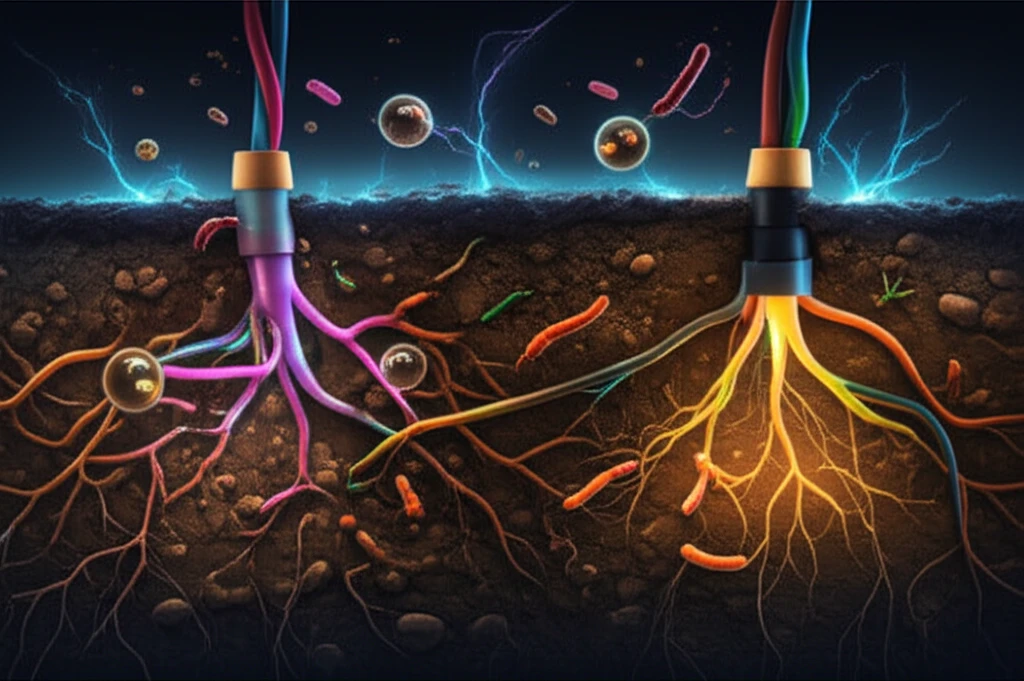
Soil SOS: Can Tiny Bugs and Electricity Save Our Planet?

"Unveiling the Groundbreaking Techniques of Electrokinetic Bioremediation for Mercury-Contaminated Soil."
Imagine a world where invisible threats lurk beneath our feet, poisoning the very ground we stand on. Soil contamination, especially from heavy metals like mercury, poses a significant challenge to both human health and the environment. But what if nature itself held the key to unlocking a solution? This article explores the innovative field of electrokinetic bioremediation, a cutting-edge technique that combines the power of electricity and microorganisms to tackle this growing problem.
Mercury, a highly toxic element, can find its way into the soil through various sources, including industrial activities, mining, and improper waste disposal. The presence of mercury in soil can lead to serious health issues, affecting the nervous system, kidneys, and other vital organs. Therefore, there is a pressing need for effective remediation strategies to remove or neutralize this dangerous pollutant, and protect our planet. The study of electrokinetic bioremediation emerges as a beacon of hope.
This article will delve into the science behind electrokinetic bioremediation, explaining how it works, its effectiveness, and its potential to revolutionize how we address soil contamination. We'll explore how researchers are harnessing the power of electricity and specific types of bacteria to combat mercury pollution and pave the way for a cleaner, healthier future. The focus is on making complex science accessible and interesting, targeting an audience eager to learn about innovative solutions.
How Electricity and Microbes Team Up to Clean the Earth: The Science of Electrokinetic Bioremediation
Electrokinetic bioremediation is an innovative technique designed to remove or neutralize contaminants in the soil. This method merges two powerful processes: electrokinetics and bioremediation. Electrokinetics involves applying a low-intensity electric field across the contaminated soil. This field helps to mobilize the contaminants, causing them to move through the soil. At the same time, bioremediation utilizes microorganisms to break down or render the contaminants less harmful.
- Electrokinetics: Uses an electrical field to move contaminants.
- Bioremediation: Employs microbes to degrade pollutants.
- Synergy: The combined approach enhances efficiency.
- Goal: Remove or neutralize contaminants effectively.
A Brighter, Cleaner Future: The Potential of Electrokinetic Bioremediation
Electrokinetic bioremediation is more than just a scientific concept; it is a viable solution for tackling soil contamination. As research and implementation continue, the potential of this technology to protect ecosystems and human health becomes even more significant. The success of these combined techniques offers new possibilities for environmental conservation and underscores the importance of scientific innovation in creating a sustainable future.