
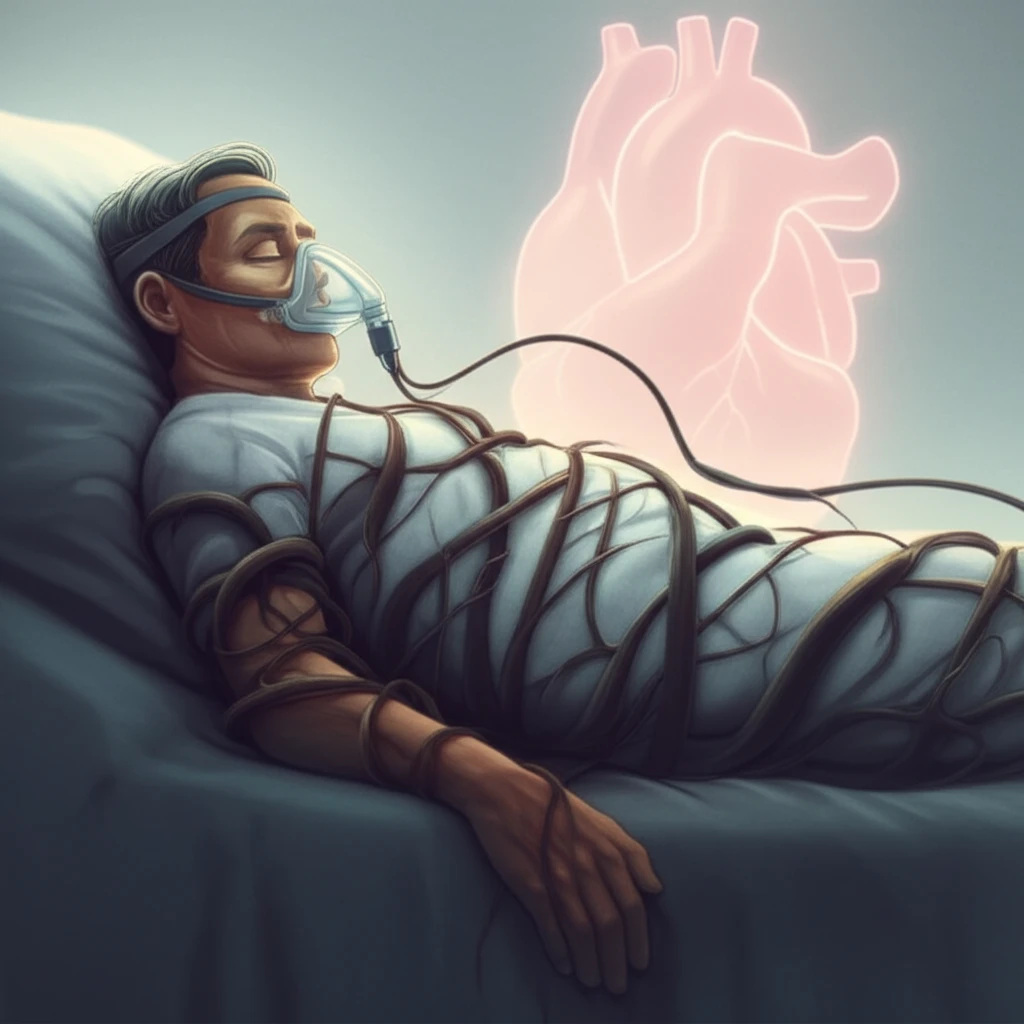
Surreal illustration of sleep apnea and hypertension.

Snoring Isn't Always Sleepy: Unmasking the Link Between Sleep Apnea and Hypertension

"Dive into the science behind obstructive sleep apnea (OSA) and its surprising connection to high blood pressure, and what you can do about it."


Obstructive sleep apnea (OSA) is more than just loud snoring; it's a serious health condition affecting millions worldwide. Characterized by repeated interruptions in breathing during sleep, OSA is increasingly recognized for its strong association with cardiovascular risks, particularly hypertension (high blood pressure).

When you sleep, your body naturally lowers its blood pressure. But with OSA, the cycle of interrupted breathing throws this process off balance. Each time your airway collapses, your body experiences a dip in oxygen levels and a surge in stress hormones. Over time, these repeated events can lead to chronic high blood pressure, straining your heart and increasing your risk of stroke and other cardiovascular problems.

This article explores the intricate relationship between OSA and hypertension, unraveling the physiological mechanisms at play and offering insights into effective management strategies.

The Sleepless Cycle: How OSA Leads to Hypertension

Surreal illustration of sleep apnea and hypertension.

The connection between OSA and hypertension isn't random. Each apnea event triggers a cascade of physiological responses that, over time, can lead to sustained high blood pressure. Here's a breakdown of what happens:

Intermittent Hypoxia: When you stop breathing, your blood oxygen levels plummet. This triggers a stress response in your body.

  • Sympathetic Nervous System Activation: Your body's "fight or flight" system kicks into high gear, releasing hormones like adrenaline that increase heart rate and constrict blood vessels.
  • Inflammation and Oxidative Stress: The oxygen deprivation and subsequent surges of oxygen upon waking create inflammation and oxidative stress, damaging blood vessel linings.
  • Endothelial Dysfunction: The inner lining of your blood vessels (the endothelium) becomes impaired, reducing its ability to regulate blood pressure effectively.
  • Arousals and Sleep Fragmentation: Each breathing interruption often leads to a brief awakening, disrupting your sleep architecture and further stressing your body.
These acute changes during sleep can eventually lead to chronic hypertension. The constant activation of the sympathetic nervous system, coupled with inflammation and endothelial dysfunction, remodels blood vessels, making them stiffer and less responsive. This sustained increase in vascular resistance leads to elevated blood pressure, even during the day.

Breaking the Cycle: Treatment and a Healthier Future

The good news is that both OSA and hypertension are manageable conditions. Effective treatment of OSA can significantly improve blood pressure control and reduce your risk of cardiovascular complications. The combination of lifestyle adjustments, medical interventions, and consistent follow-up offers the best approach to managing both conditions and reclaiming your health.

About this Article -

This article was crafted using a human-AI hybrid and collaborative approach. AI assisted our team with initial drafting, research insights, identifying key questions, and image generation. Our human editors guided topic selection, defined the angle, structured the content, ensured factual accuracy and relevance, refined the tone, and conducted thorough editing to deliver helpful, high-quality information.See our About page for more information.

Everything You Need To Know

1

What is Obstructive Sleep Apnea (OSA), and how does it relate to high blood pressure?

Obstructive Sleep Apnea (OSA) is a serious condition marked by repeated interruptions in breathing during sleep. This leads to a dip in oxygen levels and a surge in stress hormones. Over time, these repeated events can cause chronic high blood pressure, or hypertension, because the body's natural blood pressure-lowering process is disrupted. This increases the risk of stroke and other cardiovascular problems. The link is through the physiological responses triggered by apnea events, including the activation of the sympathetic nervous system, inflammation, and endothelial dysfunction.

2

How does Intermittent Hypoxia contribute to the development of hypertension in individuals with OSA?

Intermittent Hypoxia, or the decrease in blood oxygen levels during apnea events, triggers a cascade of physiological responses. The body's 'fight or flight' system, the Sympathetic Nervous System, activates, releasing hormones like adrenaline, increasing heart rate and constricting blood vessels. This, along with inflammation and endothelial dysfunction (impairment of the blood vessel lining's ability to regulate blood pressure), damages blood vessels and raises blood pressure over time. The repeated surges of oxygen upon waking also contribute to inflammation and oxidative stress, further harming blood vessels.

3

What role does the Sympathetic Nervous System play in the OSA-hypertension connection?

The Sympathetic Nervous System, part of the 'fight or flight' response, is activated during each apnea event. This activation releases hormones like adrenaline, which increase heart rate and constrict blood vessels. The sustained activation of this system over time leads to the stiffening and reduced responsiveness of blood vessels, resulting in elevated blood pressure, even during the day. It's a key mechanism by which OSA leads to chronic hypertension.

4

Besides the Sympathetic Nervous System, what other factors contribute to the link between OSA and hypertension?

Besides the Sympathetic Nervous System, inflammation and Endothelial Dysfunction are significant factors. The oxygen deprivation and subsequent surges of oxygen upon waking create inflammation and oxidative stress, damaging blood vessel linings. The Endothelial Dysfunction impairs the inner lining of blood vessels, reducing their ability to regulate blood pressure effectively. Additionally, arousals and sleep fragmentation, caused by each breathing interruption, further stress the body and disrupt sleep architecture, contributing to the chronic hypertension associated with OSA.

5

What are the available treatments, and how can effective treatment of OSA improve the management of hypertension?

Effective management involves lifestyle adjustments and medical interventions. Effective treatment of Obstructive Sleep Apnea (OSA) can significantly improve blood pressure control and reduce the risk of cardiovascular complications. The combination of lifestyle adjustments, medical interventions, and consistent follow-up offers the best approach to managing both conditions and reclaiming your health. By treating OSA, one can reduce the frequency of apnea events, thereby decreasing the activation of the sympathetic nervous system, reducing inflammation, and improving endothelial function. This, in turn, can lead to lower blood pressure and a reduced risk of cardiovascular problems.

Newsletter Subscribe

Subscribe to get the latest articles and insights directly in your inbox.