
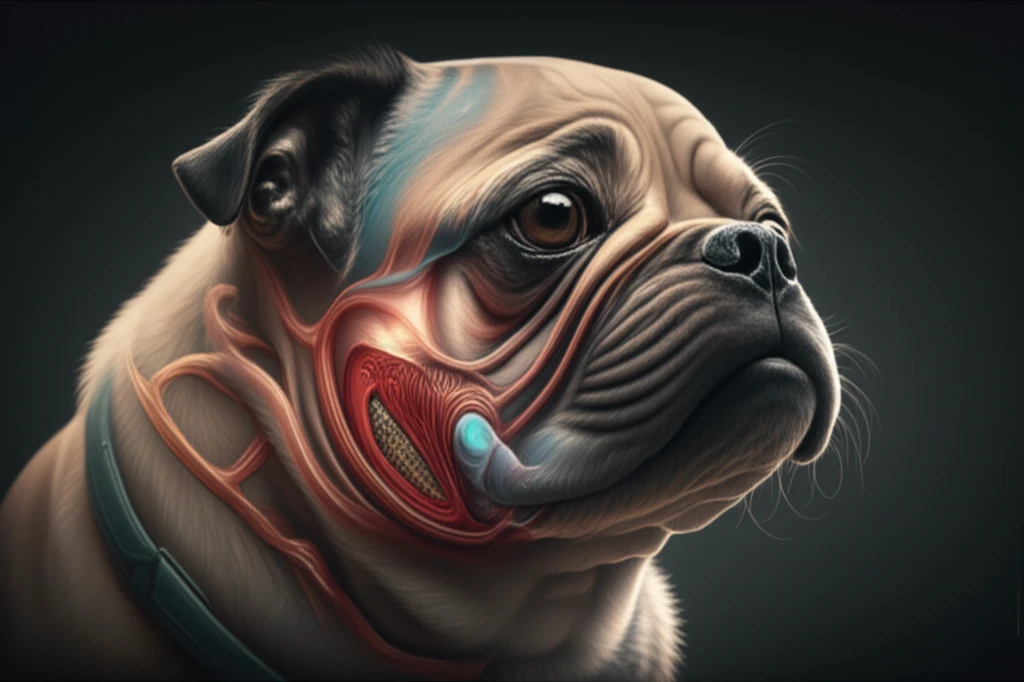
Snoring and Suffering? New MRI Study Reveals Airway Secrets in Brachycephalic Dogs

"Groundbreaking research offers insights into breathing problems in breeds like Pugs and Bulldogs, paving the way for better diagnosis and treatment."
If you're the proud owner of a brachycephalic dog breed—think Pugs, Bulldogs, Shih Tzus—you're likely familiar with their characteristic snorts and snuffles. While often endearing, these sounds can be indicators of a more serious issue: Brachycephalic Obstructive Airway Syndrome (BOAS). This condition affects many short-nosed breeds, leading to breathing difficulties that can significantly impact their quality of life.
BOAS is a complex problem stemming from the unique craniofacial structure of these dogs. Their shortened snouts often result in overcrowded airways, making it harder for them to breathe. Common issues include stenotic nares (narrowed nostrils), elongated soft palates, and tracheal hypoplasia (narrowed windpipe). Understanding the intricacies of these anatomical abnormalities is crucial for effective diagnosis and treatment.
Now, a groundbreaking study published in The Journal of Veterinary Medical Science is shedding new light on the airway anatomy of brachycephalic dogs. Using magnetic resonance imaging (MRI), researchers have gained unprecedented insights into the specific structural differences that contribute to BOAS. This research could revolutionize how veterinarians approach the diagnosis and management of this common and often distressing condition.
MRI Scans Uncover Key Differences in Brachycephalic Airways
The study, led by researchers at Chungbuk National University, used MRI to compare the airway structures of 42 brachycephalic dogs and 85 non-brachycephalic dogs. The goal was to identify specific anatomical differences in the soft palate and nasopharynx that might explain the breathing difficulties seen in short-nosed breeds. By analyzing the MRI scans, the researchers were able to measure various parameters, including:
- Skull Length: Brachycephalic dogs had significantly shorter skulls.
- Soft Palate Length and Thickness: The soft palate, the fleshy part at the back of the roof of the mouth, was relatively longer and thicker in brachycephalic dogs.
- Nasopharyngeal Airway Size: The nasopharyngeal airway, the passage behind the nose, was significantly smaller in brachycephalic dogs.
- Soft Palate and Nasopharynx Volumes: Brachycephalic dogs had a larger soft palate volume and a smaller nasopharynx volume compared to non-brachycephalic dogs.
What Does This Mean for Your Brachycephalic Dog?
This research is a significant step forward in understanding and addressing the challenges faced by brachycephalic dogs. By providing a clearer picture of the anatomical factors contributing to BOAS, it can help veterinarians make more informed decisions about diagnosis and treatment. If you own a brachycephalic breed, consult with your veterinarian about the best ways to manage their respiratory health. Early detection and intervention can significantly improve their quality of life and help them breathe easier. Remember, a happy, healthy dog starts with understanding their unique needs.